Blog
Blog
ASF in Spain: Three months after the start of the outbreak
03rd March 2026 - News
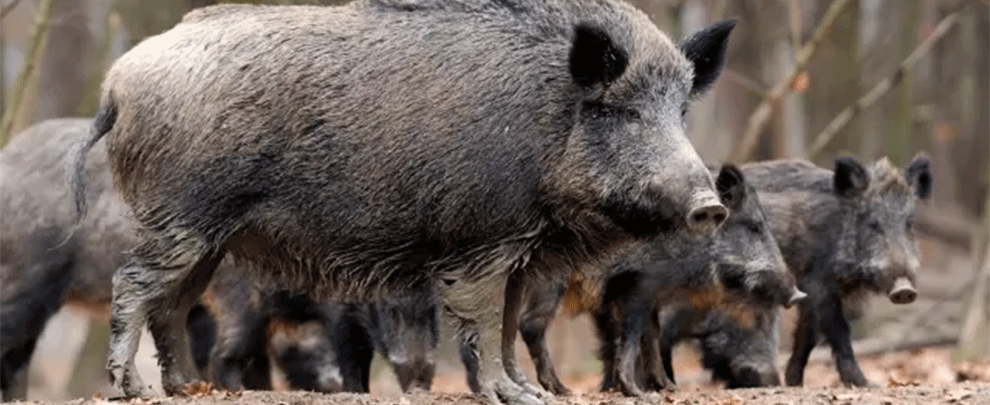
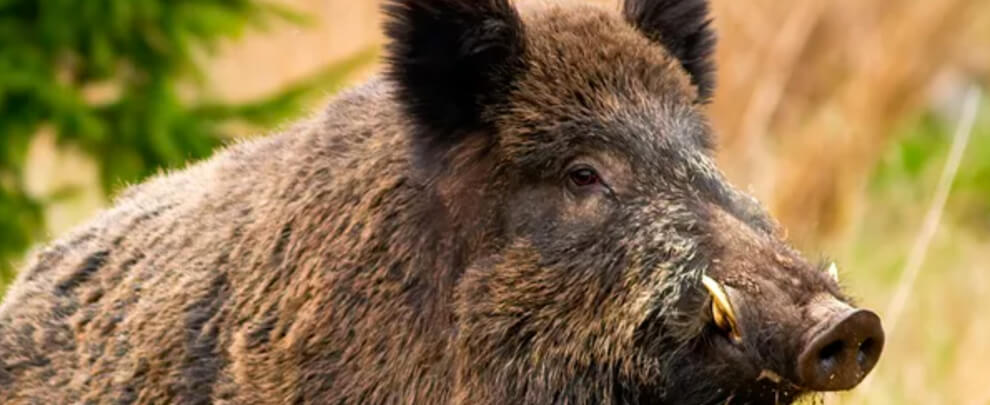
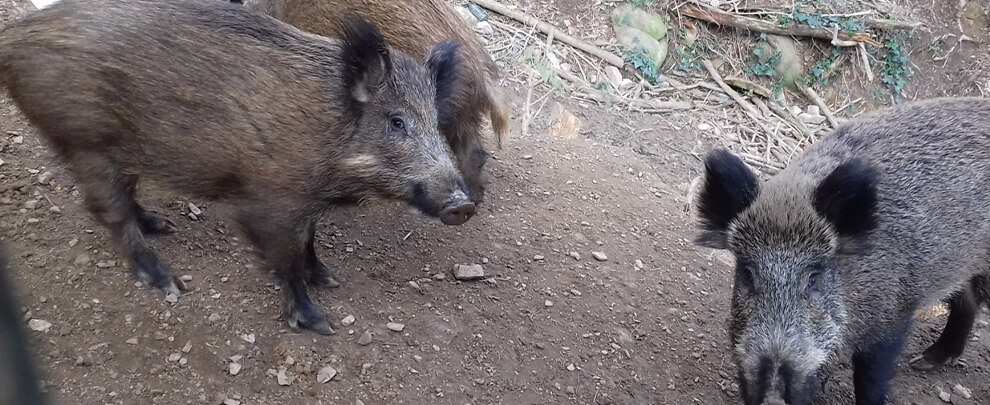
The confirmation of two cases of African swine fever (ASF) in wild boars on November 28 in Collserola set off alarms across the sector, which has since remained on maximum alert amid the latent threat. After three months of living with the disease, the virus remains limited to wildlife, although it is already beyond the initial six-kilometre radius. However, the economic and commercial repercussions are already noticeable in the sector. In this “Informativo Porcino” (Pig News), we speak with professionals from the pork industry, with whom we analyse the evolution of the outbreak and its impact, and anticipate the challenges yet to come.
The complexity of ASF
Pathologically, ASF is especially difficult to control. As Albert Finestra, veterinary advisor on pig farms, explains, “The virus is tremendously resistant to the environment, one of the most resistant known in veterinary medicine. It can be transmitted to other animals through multiple routes, such as fresh or frozen meat, processed meat without proper treatment, excrement, and even rotting bones. Furthermore, it is a septicemic disease that causes coagulation and internal bleeding, causing multiple organ failure that ends up causing death in a few days”. Its inclusion in list A of mandatory notifiable diseases adds commercial limitations that exacerbate its impact on the sector.
Appearance of the first cases and action
Since the detection of the first cases of ASF in wild boars, the surveillance and diagnostic system has been a key component in containing the disease. In this mechanism, IRTA-CReSA has played a central role as a reference laboratory within the Wildlife Health Surveillance Plan, in force since 2018, as the body responsible for receiving and testing samples for ASF. In fact, the first two cases of the outbreak involved wild boars that were urgently analysed in this organisation. Since then, the centre's professionals have worked continuously to receive corpses or remains of wild boars, test them and eliminate them.
As Quim Segalés, IRTA-CReSA researcher and professor at the UAB, explains, the speed with which the first cases were identified was key to containing the outbreak in its initial phase. In this sense, according to the researcher, “early detection has been crucial and the most important element to try to avoid further spread of the disease”. Therefore, it values the initial response and institutional coordination three months after the first positives, all cases are still within a 20-kilometre radius.
However, Segalés insists on the need to be cautious. Although the evolution of the outbreak at the moment does not seem very different from that observed in other European countries such as Belgium, Sweden or the Czech Republic, he warns that it is still early to conclude. “We are facing a virus from a genetic cluster that was unknown until now, which makes any prediction even more difficult”, he explains.
Precisely to prevent further spread of the virus, one of the most complex aspects has been the collection and management of wild boar carcasses, especially in an area with characteristics as particular as Collserola. It is a partially peri-urban environment with complex orography, making it difficult to locate dead animals and conduct population control. Despite this, Segalés highlights the deployment of means: “The administration has put all possible elements at stake, Agents Rurals, Mossos d'Esquadra, UME, Civil Protection, to carry out very hard work”.
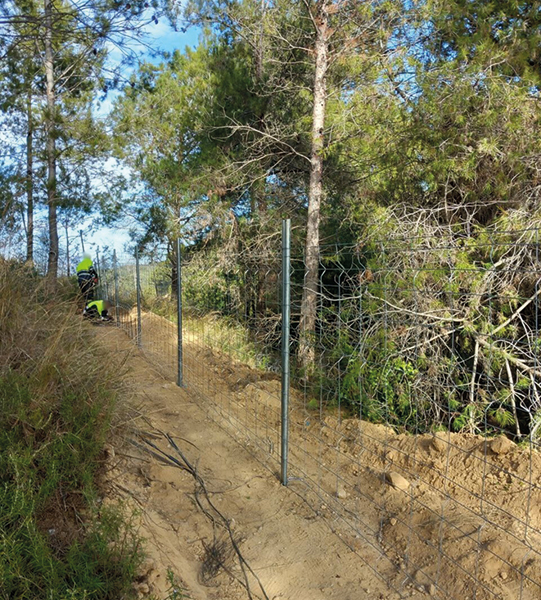
The terrain makes it difficult to locate dead animals. Photo: DARP.
After three months, where are we?
With the African swine fever outbreak already declared, more than 190 confirmed cases, and the first emergency measures fully activated, the current scenario combines relative stability from a health perspective with a growing economic impact on the pig sector. Although the virus remains limited to wildlife, its presence in Spain has significantly altered the sector's balance, especially in a country with a strong export weight.
From a veterinary point of view, Albert Finestra describes the arrival of ASF in Spain as a real “punch”. Although the threat has always existed, the confirmation of cases has generated a mix of sadness and concern, especially given the economic losses in the sector, even though domestic pigs remain free of the disease. In this context, Finestra defines the current situation as a control “in quotes”: apparently, the virus is under control, but it could be a false control if the guard is lowered.
The evolution of the outbreak is still the main unknown, that is, whether it will be contained in the affected area or whether it will end up expanding, an uncertainty that keeps the sector in maximum tension and conditions its mood. The possible spread of the virus, its persistence in the environment and doubts about the effectiveness of cleaning efforts keep veterinarians on alert. “We cannot claim victory”, insists Finestra, who emphasises that the dimension of the problem will depend on whether the outbreak manages to be contained. However, he is confident that, despite this setback for a sector already consolidated worldwide, it will emerge stronger from this situation.
In this context, Segalés focuses on the implications of ASF for a country with such a significant weight in the international pork trade. “The outlook for the pork sector in a country that has ASF, even if it is only in wild boar, and with a high level of international exports, is definitely negative”, he says. This situation has important economic and social effects, given the high level of employability in the sector in Spain. For this reason, he emphasises that “the elimination of the disease from the country is an absolutely crucial action”. However, he warns that the return to normality will not be immediate and will require “coordinated, active and extensive action, which will take time”.
What has been the impact?
One of the most immediate effects of ASF's entry into Spain has been a change in prices. According to Miguel Ángel Higuera, director of ANPROGAPOR, since the appearance of the first cases, the reference price of MercoLleida has dropped by close to 30%, from 1.30 € to 1 €. “To be realistic, the price received by the farmer is currently closer to 0.95–0.97 €”, he specifies. In economic terms, this translates into a drastic drop, resulting in average losses of 40-50 euros per animal. Despite the harshness of the adjustment, ANPROGAPOR considers this situation unsustainable over time because it would cause producers' economies to falter. They trust in a progressive market reaction: “We estimate that sooner rather than later, perhaps in March, the market has to start reacting, with a price recomposition towards March-April”.
Beyond prices, the most profound impact is occurring in the commercial sphere: "A disease detected exclusively in wildlife it has fully affected our export capacity, despite having a cabin completely free of ASF”, says Higuera, and adds: "The main problem is that some third countries do not accept the international regionalization rules established by the WHOA and consider Spain as a whole as an infected country".
Currently, key markets such as Japan and the Philippines, which between them absorbed nearly 200,000 tons, remain closed. Other destinations, such as Mexico, Colombia, Peru, or Ecuador, are added to them. “That these countries do not accept regionalisation has an emotional effect, in addition to the purely economic one," says Higuera. This situation causes a domino effect, with products unable to find a way out, downward pressure on prices, and an impact that ultimately falls on producers. Despite this, the sector does not consider these markets lost. “Contacts are being made practically weekly to advance regionalisation”, explains Higuera, especially in the case of Japan, where negotiations were advanced before the outbreak. Furthermore, it highlights a positive element: “Our buyers in Japan and the Philippines are eager to buy again in Spain”, both for economic and supply reasons.
After this time, what have we learned?
The first months of living with ASF have left several key lessons for the sector and health authorities. As quim Segalés points out, experience shows that its expansion depends largely on human action. The detection of the virus in wild boars or domestic pigs in very distant places, even thousands of kilometers from the nearest infection, shows that borders are not an obstacle: “If we have seen outbreaks 500 or 1,000 km from the evidence of infection closest, or even more than 10,000 km as was the case in the Dominican Republic, it is clear that borders are useless and that material of porcine origin contaminated with the virus has the capacity to reach any part of the world”.
For his part, Higuera highlights the importance of coordination and single command in the management of health crises. The initial response has shown that professionals specialised in wildlife and health contingencies can act efficiently if there is clear leadership from the health authority. However, farm management in regionalised areas has shown shortcomings. In this sense, he points out: “The sector was not yet sufficiently prepared to implement coordinated health measures at the regional level, and this experience makes it clear that it is something that must be improved for future contingencies”.
Regarding biosafety, Finestra emphasises that it continues to be a subject that should not be left aside: “The decrease in the price of pork registered in recent months, solely due to the presence of the virus, highlights the vulnerability of the sector to wild diseases, and the need to reinforce preventive measures”.
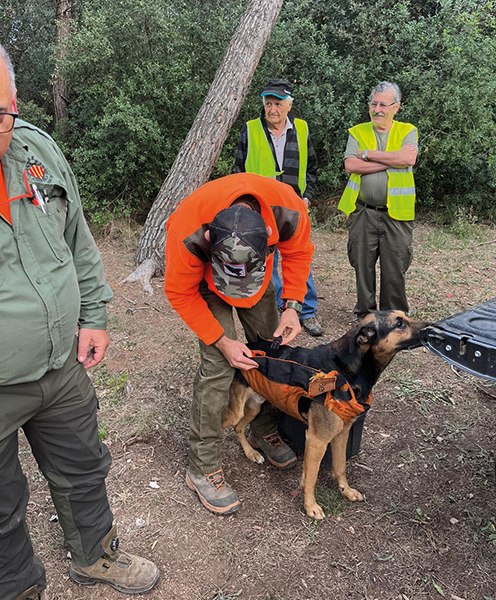
Active surveillance and coordination are essential. Photo: DARP.
And from now on, what should we do?
In view of what happened, experts agree that active surveillance and coordination are essential for the coming months. Quim Segalés warns that new cases are expected in the coming weeks, so maintaining the search-and-capture device for wild boars and passive surveillance in high- and low-risk areas is key. “The objective is not to let our guard down and reinforce the actions that are already being carried out”, he states, adding: “The best thing that can be done now is to work tirelessly to try to contain the disease and eliminate it as soon as possible; it is the only way to become, ideally as soon as possible, a country free of ASF”.
Higuera emphasises the importance of acting on multiple fronts to stabilise the sector, maintaining up-to-date protocols, coordinating emergency teams, and ensuring communication and management work seamlessly. In addition, he points out that the priority is to address production costs, improve efficiency, and support the ranchers most affected by regionalisation. For this reason, it demands urgent help lines to ensure the farms' viability and prevent the impact from becoming a structural problem. “Within a crisis, the sector must respond to the sector itself”, he highlights.
For Finestra, the key continues to be diligence in action and information. “We must insist on biosafety and passive surveillance. Any suspicious symptoms on the farm must be diagnosed immediately”, he explains, while demanding more transparency in the dissemination of information from institutions, so that the sector can act critically and constructively: “We would like to have more information about the work that has been carried out in the ground zero to be able to be constructive critics. In the sector, we work with infectious diseases; therefore, we are familiar with biocontainment, biosafety, and related practices. I would like you to listen to us and let us participate”.
Experts agree that, despite the severity of the ASF outbreak in wild boars, the situation is contained and effective measures are being applied to prevent the virus from entering farms. They underline the importance of maintaining coordination between authorities, sector and industry, and of strengthening regionalisation to protect international markets. Furthermore, they highlight that ASF does not represent a risk to people, although the population can act as a vector and must take extreme precautions in affected areas. With all this, the final message is one of cautious optimism. With discipline, biosafety and joint effort, Spain can contain the outbreak and move towards eradication.