Blog
Blog
How to reduce energy consumption in pig farms during winter
22nd January 2026 - News
Reducing energy consumption in pig farms during winter has become a strategic priority to improve the profitability of pig production. Rising energy costs, together with the need to maintain optimal environmental conditions, force producers to optimize the use of heating, ventilation, and climate control systems without compromising animal welfare or productive performance.
Addressing this challenge requires a technical and integrated approach, in which energy efficiency is addressed from facility design to daily farm management. Only by combining precise environmental control, rational use of equipment, and decisions based on the real needs of the animals is it possible to reduce energy costs in winter without affecting productive performance.
Impact of cold weather on energy consumption in pig farms
During winter, pig farms experience a significant increase in energy consumption due to the need to maintain adequate temperatures, especially in farrowing and weaning areas. Piglets are particularly sensitive to cold and require thermally stable environments to avoid energy losses that directly affect growth, intestinal health, and feed conversion rate.
When ambient temperature is not adequate, animals divert part of the energy intake to thermoregulation instead of growth, which increases production costs. For this reason, proper environmental management during winter is a key tool to reduce energy expenditure and improve productive efficiency in pig farms.
Importance of thermal insulation
Thermal insulation of facilities is one of the factors with the greatest impact on reducing energy consumption in winter. Heat losses through poorly insulated roofs, walls, and enclosures force heating systems to operate continuously, increasing the farm’s energy costs.
Improving insulation helps maintain a more stable indoor temperature and minimize consumption peaks. Likewise, good airtightness prevents uncontrolled cold air drafts that affect animal comfort and unnecessarily increase energy demand.
Localized heating to reduce energy costs
Localized heating is one of the most effective strategies to reduce energy consumption in pig farms during winter. Instead of heating the entire building, creating specific comfort zones for piglets allows heat input to be concentrated where it is actually needed.
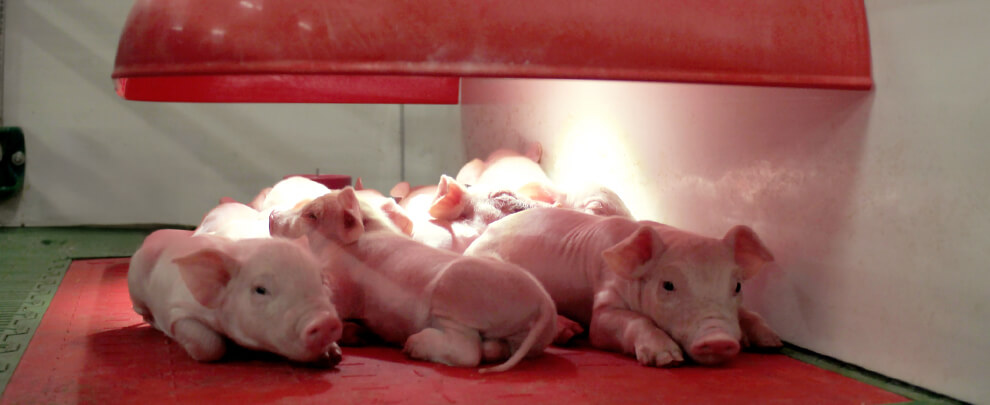
In this regard, the use of heated plates provides direct and efficient heat in piglet resting areas, better adapting to their real thermal needs. In addition, the use of nests helps piglets concentrate their activity and rest in warm, protected areas. This design reduces heat losses, improves heating system efficiency, and limits energy expenditure associated with heating unnecessary surfaces.
This approach improves animal welfare, reduces thermal stress, and lowers overall energy demand. When animals can easily find a thermally comfortable area, resting time increases, feed intake improves, and more uniform batches are obtained, with a positive impact on production costs.
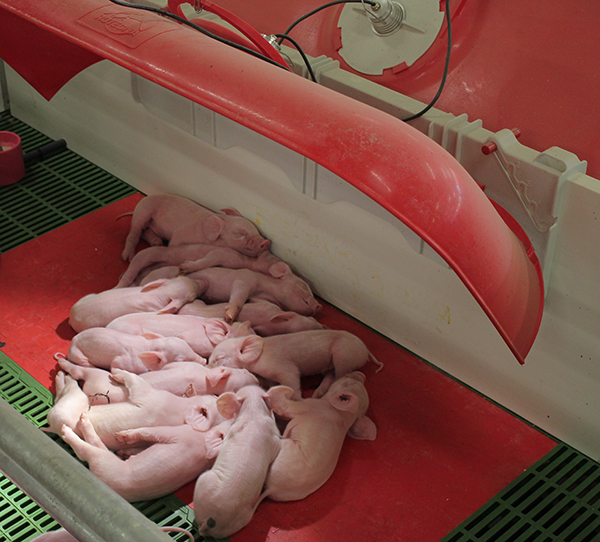
Nests allow for the creation of well-defined comfort spaces. Photo: Rotecna.
Winter ventilation and thermal balance control
Ventilation in pig farms during winter must strike a balance between air quality and energy savings. Insufficient ventilation leads to gas accumulation, increased humidity, and higher health risks, while excessive ventilation causes heat losses and increases energy consumption.
Precise adjustment of minimum ventilation allows adequate air renewal without compromising thermal balance. In this way, energy consumption is optimized and animal welfare is improved, two factors directly related to productive efficiency.
Daily management and optimization of energy use
Daily farm management has a direct impact on energy consumption during winter. Incorrect temperature settings, equipment running unnecessarily, or lack of maintenance can increase costs without providing productive benefits.
Regular inspection of heating and ventilation systems, together with proper calibration of sensors and thermostats, makes it possible to adapt the environment to the real needs of animals at each production stage. Precise management avoids excessive consumption and contributes to greater energy efficiency.
Energy efficiency and reduction of production costs
Improving energy efficiency in winter has a direct effect on production costs in pig farms. Lower energy consumption translates into a lower cost per weaned piglet and per kilogram produced, while improving animal health and performance.
In addition, a well-controlled environment reduces the incidence of cold-related problems, such as mortality, growth delays, or increased use of treatments, reinforcing the positive economic impact of good energy management.