Blog
Blog
Solids compactor: Savings in transportation costs
24th March 2026 - News
Slurry management is one of the great challenges that pig farms face today. The increasing environmental demands and the need to optimise resource use make it essential to have technical solutions that maximise the economic recovery of slurry and reduce its management costs.
In this context, the separation of the solid portion of the slurry plays a key role, as it contributes to sustainable management and facilitates compliance with current environmental requirements, reduces the costs of applying the liquid phase, and, at the same time, generates a high-value byproduct. In addition, it allows us to move towards more sustainable models.
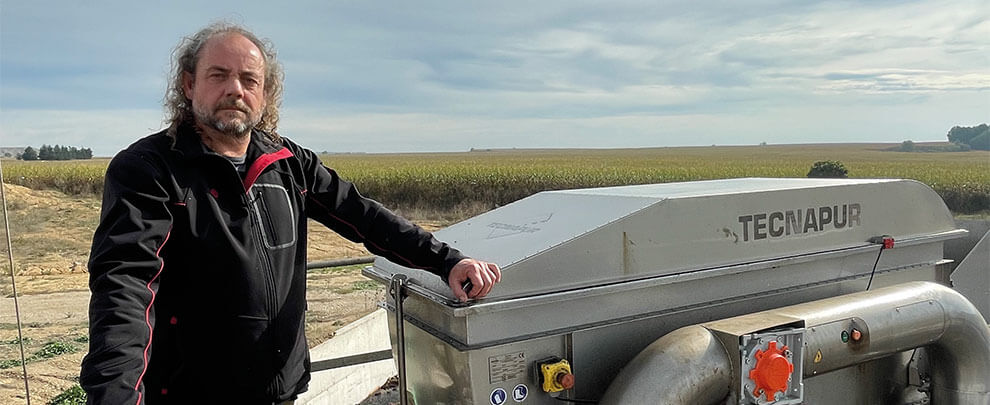
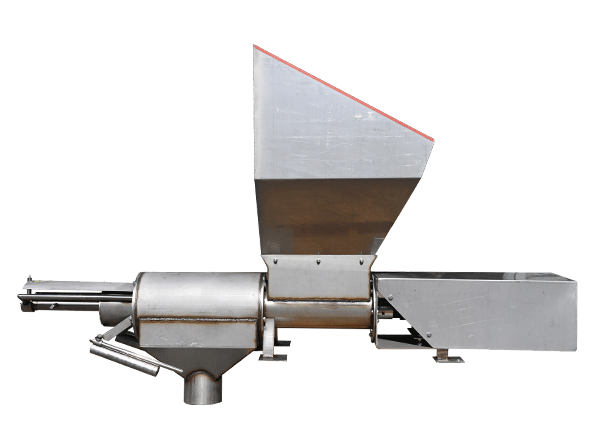
To counter these needs, at Rotecna, we expand our range of Tecnapur solutions for the treatment of slurry with the Solids Compactor, a piece of equipment designed for those farms where the management of the solid fraction is not carried out in the facilities themselves and the separated solids must be transported over long distances, immediately after separation, for subsequent treatment or recovery.
Efficiency and control in solid treatment
The Solids Compactor is part of the Tecnapur line, which specialises in the management and treatment of pig manure. Its main function is to further reduce the humidity of the solid fraction from a mechanical separation process, allowing the production of a solid with a humidity of less than 70%, compared to up to 80% that can come out of the mechanical separator TP-01 rollers from Tecnapur. This weight reduction is particularly interesting if the solid is to be transported immediately after separation, without time for it to dry in the dunghill or on-site composting area, as it significantly reduces transportation costs.
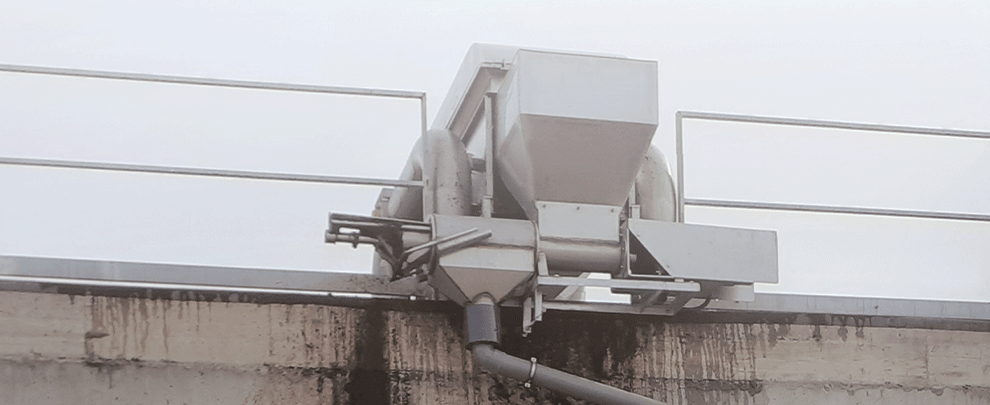
The equipment is specifically designed to work with the solid fraction from the TP-01 separator and is integrated and efficiently into existing treatment systems. The optimised design of its hopper makes it easier for the solid to enter fluidly, ensuring homogeneous and efficient compaction.
Thanks to its compaction and dehydration system, the equipment allows you to transform a solid with a high water content into a more structured material, with reduced weight, easier to manage and transport over long distances. In addition, the compactor allows adjusting the final solids’ humidity level, adapting to the specific needs of each farm and the different destinations of the treated slurry.
This type of resolution is especially interesting when the final destination of the solid is an external composting, drying, agronomic recovery or industrial treatment plant, and the distance to be travelled economically penalises the transportation of materials with high water content.
Impact on the liquid fraction
However, it is important to keep in mind that greater dehydration of the solid directly implies an increase in the volume of the separated liquid fraction. By extracting more water from the solid through compaction, this liquid becomes part of the slurry or liquid effluent, which must be stored and managed, with field application as fertiliser, for example. Therefore, although the compactor allows the cost associated with its use to be clearly optimised for the transportation of the solid when done immediately after separation, the overall cost of managing the liquid slurry will increase.
Compactor and/or separator
In this sense, the use of a compactor responds to a very specific management model, focused on the immediate long-distance export of the solid and on minimising its weight. On the other hand, when the objective is to achieve an optimal balance between the solid and liquid segments, reducing the total volume of liquid slurry to be managed and optimising the costs of agricultural application, the use of the TP01 separator allows obtaining a solid with adequate humidity without penalising the volume of liquid generated.
Advantages
- Reduction of the humidity of the
solids obtained in the separation. - Possibility of regulating the level of dehydration according to the user’s requirements.
- Easy maintenance.
- Simple and safe operation,
with minimal operator intervention. - High corrosion resistance and long service life.
Features
- Equipment made entirely of stainless steel.
- HSS 304 perforated sieve, which ensures an efficient and reliable compaction process.
- Compact and automatic system.