Blog
Blog
The pig sector, a future opportunity for young people
28th January 2026 - News
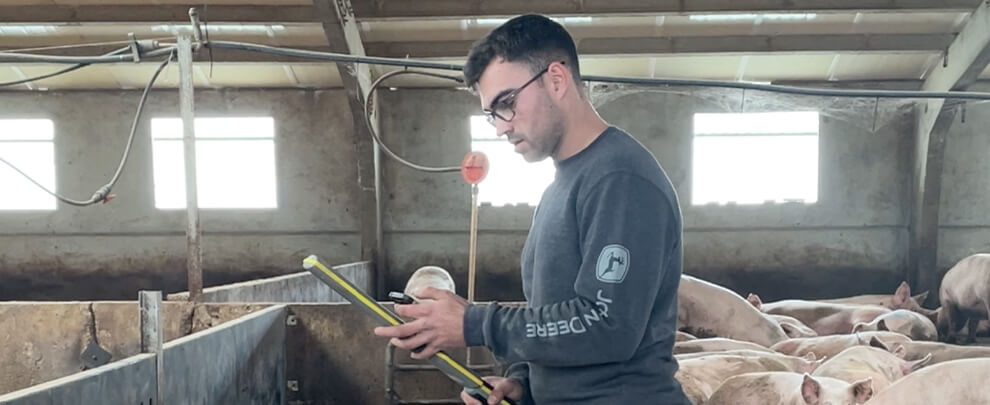
Generational change is a significant challenge for the pig sector. In a context where many young people leave rural areas in search of a future in big cities, some choose to do the opposite, staying in the countryside to support their family's business. This is the case of Adrià Peretó, a young man who, at 20, decided to join the farm his parents built. Two years later, he tells us about his experience and shares his vision about the role of offspring in the future of the pig sector.
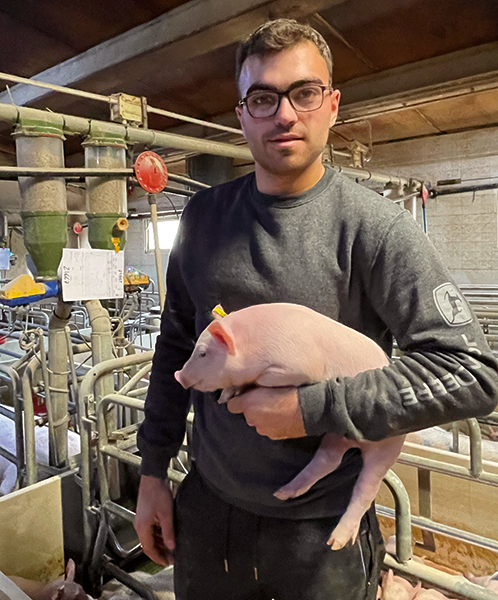
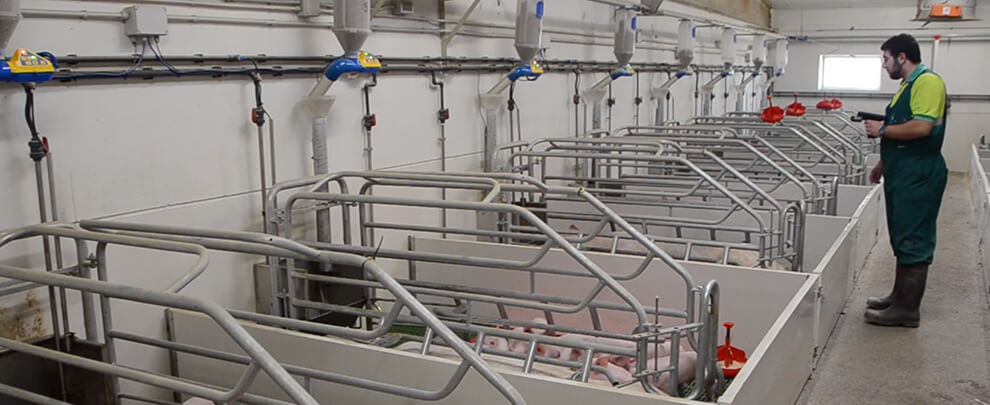
Adrià Peretó in the farrowing room of the family farm. Photo: Rotecna.
How did you start your relationship with the pig industry? Was it always clear to you that you wanted to commit to this sector?
Since I was a child, I have been closely connected to the world of pigs. My parents started this farm, and it has been present in my daily life. When I was little, it was obvious that I wanted to devote myself to agriculture, but at home, we had always combined agriculture and livestock. So, naturally, I also felt part of the livestock sector. Two years ago, when I was 20, I decided to join the family business. It was a step I was very clear about, because for me it was not just about continuing with the farm, but about following the path I have always seen at home and am passionate about.
Although many young people choose other paths, you decided to stay home and continue working on the family farm. What led you to make that decision?
I decided to stay because I saw it as a good option for the future. In the countryside, if you really like it, you can have a chance for the future. Here you have the opportunity to grow, do things your way, and continue a family project that has been running for years. Plus, it motivates me to think that I can apply my vision and slowly improve what my parents started.
What is the most challenging thing about being young in the countryside and, specifically, in the pig sector?
Possibly, it is the dedication that caring for animals requires. They need constant attention and do not understand schedules. However, it is a gratifying job. Knowing that your effort contributes to feeding people and that you are an essential part of society gives you great satisfaction.
Does society really understand what a modern, professional pig farm looks like nowadays?
There is still a lot of ignorance about farm workers. Most people cannot imagine the level of technology we use or the extent to which it helps us take better care of animals, monitor their well-being, and operate more efficiently and sustainably. For this reason, I would like society to be more interested in our daily lives and understand that animal welfare is a priority for us. We comply with one of the most demanding standards in the world, and behind each farm, there is a lot of work, professionalism and respect for the animals. In the end, our goal is to produce quality food and do it in the best way possible.
What changes or support would be necessary so that more young people are encouraged to stay in the countryside and work in the pig sector?
Above all, the administration needs to make it easier for us, especially by reducing bureaucracy, which often hinders progress. More aid and facilities would also be required for those of us who want to continue or start in this sector. It is challenging for a young person to set up a farm from scratch without financial support. That is why it is essential to expand targeted programs that encourage young people to stay in the countryside and invest in livestock farming.
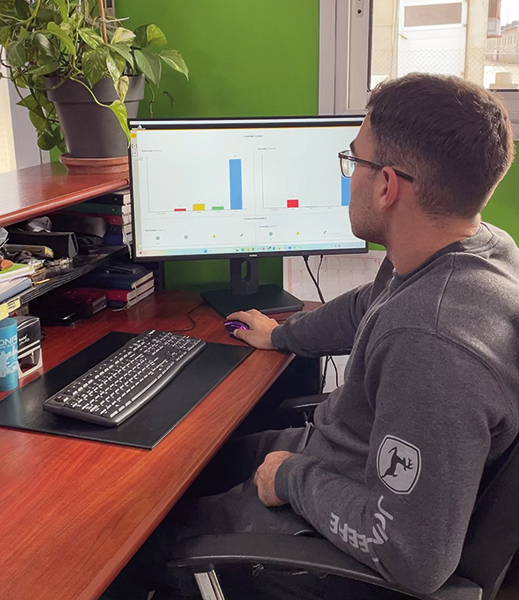
Technology allows for precise control of feeding. Photo: Rotecna.
What advances or best practices would you like to enable on your farm in the coming years?
Looking forward, I would like the farm to be more automated. Technology allows us to have greater control over everything that happens in the facilities from our mobile phones, which makes daily work much easier. Our goal is to continue advancing in this direction to optimise processes and, at the same time, decrease manual work hours, since our days are usually very long. On the other hand, some are very aware of the environmental impact our activity has, and we want to continue working to minimise it. Sustainability is one of our primary concerns, and we believe that automation and process control can also help us be increasingly respectful of the environment.
What makes you most proud to be part of the pig sector?
What makes me most proud is having a job opportunity in a rural area, without having to go to the city to work. Being able to live and develop professionally here in my environment is of enormous significance to me. Furthermore, it is gratifying because, in the end, what we do is produce food and contribute to something as basic and necessary as feeding people. Knowing you are part of that makes you feel good and gives you reasons to keep going every day.
What message would you send to young people about their professional future who do not know the opportunities pig farming offers?
To young people considering joining the sector, I'd tell them that the most important thing is to be clear about it and really like it. This job requires dedication and commitment, but when you are passionate about it, it is gratifying. The pig sector offers many opportunities for the future and allows you to live in rural areas with a good quality of life. If you like the countryside and animals, it is a worthwhile path.
If you look ten years into the future, how do you imagine your farm and the sector?
I imagine a much more automated farm, with less need for manual labour and greater control over everything that happens, without having to be there, precisely. I also see a more professionalised sector, adapted to new times, with modern farms that are well managed and committed to animal welfare and the environment.