Blog
Blog
Artificial intelligence in pig farms
17th February 2026 - News
In recent years, pig production has evolved towards more technically advanced, sophisticated, and efficient systems. However, the true qualitative leap no longer depends solely on genetics or nutrition. Today, the key lies in transforming data into strategic decisions. Every kilogram of feed consumed, every variation in temperature, or every change in water consumption generates valuable information. Artificial intelligence (AI), through advanced algorithms, machine learning, and big data analysis, allows this information to be captured and processed. This enables farmers to optimize processes, improve animal health and welfare, reinforce sustainability, and increase productive efficiency in a cost-effective way.
For this approach to work, a suitable technological environment is essential. The digitization of processes, the deployment of devices that capture data in real time, and the use of management platforms like Rotecna Cloud create the necessary infrastructure to integrate, organize, and leverage information. On this foundation, AI can unleash its full potential and establish itself as a strategic element in decision-making within pig production.
Feed optimization
AI allows for individualized monitoring of feed consumption thanks to sensors, cameras, and machine vision systems. In addition, AI-based predictive analysis helps plan growth and fattening cycles. Advanced algorithms estimate the animals’ future weight considering factors such as genetics, diet, and environmental conditions, allowing more precise decisions on management, logistics, and optimal slaughter timing. As a result, feed waste is reduced, feed conversion rates improve, and farm profitability increases.
In the reproductive domain, AI enhances precision in insemination and sow management. Automatic body condition evaluation systems using artificial vision allow feed adjustments in group gestation, preventing excessive loss of reserves and promoting fertility and prolificacy. Likewise, historical analysis of reproductive data helps identify patterns that impact live births and pre-weaning mortality, providing a solid basis for strategic decisions.
Sustainability and environmental management
Environmental management in pig farming greatly benefits from technology. Environmental sensing systems, such as Sensoritronic, allow real-time monitoring of temperature, humidity, CO₂, and NH₃, automatically adjusting ventilation and climate control. This optimizes energy consumption, reduces emissions, and keeps animals within their comfort zone.
AI also enhances manure management through digital nutrient characterization and algorithmic planning of agronomic application. In this way, ammonia volatilization is minimized, aquifer contamination is prevented, and fertilizer use is optimized, creating a more sustainable and efficient production model.
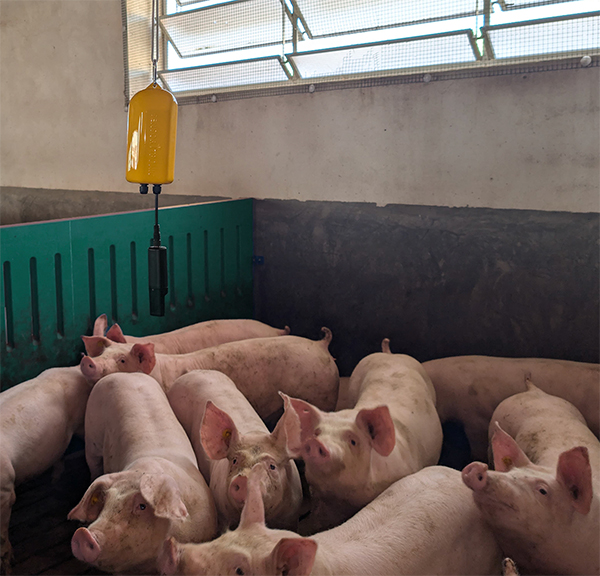
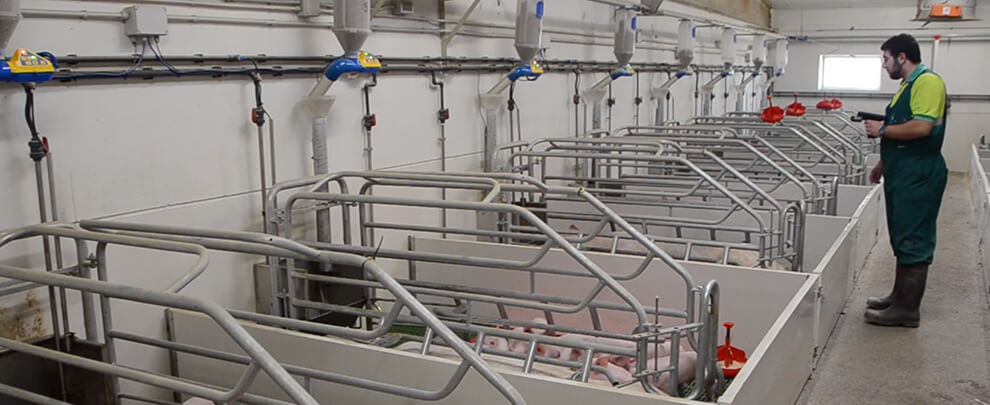
Environmental sensors allow for real-time monitoring of temperature, humidity, CO₂, and NH₃. Photo: Rotecna.
Animal health and welfare
The health and welfare of pigs are essential from both an ethical and economic standpoint. AI applied to pig health monitoring can detect subtle changes in behavior or physiology that could indicate stress, pain, or disease.
Smart cameras and sensors record daily animal activity, while algorithms process images to identify respiratory issues or skin lesions before they manifest clinically. This early detection reduces the need for mass antibiotic treatments, strengthens biosecurity, and objectively improves animal welfare.
Talent attraction and social perception
Automation and digital platforms facilitate remote monitoring of feed, environmental parameters, incidents, and productive performance. This digitalization of pig farms reduces dependence on manual tasks and makes the activity more attractive for technical profiles and new generations familiar with technology.
Furthermore, AI strengthens digital traceability, integrating information from the farm to the point of sale. Producers can document rearing conditions, health history, and feeding records, ensuring transparency, compliance with regulations, and reinforcing consumer trust. This helps improve the sector’s reputation and sustain the demand for pork.
From experience to predictive modeling
Artificial intelligence expands the analytical and strategic capacity of pig farms, allowing them to evolve from management based solely on experience to a model supported by data analysis. In this context, AI is consolidated as the pillar of a more efficient, sustainable, and competitive production system. Its adoption is not only a technological improvement but a key factor in ensuring the long-term economic viability and social legitimacy of the sector.