Blog
Blog
Keys to maximizing milk production in lactating sows
09th April 2026 - News
The first weeks of piglets’ lives are closely linked to sow performance during lactation. During this period, weaning weight, piglet survival, and the sow’s future reproductive capacity are largely determined. Success depends on a combination of nutrition, management, environmental control, body condition, etc. When these elements are managed in a coordinated way, it is possible to increase milk production, reduce weight loss in sows, and improve litter uniformity.
Lactation, a phase of high energy demand
During lactation, the sow’s energy requirements increase significantly due to milk production, potentially doubling or tripling those of other phases of the productive cycle. This rise in energy demand means that, if feed intake is insufficient, the sow will mobilize her body reserves. Although some mobilization of fat and protein is normal during lactation, excessive body condition loss can have negative consequences on subsequent reproductive performance, prolonging the weaning-to-service interval and reducing litter size in following cycles.
Furthermore, in modern genetic lines characterized by high prolificacy, milk production becomes a determining factor in maintaining adequate growth in increasingly large litters. If lactation is not properly managed, the impact is quickly reflected in weaning weight and piglet uniformity.
Feeding during lactation
Feeding is, without doubt, the main pillar for improving lactation in sows. The objective should be to maximize feed intake throughout the entire period without compromising the animal’s digestive health.
Voluntary feed intake during lactation is often lower than the animal’s actual requirements, especially under high-temperature conditions or when litter size is large. For this reason, it is essential to design feeding strategies that promote consistent and sustained intake from the first days after farrowing.
A common practice consists of progressively increasing the amount of feed until maximum intake is achieved. This gradual increase allows the sow’s digestive system to adapt and helps prevent metabolic problems. At the same time, adjusting feeding frequency is essential, since dividing the daily ration into several meals helps stimulate intake and reduce wastage.
Feeding patterns also directly influence productive results. Sows that maintain consistent intake during lactation achieve better litter weights at weaning and show a lower incidence of subsequent reproductive problems. In this context, providing fresh feed frequently helps maintain appetite, especially during hot periods when feed intake usually declines significantly.
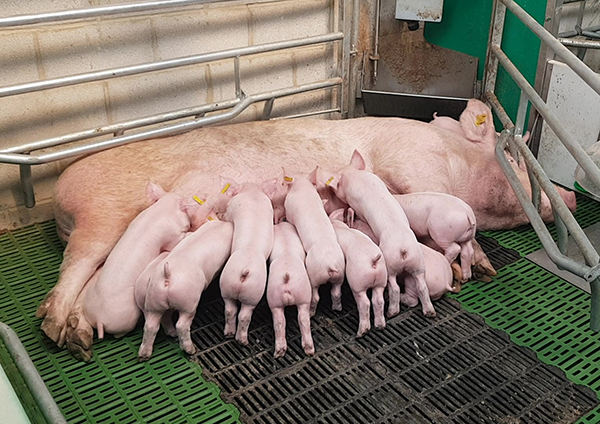
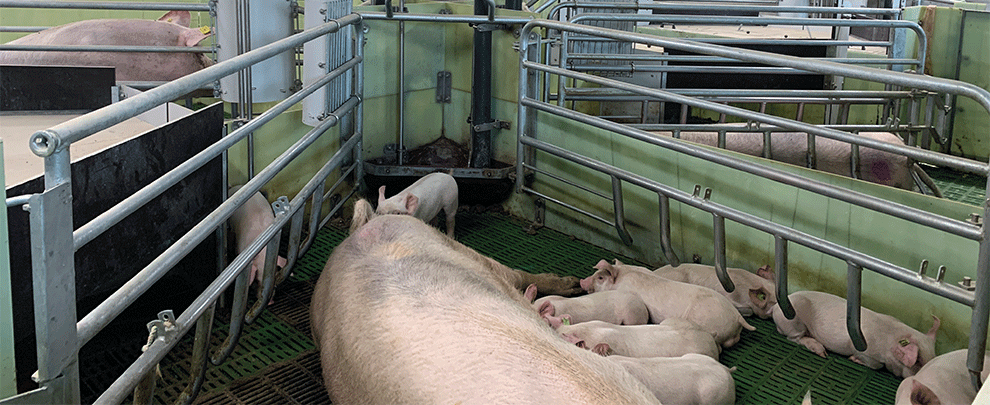
Milk production is a determining factor in maintaining adequate growth in litters. Photo: Rotecna.
The importance of water in sow lactation
Although it often receives less attention than feed, water is an essential component for milk production. A lactating sow may require large daily volumes of water, as milk is composed largely of this element. Insufficient supply or poor water quality can limit feed intake and, consequently, reduce milk production. In addition, continuous availability of clean and accessible water helps maintain digestive health and improves feed efficiency.
In practice, monitoring drinker flow rate and periodically checking their proper functioning are basic actions that can make a significant difference in litter performance.
Body condition, a key indicator of success in lactation
The sow’s body condition at the start of lactation largely determines her ability to produce milk and maintain good health status. Sows that reach farrowing with excess fat often experience difficulty achieving adequate intake levels during lactation. This situation may result in piglets with lower weaning weights and slower recovery after the lactation period. Conversely, sows with balanced body condition have a greater capacity to maintain consistent milk production and meet the energy demands of the period without excessive weight loss.
Monitoring backfat thickness and body weight during lactation allows deviations to be detected and feeding strategies to be adjusted precisely. This control helps maintain long-term productivity and extend the productive lifespan of breeding females.
The environment and its impact on lactation
Environmental conditions directly influence the feeding behavior of sows and their ability to produce milk. Factors such as temperature, ventilation, and air quality can alter feed intake and affect animal welfare.
In warm environments, for example, intake usually decreases due to heat stress, reducing milk production and piglet growth. In such situations, adapting feeding schedules and ensuring adequate ventilation are essential to maintaining productive performance. Likewise, a clean and properly managed environment helps reduce health pressure during the first days of piglets’ lives. Hygiene in the farrowing area helps prevent digestive diseases and supports healthy litter development.
The combination of thermal comfort and good cleaning practices creates an environment that facilitates both feed intake and the expression of maternal behavior.
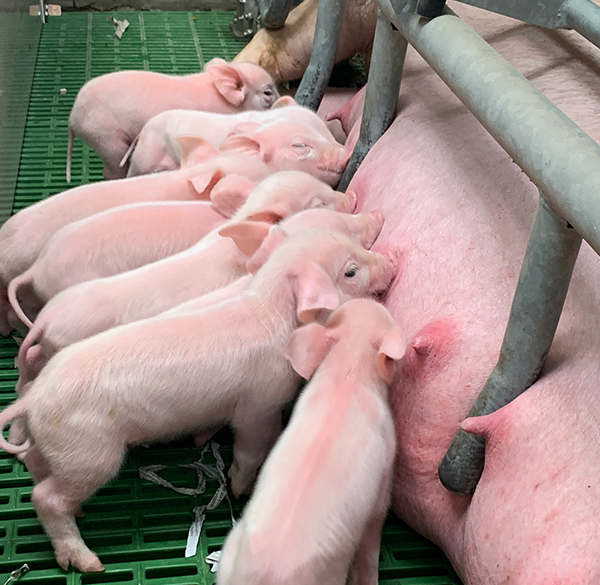
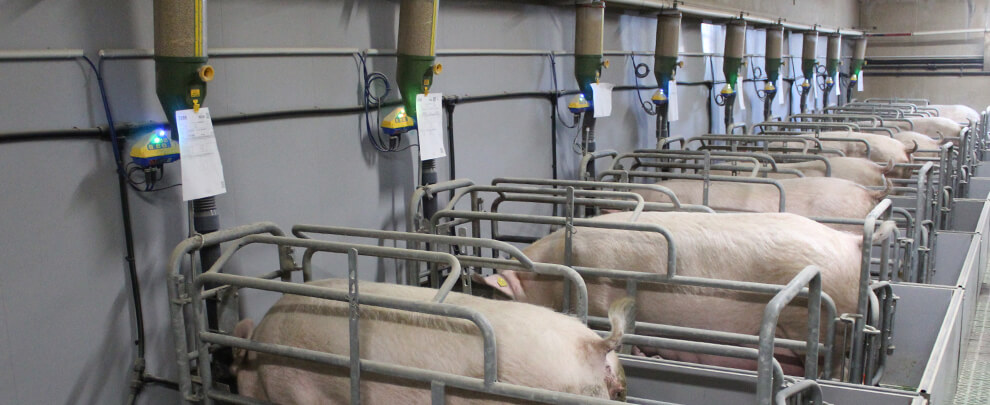
Optimizing lactation increases overall farm efficiency. Photo: Rotecna.
Pre-farrowing management
Although lactation begins after farrowing, its success largely depends on the management carried out during the final weeks of gestation. In this final phase, fetal growth and mammary gland development significantly increase the sow’s nutritional requirements. If these needs are not adequately met, colostrum and milk production may be compromised from the outset.
Maintaining proper feeding during the pre-farrowing period ensures that the sow reaches the start of lactation with sufficient energy reserves and in optimal condition to cope with the metabolic effort associated with milk production. This preventive approach reduces the risk of excessive weight loss and improves piglet uniformity from the first days of life.
Efficient lactation, key to farm profitability
Optimizing lactation not only improves piglet growth but also increases overall farm efficiency. Litters with higher weaning weights, reduced body condition loss, and faster recovery after lactation help lower costs and improve productivity.
In a context of increasing production demands and ever more prolific genetics, the sow’s ability to produce milk efficiently becomes a key differentiating factor. Farms that prioritize nutritional management, environmental control, and continuous monitoring achieve better long-term results.
Improving lactation should be understood as an integrated process that begins before farrowing and continues until weaning. When all involved factors are properly managed, lactation becomes a strategic tool for strengthening the sustainability and competitiveness of modern swine production.