Blog
Blog
Slurry management strategies to reduce emissions on the farm
21st April 2026 - News
When analysing the carbon footprint of a pig farm, there is one element that concentrates a large share of environmental impact and improvement opportunities: slurry. Its management directly influences greenhouse gas emissions and the overall efficiency of the production system.
In recent years, the approach has evolved from a system focused on storage and field application towards a more technical and integrated model. The current objective is to intervene across the entire slurry cycle, from its generation to its final valorisation. Technologies such as solid-liquid separation, lagoon covering, or anaerobic digestion make it possible to optimise this process and improve nutrient utilisation.
The role of slurry in emissions
In pig production, slurry is one of the main sources of greenhouse gas emissions, particularly methane and nitrous oxide. However, its share of the overall emissions inventory is relatively low. In Spain’s pig sector, it accounts for around 2% of total greenhouse gas emissions, placing its impact within a broader context of the production system.
Beyond its relative weight, its relevance lies in the fact that it is a point where technical intervention is possible. Slurry composition, storage conditions, and final destination largely determine the environmental performance of the farm.
Reducing emissions from the beginning
The first improvement lever lies at the origin of slurry, directly linked to animal nutrition. Feed formulation determines the amount of nitrogen that is subsequently excreted. When diets contain protein levels above what the animal can utilise, the excess is excreted as nitrogen compounds that increase emission potential during storage and field application. Adjusting diets by production phases, together with the use of synthetic aminoacids, improves nutrient utilisation and reduces the environmental load of the slurry produced.
In addition to protein adjustment, raw material digestibility also influences final slurry composition. The use of ingredients with higher nutritional availability and the incorporation of additives such as enzymes improve nutrient uptake and reduce the undigested fraction that ends up in the slurry. Likewise, controlling feed waste in feeding systems prevents unnecessary organic matter inputs into the system, helping to maintain a more stable and predictable slurry composition.
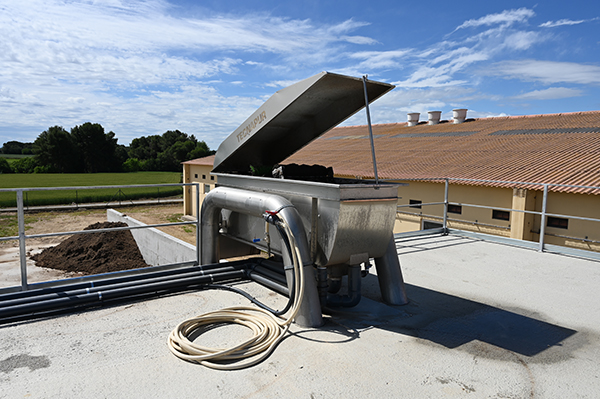
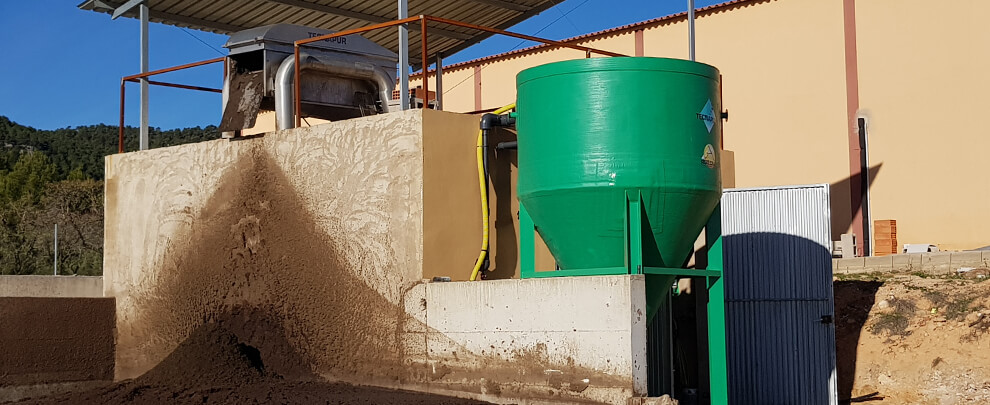
Solid-liquid separation allows for improved nutrient utilization. Photo: Rotecna.
Separation and storage
Solid–liquid separation has become one of the most effective tools for reorganising slurry management from a technical and agronomic perspective. Rather than a simple mechanical operation, it represents the starting point for transforming a complex effluent into two streams with differentiated uses that are easier to manage.
After separation, the solid fraction concentrates a significant portion of the organic matter and phosphorus, as well as a relevant share of total nitrogen. This concentration reduces the overall volume to be managed and facilitates transport to areas where there is demand for organic matter.
The liquid fraction, on the other hand, has a lower solids content and a higher proportion of mineral nitrogen available for crops. This characteristic improves its behaviour during storage and facilitates its application through more precise systems. The reduction in solids also limits the formation of surface crusts and promotes slurry homogenisation prior to pumping.
From an environmental perspective, the reduction of organic load in the liquid fraction contributes to lowering the potential for methane formation during storage. At the same time, the lower presence of solids facilitates the use of application techniques that improve soil infiltration and reduce runoff losses.
Storage remains a decisive stage in the generation of emissions. Prolonged exposure of slurry to the atmosphere promotes gas release, especially when the surface remains uncovered. In this context, covering storage tanks is one of the most effective measures for reducing these emissions, achieving reductions of close to 80% when appropriate covers are used. Other solutions, such as floating materials, also significantly reduce gas exchange.
In addition, strategies such as slurry acidification help reduce ammonia volatilisation during storage, preserving nitrogen in more stable forms and improving its subsequent agronomic value.
Among the most advanced treatment solutions, anaerobic digestion plays a key role in the valorization of slurry. This biological process, carried out in the absence of oxygen, allows for the decomposition of organic matter and the production of biogas, primarily methane, which can be used as a renewable energy source. This reduces the potential for greenhouse gas emissions during storage and generates a valuable energy byproduct. The resulting digestate retains a significant fraction of nutrients, enabling their agronomic use and contributing to closing the slurry cycle within a circular economy framework.
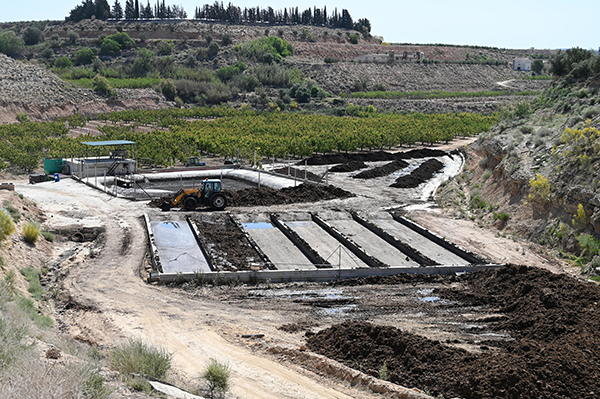
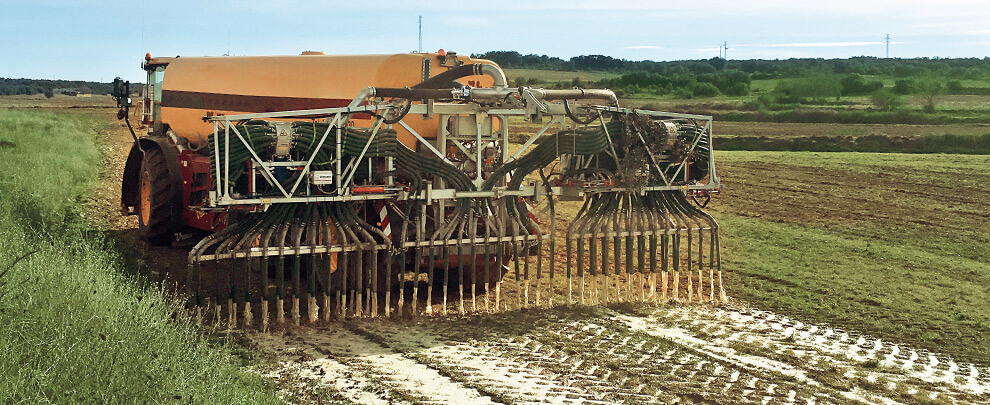
Applying manure properly in the field helps reduce emissions and make better use of soil nutrients. Photo: Rotecna.
Efficient agronomic application of slurry
The application of slurry to the field constitutes the final stage of the cycle and one of the points at which its environmental efficiency is determined. Proper management at this stage makes it possible to reduce nutrient losses and limit the generation of emissions, especially ammonia and nitrous oxide.
The way slurry is distributed directly influences the magnitude of these emissions. Localised application systems, such as trailing hose spreading or direct injection into the soil, reduce slurry contact with air and limit nitrogen volatilisation. These techniques also promote faster incorporation into the soil, which improves the efficiency of available nitrogen and reduces the risk of runoff losses.
Another key aspect is the adjustment of application rates to the actual needs of the crop. Prior analysis of the nutrient content of the slurry makes it possible to adapt application rates and avoid excessive inputs that may later be lost as emissions or through leaching. This approach helps optimise the use of nitrogen and phosphorus, reducing the environmental impact associated with their use.
Conditions at the time of application also influence the final outcome. Applying slurry during periods of moderate temperatures and low wind intensity reduces volatilisation and favours incorporation into the soil. Likewise, synchronising applications with periods of peak crop nutrient demand improves the overall efficiency of the system and reduces unnecessary losses.
The proper integration of this stage with feeding, separation, and storage strategies makes it possible to close the slurry cycle with lower nutrient losses and reduced emissions. In this way, slurry ceases to be merely a by-product of the production system and becomes a resource managed more efficiently from an environmental perspective.