Blog
Blog
Trends in weaning equipment
10th March 2026 - News
Weaning is one of the most delicate stages in pig production. In just a few days, the piglet shifts from a milk-based diet to solid feed, changes environment, and must adapt to new social hierarchies within the group. This process represents a significant physiological and management challenge, and any mistake can affect the animals’ subsequent growth.
For this reason, the equipment used in weaning wards has evolved significantly in recent years. Innovation has focused on facilitating piglet adaptation, improving feed intake, and optimizing welfare conditions. As a result, farms are incorporating increasingly specialized solutions that make it possible to face this stage more efficiently.
Adapted feeding to encourage early intake
One of the key aspects of weaning equipment is the feeding system. The goal is to ensure that piglets begin consuming solid feed as soon as possible after weaning, since early intake reduces the risk of digestive problems and promotes more uniform growth.
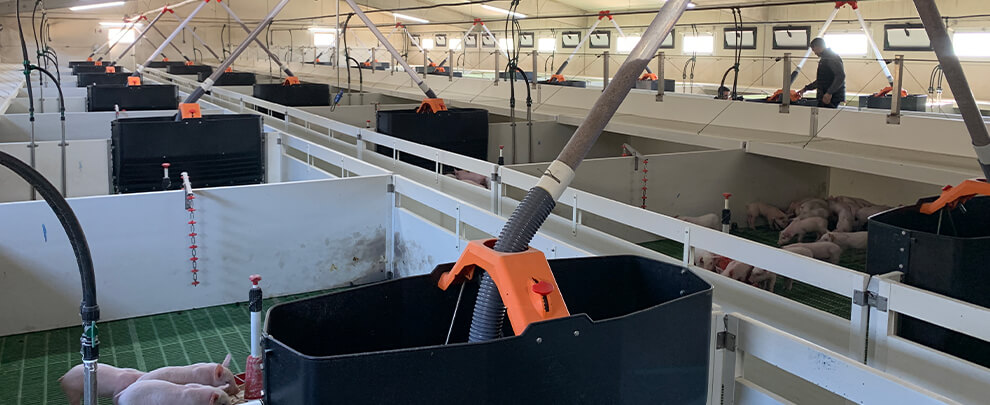
Feeders specifically designed for this stage have evolved to adapt to the behavior of younger animals. Their design facilitates access to feed from different angles and allows several piglets to eat at the same time, thereby reducing competition within the pen. In addition, current systems offer options for dry or wet feeding and allow for precise adjustment of the feed flow. This control prevents excessive feed accumulation in the tray, reducing waste and keeping the feed in better condition for consumption. At the same time, feed remains constantly available, encouraging piglets to explore the feeder and gradually become familiar with the new diet.
At a stage when animals are still learning to eat solid feed, this type of equipment plays a key role in stimulating intake and facilitating the dietary transition.
Feed waste control and improved efficiency
The evolution of pig farms toward more efficient production models has also influenced the design of weaning equipment. In many facilities, pens house increasingly large groups of piglets, which requires solutions capable of properly managing this higher animal density.
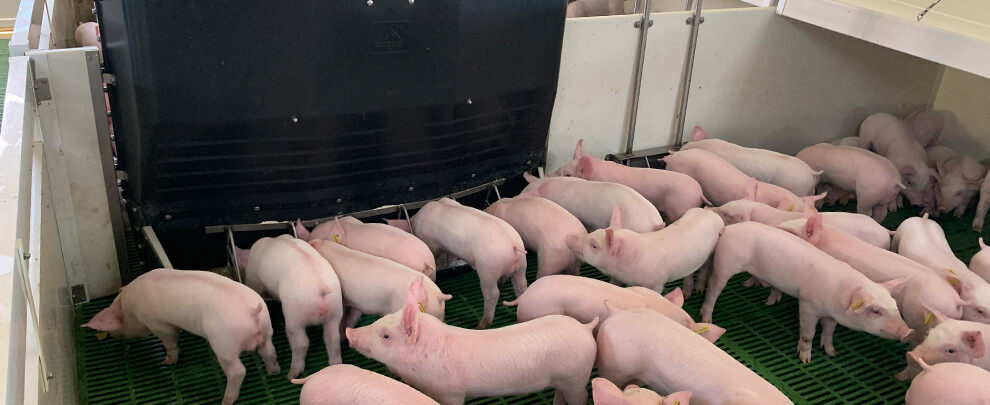
To meet this need, feeders with multiple access points and designs that allow several animals to feed simultaneously have been developed, such as the TR6D and TR7D models from Rotecna. This type of equipment helps distribute feed intake more evenly within the group, reducing competition between piglets.
At the same time, these designs help optimize the available space within the pen and improve feed efficiency. Feeders incorporate regulation systems that adjust the feed flow and prevent feed from accumulating or being wasted, helping to keep the feed in better condition and promoting more consistent intake.
The robustness of the equipment and ease of cleaning have also become key aspects in its development. The materials are designed to withstand intensive use and simplify maintenance tasks, which is essential to maintain proper hygiene and biosecurity conditions on the farm.
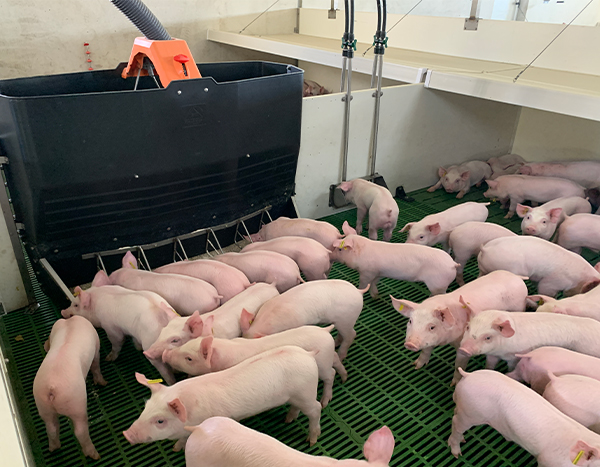
Weaning pen with the Rotecna TR7D hopper. Photo: Rotecna.
Multi-phase feeding systems and nutritional control
The piglet’s digestive adaptation does not occur immediately after weaning. During the first weeks, the digestive system continues to develop and requires diets specifically formulated for each stage of the process. In this context, multi-phase feeding systems, such as Evofeed, are gaining importance on pig farms. These solutions make it possible to introduce different types of feed progressively, supporting the animal’s digestive development while avoiding abrupt dietary changes.
Thanks to these systems, the transition between feeds is carried out gradually, which helps reduce digestive disorders and improves intake stability. This approach is particularly useful in preventing problems such as post-weaning diarrhea, one of the main health challenges during this stage.
Furthermore, feeding automation allows feed supply curves to be adjusted according to the animals’ development. In this way, nutritional management becomes more precise and better adapted to the actual needs of the batch.
Equipment designed to improve piglet welfare
Animal welfare has become a fundamental criterion in the design of pig equipment, especially at such a sensitive stage as weaning. The stress associated with changes in diet, environment, and social group can negatively affect piglet performance if room conditions are not adequate.
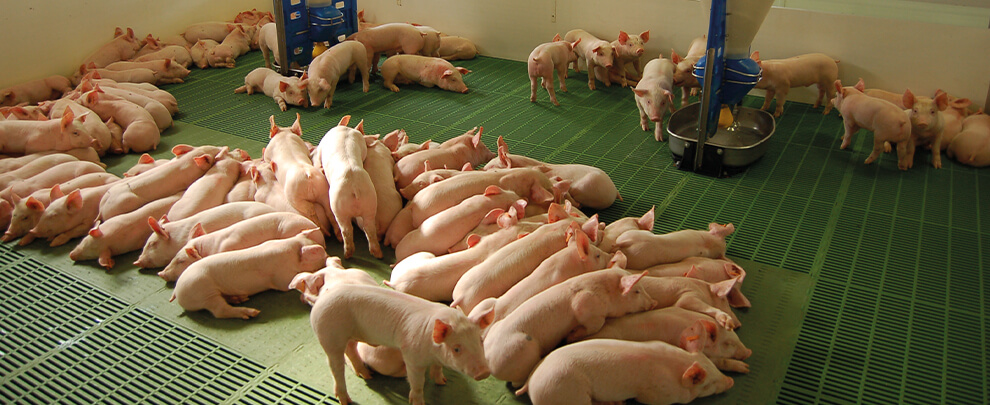
In this regard, one of the most notable developments is the incorporation of solutions that allow microclimates to be created within the pen. Nests are increasingly used to provide warmer areas where piglets can rest. These structures take advantage of the animals’ own body heat to maintain a comfortable temperature inside. In this way, thermal comfort is improved without the need to heat the entire room volume, which also helps optimize the farm’s energy consumption.
The possibility for piglets to choose between different thermal zones within the pen also encourages more natural behaviors. When animals can regulate their own comfort, stress levels decrease and overall welfare improves.
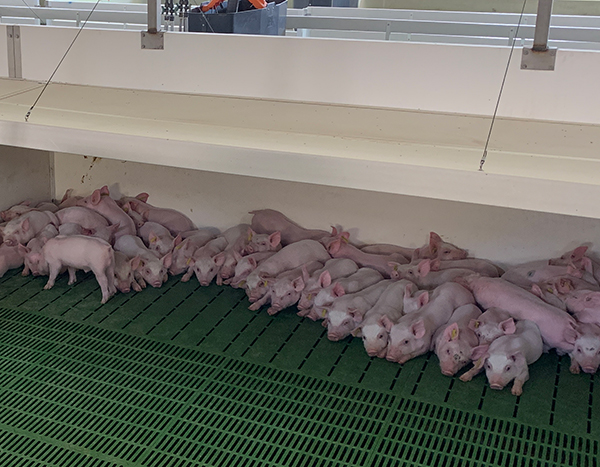
The nests provide warm areas for piglets to rest. Photo: Rotecna.
Digitalization begins to reach weaning
Digitalization is beginning to open new possibilities in the management of weaning rooms. Automated feeding systems and environmental sensors, such as Sensoritronic, allow valuable information to be collected about animal behavior and facility conditions.
These data may include feed intake, temperature, humidity, or even piglet activity. Analyzing this information helps detect potential problems early and facilitates decision-making in daily management. For example, a sudden drop in feed intake may signal a health issue or a malfunction in the feeding system. Identifying these situations quickly makes it possible to act before they affect batch performance.
Increasingly technified weaning
The evolution of equipment in weaning rooms reflects a broader transformation in pig production. Farms are increasingly looking for solutions that combine production efficiency, animal welfare, and ease of management. The objective is clear: to ensure piglets overcome weaning with as little stress as possible, maintain stable feed intake from the first days, and achieve uniform growth. When these conditions are met, the performance of later production stages improves significantly.
In this context, equipment is no longer just a simple element of the facility but becomes a strategic tool within the farm. Its evolution will continue to shape the path toward increasingly efficient, sustainable production systems adapted to the real needs of the animals.