Blog
Blog
What are the main external biosecurity measures in pig farms?
28th April 2026 - News
External biosecurity is the first sanitary barrier to prevent the entry of pathogens into pig farms. In a globalized context, where the movement of animals, people and materials is constant, prevention at the source has become a structural element of modern pig production.
The objective of external biosecurity is simple in its definition and demanding in its implementation: to minimise all possible routes of pathogen entry. People, vehicles, animals, materials and even the immediate surroundings of the farm can act as indirect transmission vectors if not properly controlled. In this framework, external biosecurity acts as the first line of defence and focuses on all points of contact with the outside environment.
Location, sanitary perimeter and access control
Farm location is one of the first decisions with a biosecurity impact. Distance from other pig farms, ideally between 3 and 5 kilometres, reduces the risk of transmission via aerosols or vectors such as birds, insects or environmental particles. Proximity to high-traffic roads also increases sanitary pressure, making early planning a decisive factor in future risk levels.
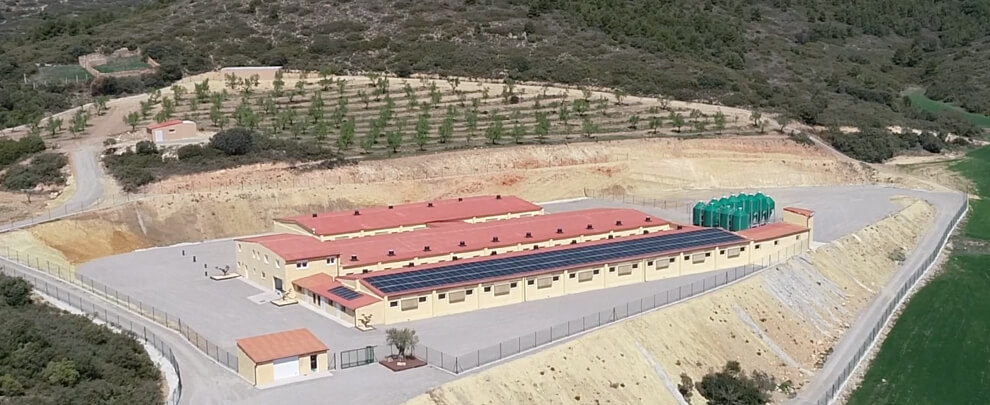
On this basis, physical access control becomes the next protective barrier. The installation of continuous perimeter fencing establishes a clear separation between the outside and production areas, limiting the entry of wild animals and reducing unauthorised traffic.
Within this perimeter, access is organised through a single entry point, which facilitates supervision of entries and exits. This point becomes a critical area where sanitary controls are concentrated, from visitor verification to vehicle and material disinfection.
Entry logs provide an additional layer of security by allowing precise identification of who enters the farm, their origin and any previous contact with other pig farms. This traceability is especially relevant in high-risk sanitary scenarios.
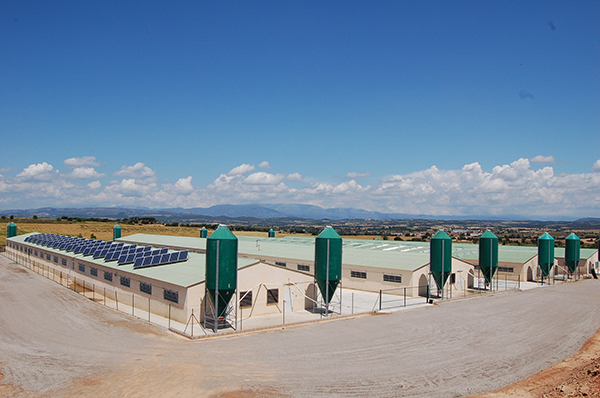
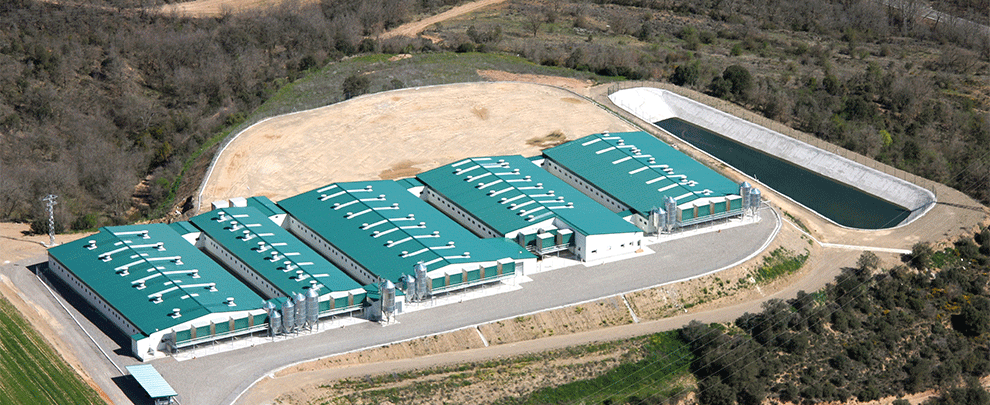
The installation of perimeter fencing limits the entry of wild animals. Photo: Rotecna.
Visit management and staff training
People represent one of the main indirect routes for disease introduction into pig farms. Movement between facilities, contact with animals or the handling of materials can facilitate the transmission of pathogens when strict control measures are not applied.
To reduce this risk, access for staff and essential visitors is organised through rigorous hygiene procedures that include showering and a complete change of clothing and footwear exclusively used within the farm. This system establishes an effective separation between the external environment and the production area, limiting the possibility that pathogens associated with human activity reach sensitive zones.
These measures are reinforced by the importance of continuous staff training, which helps ensure the correct implementation of established protocols. Understanding procedures and applying them consistently is essential to maintain the coherence of the biosecurity system in daily operations. In this context, building a preventive culture within the farm plays a central role. Staff must understand not only what to do, but also why they must do it, as risk perception and individual responsibility directly influence the overall effectiveness of any biosecurity plan.
Vehicle disinfection
Transport is one of the critical points in external biosecurity on pig farms, as animal trucks, supply vehicles or service equipment can act as mechanical vectors of pathogens if not properly managed. To reduce this risk, external parking areas are designated for visitors and initial unloading of supplies, preventing unnecessary entry of vehicles into the clean area of the farm and reducing internal sanitary pressure.
When access to the production area is essential, vehicles undergo complete disinfection systems such as arches or washing points designed to cover the entire surface, with special attention to wheels and undercarriages, even in the presence of organic matter.
In addition to these operational measures, logistical planning plays an important role in reducing sanitary risk by avoiding routes that involve visits to multiple farms within short time periods.
Sanitary control of replacement animals
The introduction of replacement animals represents one of the highest-risk routes in external biosecurity, making its control essential to minimise the likelihood of disease introduction. In this regard, selecting suppliers with known sanitary status is a key requirement. In many cases, the number of supplier farms is limited, prioritising those with a sanitary level equal to or higher than that of the receiving farm, which reduces system complexity and improves control.
Before entering the production herd, all animals must undergo strict quarantine in isolated facilities. During this period, clinical and serological tests are carried out to detect potential subclinical infections before integration.
In genetics, the use of semen from insemination centres with high sanitary guarantees adds an additional layer of security, reducing risks associated with the introduction of biological material.
Management of supplies and materials
Materials entering the farm, such as feed, tools or equipment, also represent potential pathogen entry routes and require specific control within external biosecurity.
In this context, feed and water can act as indirect vehicles of infectious agents if not properly managed. In this context, feed and water can act as indirect vehicles for infectious agents if not properly managed. Therefore, it is essential to work with trusted suppliers and ensure the protection of silos and tanks through closed systems that prevent any type of external contamination.
This is complemented by organised storage in designated areas and controlled handling before materials enter production zones, significantly reducing sanitary risks associated with these essential inputs.
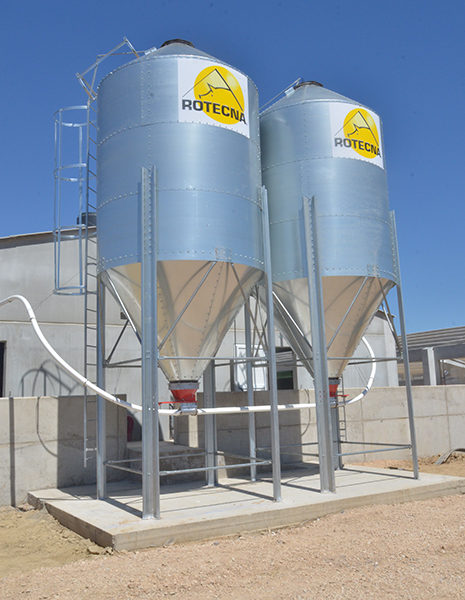
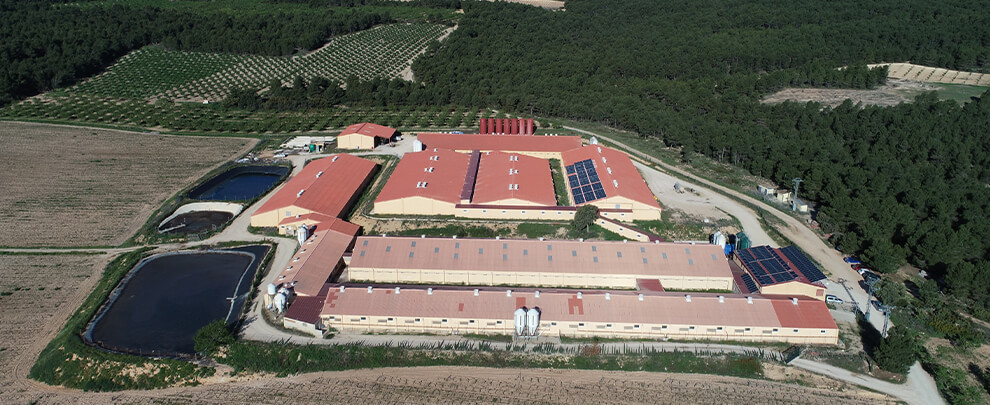
The protection of silos must be ensured with systems that prevent any type of external contamination. Photo: Rotecna.
Wildlife, pests and sanitary risk
Wildlife, especially wild boar, plays an important role in the epidemiology of diseases such as ASF, reinforcing the importance of perimeter control in pig farms. Proper fence maintenance is essential to prevent contact with wild animals. Farm location and environmental management also influence risk, as organic waste or feed residues can attract unwanted wildlife.
Rodent, insect and bird control forms part of the overall external biosecurity strategy, as these species may act as mechanical or biological vectors of pathogen transmission.
Waste and carcass management
Carcass removal and organic waste management are critical points in external biosecurity, as improper handling can become a route for pathogen spread. For this reason, these operations are carried out from perimeter points of the farm, preventing vehicles from entering production areas and reducing the risk of cross-contamination within the system.
Similarly, the use of containers or collection systems accessible from outside the farm keeps these flows out of the internal circuit, reinforcing sanitary separation and minimising exposure of the production area.
External biosecurity as the foundation of pig production
Experience in the pig sector has established external biosecurity as a structural pillar of production. Farms that apply consistent protocols show greater sanitary stability and improved resilience to emerging risks.
In a context marked by globalised trade, constant animal movement and the persistence of diseases in different regions, external biosecurity has become a strategic tool to protect health, productivity and the competitiveness of the pig sector.