Blog
Blog

Biosecurity, a tool to reduce the use of antibiotics
10th January 2019 - News
Antimicrobials are an essential tool for achieving efficient, sustainable and economically profitable production, but their use should be restricted to what is strictly necessary. Lorenzo Fraile, DVM and Associate Professor at the University of Lleida, discusses with us the importance of reducing prophylactic antimicrobial use in the current context of the pig sector.
What is biosecurity?
Biosecurity is a set of measures implemented to reduce the risk of the introduction and spread of disease within a farm and/or a region. According to Lorenzo Fraile, there are unfortunately many swine pathogens. If we analyse the 24 pathogens for which reliable, evidence-based information is available on the role of biosecurity in their control, we can see that, for the vast majority of them, biosecurity can be an important control tool. In one of his presentations, drawing on scientific research, Dr Fraile listed the diseases that can be controlled by strengthening either external or internal biosecurity.
What are antimicrobials?
Antimicrobials are medicines used to control disease. "Claiming that antimicrobials have been misused in livestock production until now is an incorrect generalisation. Their use could certainly be improved compared with the past, and they should be included within what we call preventive medicine programmes, which are disease control programmes. In many cases, antibiotics were used prophylactically, and this is the area that needs to change within the sector. In fact, it already is changing, as prophylactic use has been significantly reduced. Treating sick animals is an intrinsic part of our profession. You can discuss the best way to do it, but not whether it should be done or not," explains the veterinarian.
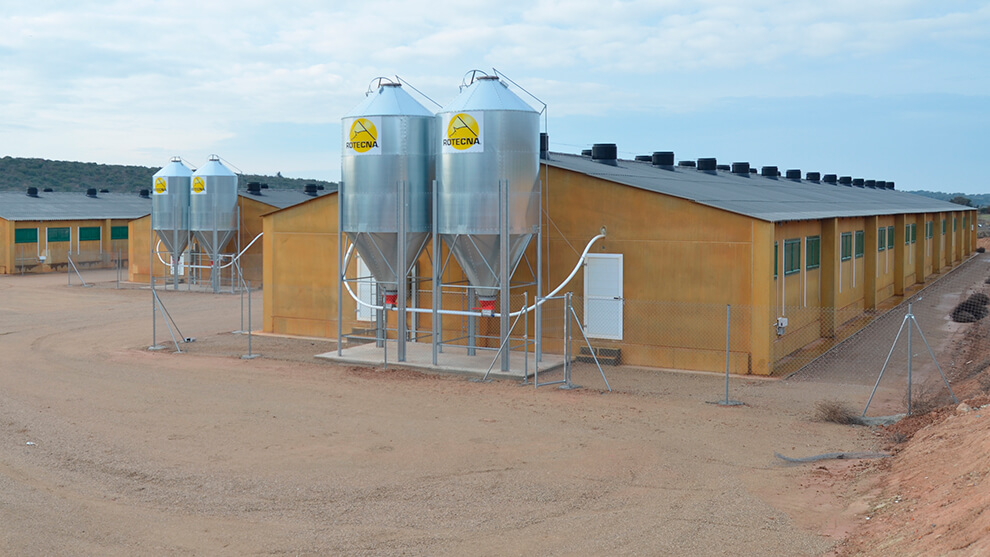
Perimeter fencing is a basic biosecurity measure. Photo: Rotecna.
How can we reduce antimicrobial use?
The principles of antimicrobial therapy are based on a therapeutic triangle involving the bacterium responsible for the infection, the diseased animal and the drug used to treat the infection. According to Dr Fraile, “Nowadays, we are learning how to reduce antimicrobial use during the nursery phase. In the finishing phase, we have traditionally used medication during the animals' first month of life, which is a high-risk period, but there are already companies whose antimicrobial use is virtually zero.”
Lorenzo Fraile explains that reducing antibiotic use requires improvements in many other areas. One of the most important is biosecurity. “In the past, people did not give it enough importance. Now they do,” says the professor. The most important aspects range from external biosecurity, which reduces the risk of introducing disease into a farm, to internal biosecurity, which reduces the risk of disease spread within the farm. “If a bacterial disease never enters the farm, there is no need to treat it; it is simply common sense. The message is very straightforward: external biosecurity can prevent the introduction of virtually all major swine diseases, while internal biosecurity can reduce the incidence of the vast majority of them,” Fraile continues.
During the fifth pig farming conference organised by JARC, Lorenzo Fraile made special reference to African swine fever. “Before the authorities have to ask farmers to comply with biosecurity measures, we should be the ones taking the initiative ourselves.” According to the professor, most pig producers are still not fully aware of the importance of these measures. “They see them as an expense rather than an investment. But it is our own responsibility; it is not something that should have to be imposed on us,” he stated.
Other tools for reducing antimicrobial use include vaccines. In addition, over the last six years, alternatives such as organic acids, essential oils and probiotics, among others, have emerged. These are different types of substances that can have beneficial effects on disease control. “The problem is that, unlike vaccines and antibiotics, they are not required to undergo such stringent approval procedures. This means that the level of assurance for the end user is lower.”
Risk management
“Any disease can affect your farm, but not all diseases have the same impact; it depends on the specific pathology. Even so, external biosecurity is absolutely essential. One critical measure is having an effective perimeter fence to keep wild animals out, because they are a ticking time bomb,” the expert recommended, before outlining other key biosecurity measures. In particular, he stressed that establishing a biosecurity perimeter for vehicles and transport personnel entering the farm would reduce the risk of pathogen introduction. He also made several recommendations regarding the precautions that anyone entering the farm should follow, including hygiene measures such as showering and the mandatory use of dedicated boots and clothing. “If you require these measures from a veterinarian, you should require them from a maintenance worker as well, an electrician or a plumber, for example. What is the difference?” Fraile insisted, referring to the limited importance that many farmers still attach to the movement of people and equipment within their facilities. He also emphasised the importance of pest control measures (rodents, insects and wild animals), proper manure and carcass management, the installation of effective footbaths and wheel baths, and the need to monitor semen sources.

Controlling access to the farm is essential. Photo: Rotecna.
Highlighting the importance of biosecurity
“You need to do the numbers. You need to know how much a disease outbreak would cost your farm and how much it costs to maintain good biosecurity,” Fraile stressed. In this regard, he argued that the current level of biosecurity in Spain still has considerable room for improvement and that further efforts are needed in this area. “Within the same region, you can find farms with a biosecurity score of 90 out of 100 alongside others scoring only 40 out of 100. Once a disease enters the farm with the lower level of biosecurity, it will spread to neighbouring farms because they are all part of the same production network. We need to raise the overall standard.”
One of the measures to be considered is the thorough monitoring of antimicrobial consumption. Antimicrobial use is currently reported periodically across Europe through the ESVAC reports, which also provide detailed data on the total consumption of these medicines in each country. According to Lorenzo Fraile, this system is particularly useful for comparing antimicrobial use at both national and international levels.
The reports use the Population Correction Unit (PCU), which is calculated by multiplying the number of live and slaughtered animals by their theoretical weight at the expected time of treatment. “In Spain, antimicrobial consumption is approximately 360 mg/PCU. We are making progress, but we are still far behind countries such as Denmark, where consumption is below 100 mg/PCU,” explained the veterinarian.
The consequences of disease on a farm can be both economic and productive. “The impact depends on the specific disease involved. The problem is that eradicating a disease is not easy. Just like humans, animals can live with diseases, and the challenge is that we do not yet have effective tools to control all of them. The best strategy is to remain healthy,” Fraile explained. He also stressed that the use of antimicrobials does not affect the quality of the final product, meat. “Consumers are often confused because all meat available on the market is free of antibiotic residues. Diseases are a profitability issue, not a food safety issue,” he clarified.
In conclusion, Fraile emphasised that antimicrobials remain an essential tool for achieving efficient, sustainable and economically viable livestock production, but their use should be limited to what is strictly necessary. He also highlighted biosecurity as a critical pillar for optimising antimicrobial use in animal production.