Blog
Blog
Body condition management in gestating sows
23rd April 2026 - News
During gestation, maintaining an adequate balance of energy reserves supports fetal development and prepares the female to face lactation under favourable conditions. Sows that achieve a balanced body condition typically show better birth weights, higher piglet viability and a more efficient response during lactation. These results reflect consistent management that begins in the previous lactation and is consolidated throughout gestation.
Monitoring body condition helps prevent overfeeding or energy deficits, which can eventually lead to metabolic disorders and reduced reproductive efficiency. When most females are maintained within appropriate energy reserve ranges, productive longevity increases and perinatal mortality decreases, factors that directly impact the farm's technical and economic stability.
Body condition as a continuous process
Body condition in gestating sows should be understood as a dynamic process that develops throughout the entire reproductive cycle, from the previous lactation to the next farrowing. During lactation, a significant mobilisation of body reserves occurs due to the high energy demand associated with milk production, making the subsequent gestation a key phase for restoring metabolic balance.
In modern genotypes, selected for higher prolificacy and lower propensity for fat deposition, the management of body reserves becomes even more critical. In this context, body fat should not be seen solely as an indicator of sow condition, but as a functional reserve essential to sustain the high metabolic demands of the reproductive cycle. When this balance is disrupted, productive response becomes more sensitive, particularly during the transition periods between lactation and gestation.
Backfat thickness is currently the most reliable indicator of the sow’s energy status. Under typical production conditions, it should be maintained between 17 and 20 millimetres, a range that supports productivity without compromising mobility or feed intake capacity, and serves as an objective reference for guiding nutritional management throughout gestation.
The recovery of body reserves during gestation should be approached in a progressive and planned manner. Late or overly aggressive corrections tend to generate inconsistent responses and increase the risk of excessive fat deposition before farrowing, negatively affecting the subsequent reproductive cycle.
Body condition monitoring on farm
Systematic monitoring of body condition allows deviations to be detected before they develop into productive problems. Under commercial conditions, body condition scoring remains a widely used tool based on visual observation and palpation of anatomical points. This method makes it possible to identify animals at risk and guide initial management decisions.
However, in recent years, digitalisation has opened new possibilities to automate this process. Systems based on artificial vision allow continuous evaluation of the body condition of each sow and enable feeding adjustments according to actual requirements. An example of this technological evolution is the BodyCheck system developed by Rotecna, which uses cameras installed in feeding stations to capture images of each sow and analyse body condition through artificial intelligence algorithms.
These solutions allow each female to be automatically identified through her electronic ear tag and enable real-time body condition evaluation. Based on this information, the system adjusts feeding curves individually and enables continuous monitoring of body condition evolution within different gestation groups. Automation reduces variability associated with subjective assessment and facilitates more precise management of body reserves.
The combined use of body condition scoring, backfat measurement and digital tools provides a more complete view of the physiological status of females and reduces the risk of inappropriate nutritional adjustments.
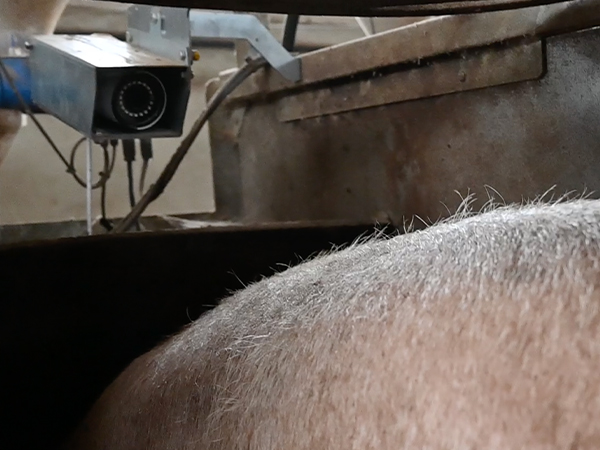
Bodycheck allows for the analysis of sows' body condition using artificial intelligence algorithms. Photo: Rotecna.
Key moments for body condition evaluation
The timing of evaluation directly influences the effectiveness of management decisions. In gilts, measuring backfat thickness before first insemination allows confirmation that the recommended level defined by genetics has been achieved. Values outside the optimal range are commonly associated with fertility problems and reduced future productive life.
In multiparous sows, evaluation at farrowing allows assessment of the level of reserves available at the start of lactation, which determines the ability to sustain milk production without excessive mobilisation of body tissue. During this phase, backfat loss should remain within moderate limits to prevent delays in subsequent recovery.
During the first 35 to 40 days, the priority is to recover live weight and body reserves lost during the previous lactation. This period establishes the basis of the feeding curve that will be maintained throughout much of gestation.
Adjusting feeding
Feeding represents the primary mechanism for regulating body condition in gestating sows. Its adjustment should respond both to physiological stage and to the individual characteristics of each female.
During the first third of gestation, the greatest recovery of body reserves occurs. When this recovery is properly achieved in the early weeks, the risk of later deviations is reduced and metabolic stability throughout the rest of the cycle is facilitated.
From a physiological perspective, body condition recovery should be consolidated before day 85 of gestation. After this point, the increase in nutritional requirements is mainly associated with fetal growth and mammary tissue development.
The formulation of diets balanced in energy and amino acids supports reserve replenishment without inducing excessive fat deposition. The inclusion of adequate fibre levels contributes to stabilising intake and supports feeding behaviour, particularly in group housing systems. In this context, precision in feed distribution plays a key role. The integration of electronic feeding systems such as Dositronic G by Rotecna allows the daily ration to be adjusted individually according to body condition and the evolution of each sow within the group. These solutions make it easier to apply more accurate feeding curves, reduce variability between animals and improve the efficiency of body reserve recovery during gestation.
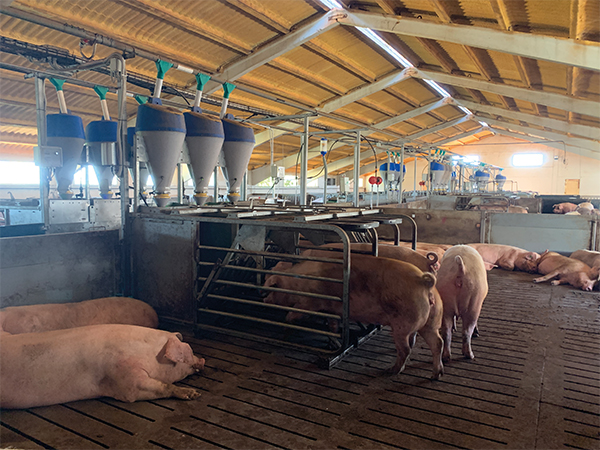
Maternity ward with Dositronic G. Photo: Rotecna.
Individualising sow management
Variability among animals within the same farm requires differentiated management strategies. Uniform treatment of all females limits the capacity for body reserve recovery and increases the likelihood of energy imbalances. Factors such as parity number, size of the previous litter and feed intake capacity determine individual nutritional requirements. Young sows continue body growth during early gestations, while adult females depend primarily on maintenance and replenishment of fat reserves.
Individualised feeding, even within group systems, improves management precision and allows a greater proportion of females to remain within the optimal body condition range.
Management and environment in body reserve recovery
The production environment directly influences the ability of sows to recover body reserves. Actual feed intake depends not only on feed composition but also on management and housing-related factors.
Social competition among animals may limit access to feed, particularly in group gestation systems where social hierarchies influence feeding behaviour. This phenomenon more frequently affects young or subordinate animals.
Thermal comfort also plays a decisive role. Heat stress situations reduce voluntary intake and hinder body condition recovery. Maintaining adequate environmental conditions supports efficient nutrient utilisation and contributes to maintaining energy balance throughout gestation.
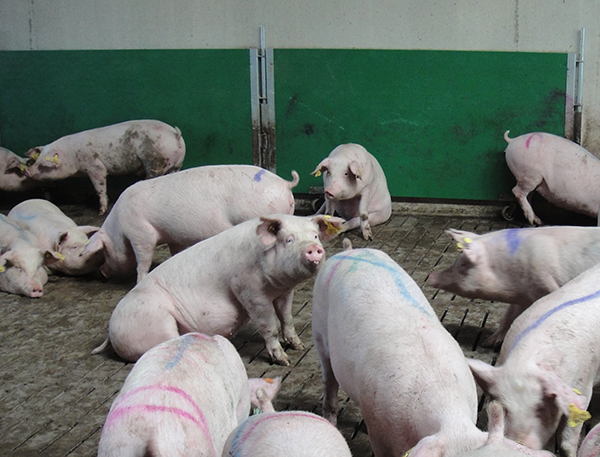
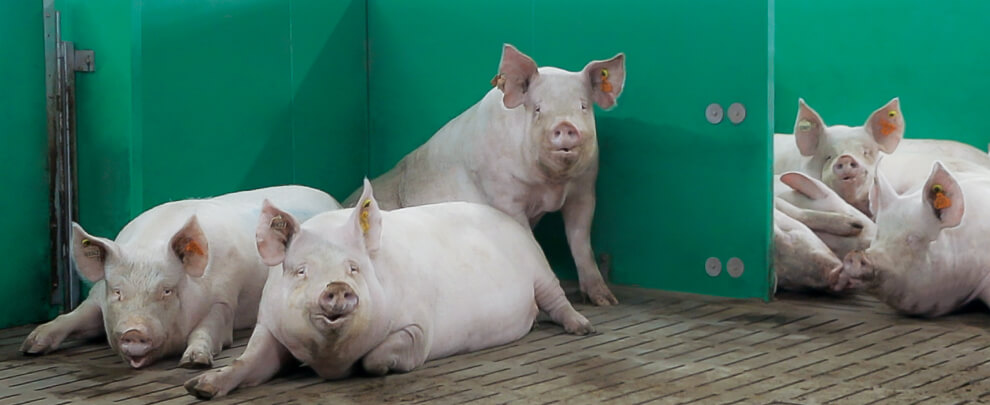
Proper management of the body condition of pregnant sows improves farm productivity. Photo: Rotecna.
Preparing the sow for farrowing and lactation
Managing body condition during gestation aims to prepare the sow to face lactation with sufficient reserves and high intake capacity. Sows that reach farrowing with balanced body condition typically show higher feed intake after litter birth and maintain more stable milk production. This behaviour reduces excessive mobilisation of reserves and facilitates subsequent reproductive recovery. Body condition achieved at the end of gestation directly determines performance during lactation and preparation for the next reproductive cycle.
Productive and economic impact
Efficient management of body condition in gestating sows directly influences overall farm productivity. Maintaining a high percentage of females within the optimal reserve range supports reproductive stability and improves uniformity of production results.
In addition, productive longevity increases when excessive reserve losses are reduced and progressive recovery during gestation is achieved. This approach reduces the need for premature replacements and improves utilisation of feed resources.
From both technical and economic perspectives, systematic body condition control reduces hidden losses associated with reproductive failures, variability in litter performance and shortened sow lifespan. The final outcome is more predictable and sustainable production over time.