Blog
Blog
Debunking the myths of the pig industry
09th June 2026 - News
If one is guided by certain conversations on social media or by decontextualized images, one might think that the pig sector remains anchored in outdated production models. However, the reality of modern farms is very different. Over the past decades, pig production has undergone a profound transformation driven by technology, professionalization, and increasingly demanding requirements in terms of animal welfare, sustainability, and food safety.
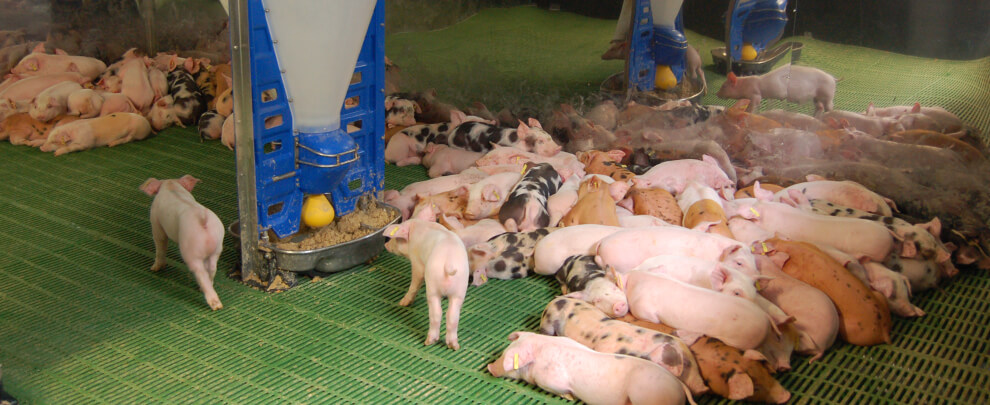
Currently, pig production has evolved toward a highly technified model, where management no longer depends solely on direct observation but on real-time data. Many farms operate with automated environmental control systems, sensors that monitor different parameters in real time, precision feeding programs, and digital tools that facilitate decision-making. This evolution has made it possible to improve productive efficiency and raise animal welfare standards, although much of these advances remain little known outside the sector. As a result, the gap between perception and reality continues to fuel misconceptions about how pig production works today.
Animal welfare and productivity
One of the most widespread myths holds that animal welfare and productivity pursue different objectives. From a technical standpoint, the opposite is true. Welfare is one of the factors that most influence animal performance and is part of the productive strategy of any modern farm.
Aspects such as housing quality, ventilation, temperature control, access to water, stress reduction, or feeding adapted to each production stage have a direct impact on animal health and behavior. When these conditions are adequate, pigs show more uniform growth, better production indexes, and a lower incidence of health problems.
For this reason, animal welfare has become central to the design of facilities and to daily farm management. Investment in pig equipment, technology, and management systems helps improve animal conditions and promotes more efficient, stable, and long-term sustainable production.
Environmental impact of pig farms
Environmental impact is another topic that often generates oversimplified perceptions of the sector. However, today’s reality is marked by continuous improvements in resource efficiency and the incorporation of solutions aimed at reducing the impact of production activity.
Advances in nutrition allow increasingly precise feeding strategies to be formulated, reducing nutrient waste and improving their utilization by animals. At the same time, pig slurry management has evolved significantly thanks to technologies that facilitate its agronomic valorization and more efficient use within agricultural systems.
Automation also plays an important role in this area. Control systems allow optimization of water, energy, and feed consumption, minimizing losses and improving overall farm performance. Every improvement applied to genetics, nutrition, or management contributes to reducing the resources needed to produce the same amount of meat, reinforcing the sustainability of the production system.
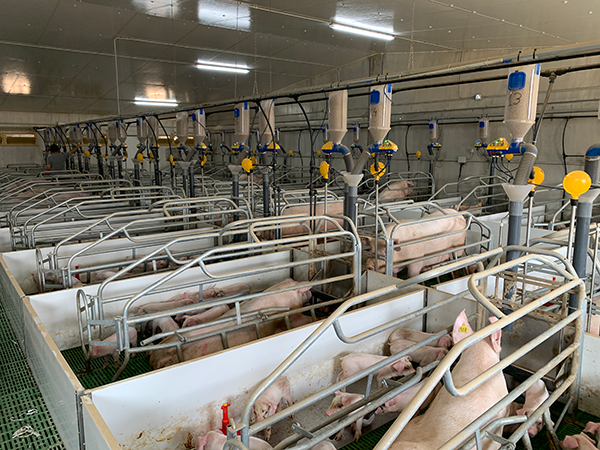
The technology has contributed to the evolution of pig farms. Photo: Rotecna.
Modern farms and regulation
Another common myth is the idea that pig farms operate with little supervision or limited levels of control. In reality, this is one of the most strictly regulated agro-food activities.
Regulations establish requirements related to animal welfare, biosecurity, animal health, traceability, environmental management, and food safety. These controls apply throughout the entire production chain and require standardized procedures, documented records, and specific operating protocols for each stage of production.
This regulatory framework has driven increasing professionalization in the sector. Technical training, investment in facilities, and the incorporation of new technologies are part of the normal functioning of many farms. Far from operating on improvised models, modern facilities work through planned and monitored systems that allow continuous control of multiple variables.
Technology and sustainability
Much of the evolution experienced by the pig sector in recent years has been linked to the incorporation of technology. Digitalization allows real-time information to be collected, key parameters to be monitored, and response capacity to be improved in the event of any incident.
Thanks to sensors, automated systems, and data analysis tools, producers can optimize aspects related to feed, environment, resource consumption, and animal health. This information enables more precise management and helps identify improvement opportunities that would be difficult to detect through traditional observation.
Technology also plays a fundamental role in sustainability. More efficient production implies better use of available resources and a reduction in losses associated with production processes. For this reason, innovation, profitability, and sustainability are increasingly advancing hand in hand within the pig sector.
Social perception and reality of the pig sector
Many of the false myths surrounding pig production originate from lack of knowledge and from a growing distance between urban society and rural reality. Most people have never visited a modern farm and build their perception based on images, messages, or references that often do not reflect the current situation of the sector.
The reality is that today’s pig farms operate in an environment characterized by technology, technical specialization, process control, and continuous improvement. Understanding this evolution is essential to analyze the sector with a more complete perspective aligned with the challenges and advances that define current pig production.