Blog
Blog
J. Esquerda: “ECOGAN makes it possible to transform farm data into useful information”
20th October 2026 - News
ECOGAN's implementation represents an important step in the environmental management of livestock production in Spain. Although it has not yet been a year since its launch in Catalonia, the tool already allows you to communicate the Best Available Techniques (BAT) and calculate emissions. We spoke with Juanjo Esquerda, a technician from the General Directorate of Agriculture and Livestock of the Generalitat of Catalonia, who takes stock of these first months of implementation and analyses the challenges and opportunities that ECOGAN poses for the sector.
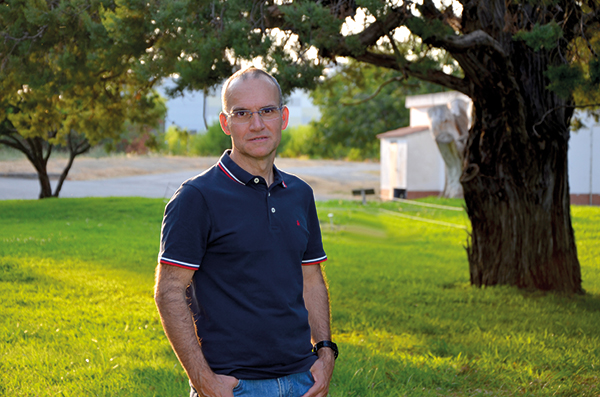
Juanjo Esquerda, Agricultural Technician of the Generalitat of Catalonia. Photo: J.E.
Catalonia joined ECOGAN approximately a year ago. What is your assessment of this first implementation period? Have initial expectations been met?
Overall, this first period has been clearly positive. Catalonia did not join ECOGAN until December 2025, and the first declarations were submitted in February 2026, so the adaptation time for farms, technicians, and the administration itself has been very short. Within the framework of the campaign implementation process, it was considered appropriate to extend the declaration period exceptionally until April 30, making it easier for the maximum number of applications to be processed with the maximum guarantees, which allowed nearly 40% of the Catalan farms required to declare to have already notified their information through ECOGAN by the end of that month. This is equivalent to more than 2,700 farms registered in a short period. So far, we have met initial expectations, and the results are satisfactory.
For producers who still see it as just another administrative procedure, what exactly is ECOGAN, and what are its objectives?
To understand ECOGAN, we must first understand what Best Available Techniques (BAT) are and what they are for. BAT are the most effective and advanced techniques for preventing or reducing an activity's environmental impact. Applying these techniques allows animal production with minimal environmental impact. ECOGAN is a tool developed to support the livestock sector and the competent authorities in the environmental management of farms. Its objective is to facilitate notification to the General Register of Best Available Techniques (BAT) of the techniques applied on each farm, as well as to calculate and monitor their emissions. It also allows estimating the amount of excreta generated and evaluating the emission reductions achieved through the application of BAT, contributing to more efficient and sustainable management of livestock farms.
What has been the sector's response during this first year? What doubts or difficulties have producers most frequently raised?
The sector's response has been positive, despite the limited time available to adapt to the new tool and the short period established for reporting BATs in ECOGAN. However, implementing the new system has not been without difficulties. During the first few weeks, the main inquiries concerned problems accessing ECOGAN. On the one hand, legal entities' access depended on prior registration by the administration. Catalonia is one of the autonomous communities with the largest number of livestock facilities and, consequently, with a high workload to process these registrations in a very short period of time. To speed up the process, DARPA provided MAPA with the necessary information, and ECOGAN carried out a bulk upload, which accelerated implementation. On the other hand, some individuals, although they could register independently with ECOGAN, lacked the technical means or knowledge to do so. To address these difficulties, the Generalitat enabled 85 officials, distributed throughout the territory, to meet the sector's needs. As a result, we completed the companies' pending cases in a very short period and provided in-person assistance to people who lacked the necessary resources or knowledge. We also created a dedicated email through which we handled approximately 700 inquiries in just two months. In the following weeks, questions shifted to ECOGAN's operation and notification submission.
ECOGAN integrates the communication of best available techniques (BAT), emissions calculation, and livestock manure management into a single platform. What advantages does this integration bring to both farms and management?
The main advantage of this integration is administrative simplification, an objective aligned with European Union policies to reduce bureaucratic burdens in the agricultural sector and a long-standing demand of livestock farmers. For farms, a single tool avoids duplicated procedures, reduces time spent on administrative tasks, and facilitates compliance with regulatory obligations. For administration, integration provides homogeneous, up-to-date information, improving monitoring, control, and planning.
Beyond regulatory compliance, how can ECOGAN help producers make better decisions within the farm?
BAT are neither prescriptive nor exhaustive. This means different techniques can achieve similar emissions reductions, but with different implementation and management costs. In this context, the ECOGAN simulator is a useful tool, as it allows evaluation of different application scenarios and verification of their potential impact on emissions reduction. Similarly, regular reports on results from each farm based on the techniques applied provide farmers with valuable information for decision-making. This data allows us to assess the adoption of new BATs to achieve established objectives or improve results, as well as to replace certain techniques with more efficient ones or ones with lower implementation and operating costs.
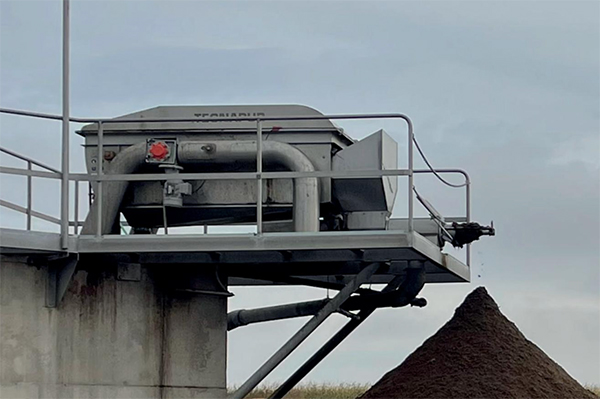
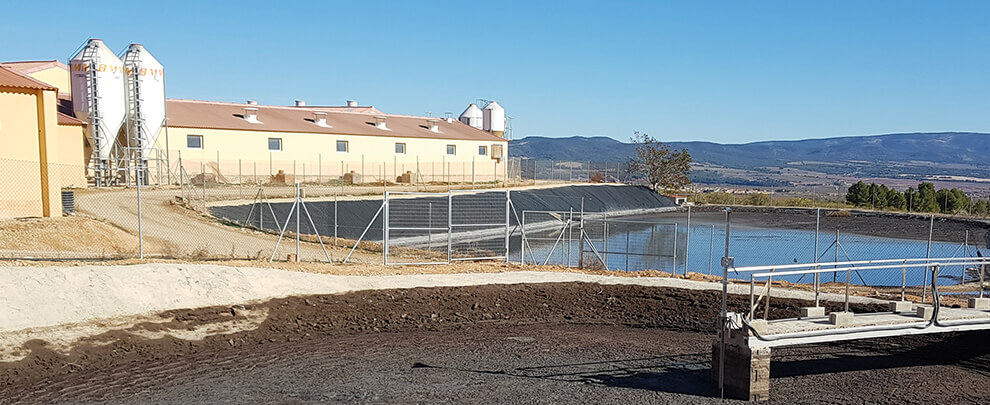
ECOGAN allows measuring the impact of BAT. Photo: Rotecna.
Digitalisation is increasingly transforming pig production. What role will ECOGAN play within this digitisation process?
ECOGAN transforms farm-generated data into useful information for management, environmental improvement, and decision-making. Beyond recording and calculating emissions, it helps ensure decisions on feeding, management, or BAT application are based on objective, quantifiable indicators. This platform supports more integrated farm management by enabling results monitoring, evaluation of new emissions-reduction strategies, and comparisons between production scenarios. This way, farmers can learn not only which techniques they apply, but also their real effectiveness and how they contribute to meeting environmental objectives. ECOGAN helps make sustainability part of daily farm management, turning environmental information into a tool for planning and continuous improvement.
Reducing emissions is one of the sector's major challenges. How can ECOGAN help farms better understand their environmental impact and take steps to reduce it?
ECOGAN and its simulator provide information that lets farms evaluate different scenarios before implementing new techniques, making it easier to quantify emissions reductions from the techniques applied on the farm. This information provides a basis for analysing the costs of implementing and using these techniques, as well as for establishing the relationship between a BAT's cost and the environmental benefit it generates. This supports decision-making based on objective data and technical knowledge, resulting in significant savings in time and, in certain cases, economic resources. Therefore, to get the most out of ECOGAN, the data entered must reflect the farm's actual production conditions as faithfully as possible. This responsibility falls on the farm owner and the person they designate to enter the data.
The information ECOGAN collects can offer valuable insight into the sector. How useful will this data be in guiding public policies and addressing the environmental challenges of the coming years?
The information ECOGAN collects makes it possible, for the first time, to have large-scale data on emissions associated with different livestock production systems and on the real effectiveness of mitigation techniques applied on farms. This allows administrations to design public policies that better reflect the sector's reality, based on evidence rather than solely on theoretical estimates. Furthermore, this data will help us identify which measures offer the best cost-to-emissions-reduction ratio, directing efforts toward actions with the greatest environmental impact. They will also help assess compliance with national and European targets for air quality and emissions reduction, and anticipate future environmental challenges. In the coming years, access to this information will be key to moving towards more efficient and sustainable livestock farming, supporting decision-making by both producers and administrations, and promoting knowledge- and innovation-based sustainable livestock farming.
Finally, one year after its implementation in Catalonia, what message would you convey to producers who still see ECOGAN as an obligation rather than an opportunity to improve farm management?
The main message would be that ECOGAN should be understood as a tool to support farm management and decision-making, not just an administrative obligation. Objective information on farm emissions helps us better understand the impact of management practices and evaluate improvements in areas such as feeding, waste management, and resource efficiency. Furthermore, the regulatory and market context is moving towards greater demands for environmental sustainability. In this sense, tools that measure and certify farm results help highlight the effort the livestock sector is already making. It is also important to continue working to make ECOGAN increasingly useful, simple and integrated with other information systems, minimising administrative burdens and maximising the value of the information available to farmers. The goal is for ECOGAN not to be perceived solely as an obligation to report BATs, but as a tool that helps farms better understand their environmental reality, identify opportunities for improvement and strengthen their long-term sustainability and competitiveness.