Blog
Blog
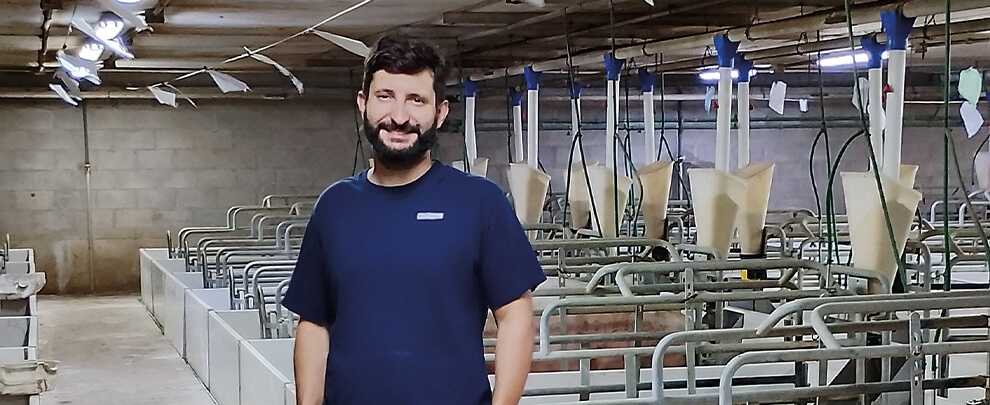
J. Matteucci: “The plates allow piglets to be offered a more uniform comfort zone”
17th March 2026 - Success stories
In the midst of its expansion, the BLD Agro farm, located in the province of Córdoba (Argentina), is moving towards an increasingly efficient production model aligned with animal welfare. With a capacity of 5,800 to 8,500 sows, the farm has opted for technological solutions that optimise management and energy consumption, such as Rotecna's hydraulic heated plates in farrowing wards. In this interview, its technical manager, Juan Matteucci, reviews the evolution of the project, explains the technical criteria behind this choice and details the daily management of the system, as well as its impact on piglet comfort and production costs.
Why did you decide to dedicate yourself professionally to pork production?
My father was a veterinarian and worked in a rural area. Always being by his side, both my brother and I ended up studying Veterinary Medicine. I first worked for a company in a neighbouring town, when many producers were switching to intensive production systems. From there, I began working on larger farms with more developed infrastructure. In that process, I completed a postgraduate specialisation, which I am now finishing, and I have evolved professionally. I started in counselling, then in health, and then in starting farms and genetic changes. Today, I am in the technical part of an expansion project and am moving towards a role more closely aligned with infrastructure.
How and when was this farm started?
The farm belongs to the BLD business group and is located in Noetinger, Córdoba. It was launched between 2018 and 2019, and began producing and selling animals in 2020. It is currently in an expansion process that will increase it from 5,800 to 8,500 sows, following a technical analysis of the original project to adapt it to the company's growth needs. The production system is an integration model. The farm produces piglets until approximately day 70, weighing about 28–30 kg. Then it is sold to a partner, working under a partnership scheme in which expenses and results are distributed.
How is it distributed?
The farm is distributed in 14 farrowing wards, with 88 places per room. The reproduction system includes a cover–release phase in groups, at 16 weeks of gestation, and has cages for temporary use, designed for an approximate stay of 24 hours, only during the cover and release of the animals.
How many people work in these facilities?
The project staff consists of an average of 120 to 145 people; this includes the administration, the workers of the food, collection, and infrastructure plant, and, finally, the UPL, post-weaning, and fattening warehouse operators managed by the company.
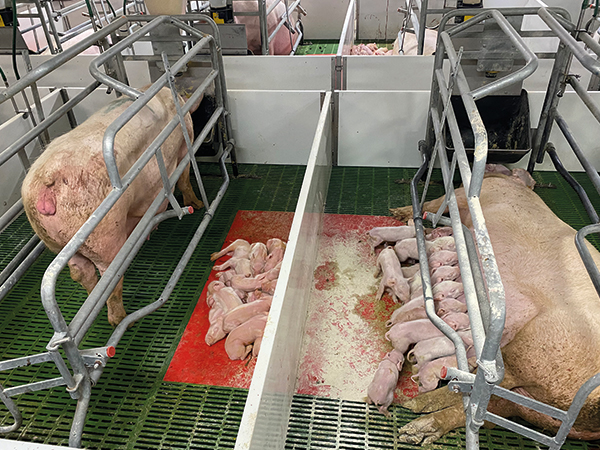
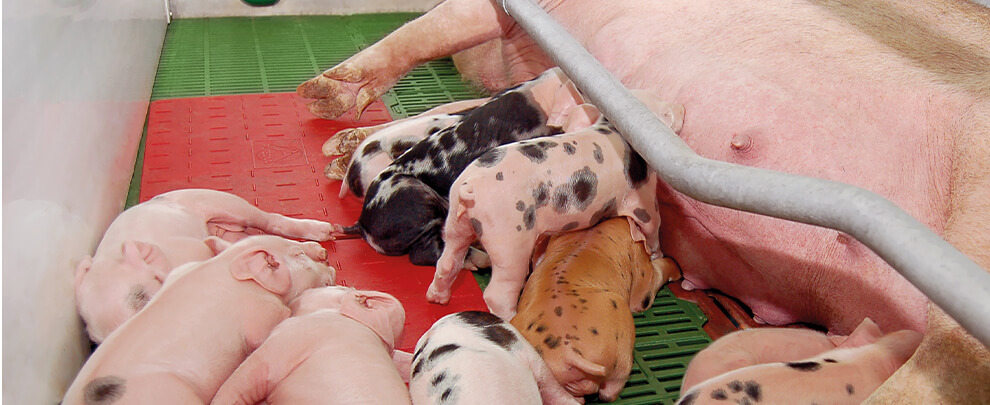
Farrowing area with Rotecna hydraulic heated plates. Photo: BLD.
Rotecna hydraulic heated plates are installed during farrowing. What factors were decisive when choosing this system?
One of the key factors in choosing this system was the possibility of connecting the farm to the natural gas network, since the location was selected precisely for its proximity to it. Currently, the entire farm runs on natural gas, which fits perfectly with a heating system using hydraulic heated plates, both for efficiency and cost. The savings in heating are very significant compared to other systems that depend on liquefied gas. Furthermore, it is a very practical solution from an operational point of view and has multiple benefits in handling. Beyond the technical, it was also a strategic decision. We went from depending on a liquefied gas supply to a natural gas system, which is much more stable and economical for the farm.
From your experience, what are the main benefits that you would highlight from the use of heated plates on the well-being and performance of piglets?
One of the main benefits of heated plates is the uniform heat distribution, which allows better use of the entire surface and provides piglets with a more uniform comfort zone. Once the plate is filled with water, the system reaches thermal equilibrium, and almost 100% of the surface is utilised, which has a direct, positive impact on the well-being and performance of the animals. This stable thermal environment helps piglets stay dry and active from the first hours of life, reduces the risk of cooling and contributes to better vitality, which translates into a better start of lactation and greater uniformity of litters.
What management do you perform with the plates daily? How do you adjust temperature and regulation based on age or environmental conditions?
Although the team had no previous experience with this system, after a brief adaptation period, daily handling of the boards is very simple. We work with a stable temperature, differentiating only between winter and summer. The boiler operates a 60 °C in winter and 55 °C in summer. Once the room is washed and disinfected, the person in charge conducts a complete check using a control sheet, verifying the inlet temperature from the boiler, the flow rates, and the temperature of each plate with a laser thermometer, and, if necessary, adjusting the flows. This prior control allows us to reach the delivery moment with the system correctly regulated. During calving, a quick verification of conformity is carried out. Around the seventh day, when the piglets still require greater thermal input, the final check is performed. From that moment on, the room remains unchanged until the end of the cycle. Initially, the possibility of adjusting the temperature according to the age of the piglets was considered. Still, due to the system's size and interconnections, maintaining a constant temperature ensures a more balanced operation and prevents flow imbalances.
Are the plates energy efficient?
Yes. By working with water and maintaining a stable temperature, consumption is much more controlled than in other heating systems. Furthermore, because natural gas is used, energy costs are significantly lower, and dependence on more expensive and unstable supplies is reduced.
What other Rotecna products have you installed?
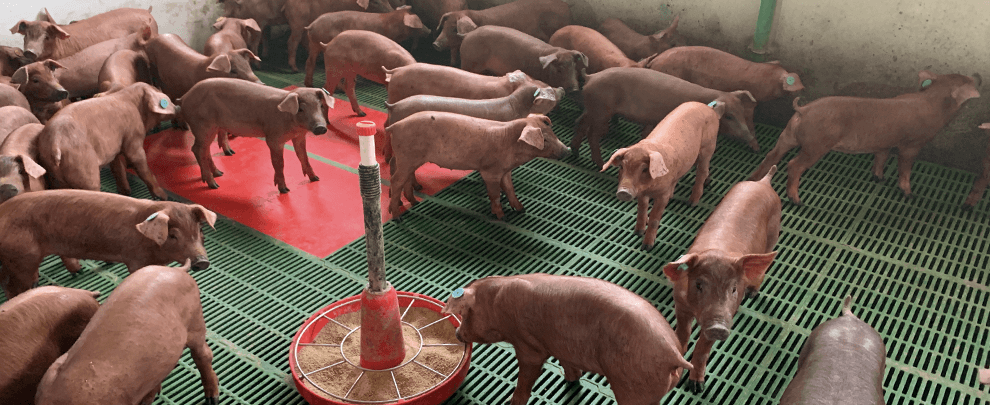
In addition to the heated plates, we have several Rotecna products installed on the farm. We have slatted flooring, dispensers, the Feeding Ball dispenser, systems, distribution of food and feeders, so practically all farrowing wards are equipped with Rotecna solutions.
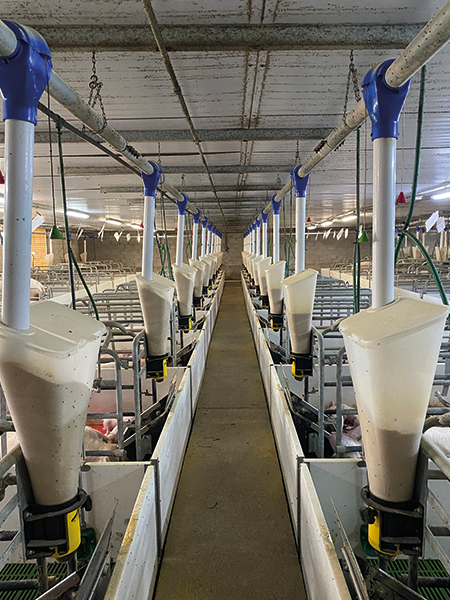
In the farrowing area, they use the Feeding Ball dispenser. Photo: BLD.
Overall, what do you value most about Rotecna?
The good quality-price ratio of their products. It is a brand that offers reliable, competitive solutions for both equipment and costs. Furthermore, in Argentina, we have access to spare parts and reliable technical service through INDIV, which makes maintenance and daily operations much easier. During the current farm expansion, when requesting quotes, we found that Rotecna solutions were very competitive in price, reinforcing our decision to continue working with the brand.
At a health level, what are your main concerns?
At the health level, one of our main concerns is maintaining our health status, because the expansion project significantly increases the risk of introducing diseases. As a result, we strictly enforce biosecurity measures. At the country level, we are currently free of PRRS and other high-impact diseases, such as African swine fever (ASF), although we are aware that we are no strangers to these risks. Therefore, prevention and health control are constant priorities in our daily management.
What biosecurity measures have you adopted on the farm?
On the farm, we follow a strict biosecurity protocol, especially regarding vehicle movement. All trucks that enter the dirty area go through an outsourced laundry room in addition to the official washing, and are subsequently given an extra wash. Before authorising entry, a wash check is carried out, and any vehicle that does not meet the requirements is rejected. Once inspected, trucks pass through disinfection arches, and vehicle access to the clean area is strictly restricted, with specific controls for everything entering the farm from the transfer unit. In addition, we have a transfer unit, where the animals are loaded and transported in other trucks to the refrigerator, preventing direct entry by external vehicles. For staff, we require sanitary filters, affidavits, and income records. All material that enters the farm is disinfected, and access is always through wet sanitary filters.
Finally, what future challenges do they pose for this farm?
The main challenge for the future is to determine the productive limit of the new farm and achieve high-quality pigs that meet animal welfare standards.