Blog
Blog
Trends in equipment for finishing pig farms
02nd July 2026 - News
Finishing pig farms are operating in an increasingly demanding environment. Improving production efficiency, rising production costs and the need to optimise daily management have turned pig equipment into a strategic element of any facility. It is no longer enough to have robust equipment; every component must contribute to improving animal welfare, making daily tasks easier for farm staff and optimising the use of available resources.
This evolution also reflects a broader approach to farm management. Equipment is no longer viewed as a collection of independent elements but as part of an integrated system in which feeding, space organisation, environmental control and hygiene are closely interconnected. A decision as simple as choosing a feeder, a partition panel or a monitoring system can have a direct impact on feed intake, batch uniformity or the ease of cleaning and maintenance.
As a result, current trends are focused on developing more functional, durable and practical solutions that meet the real needs of modern pig farms. The aim is to provide equipment that helps producers work more efficiently by simplifying daily operations and creating optimal conditions for animal performance.
Feeding equipment designed to make better use of every kilogram of feed
Feeding remains one of the key factors determining the profitability of a finishing pig farm. For this reason, much of the innovation in farm equipment is focused on developing systems that improve feed consumption and reduce feed losses during consumption.
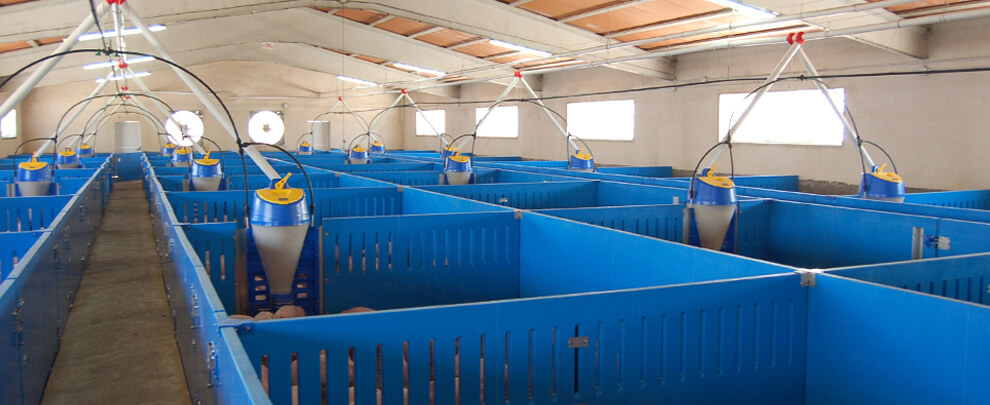
Modern feeders are evolving towards designs that allow precise feed flow adjustment and make it easier to adapt feed availability to the different stages of the finishing period. Being able to make these adjustments quickly and easily improves day-to-day management and helps maintain consistent feeding conditions throughout the production cycle.
Another area that has gained importance is the design of the feeder pan and feed outlet. The objective is to ensure that feed is available in the right quantity and evenly distributed, preventing unnecessary accumulation and waste. A balanced feed supply promotes more efficient feed intake and contributes to greater batch uniformity, a key factor in achieving better production results.
Materials also play a fundamental role. High-quality technical plastics provide excellent resistance to wear and corrosion while making cleaning easier. This results in longer equipment lifespan and lower maintenance requirements, two aspects that are particularly valuable on farms with high animal turnover.
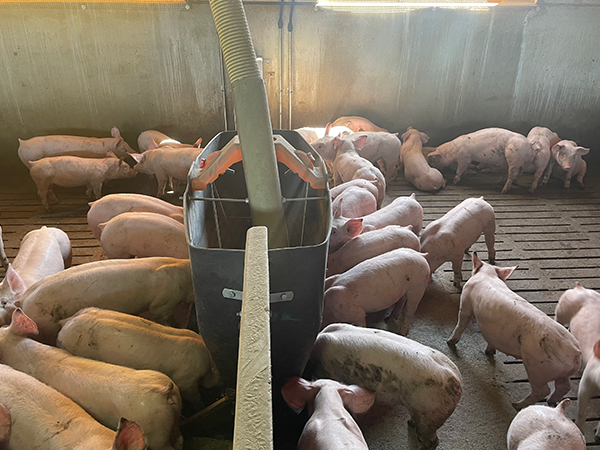
Feeders must offer precise regulation of feed flow. Photo: Rotecna.
Environmental control: a key ally for improving farm performance
The environment inside the barn has a direct influence on animal welfare and behaviour. Temperature, humidity and air quality affect feed intake, comfort and growth performance, making stable environmental conditions throughout the finishing period essential for achieving optimal production results.
For this reason, environmental control has become one of the main trends in modern pig farm equipment. Having accurate information about barn conditions allows producers to detect potential deviations quickly and take corrective action before animal performance is affected. Better environmental management also supports decision-making and enables producers to adapt management practices to changing conditions.
In this area, solutions such as Sensoritronic enable continuous monitoring of key environmental parameters while providing real-time information on barn conditions. Access to this data allows producers to monitor housing conditions more accurately and respond proactively to changes that could affect animal welfare or production efficiency.
The trend is moving towards data-driven farm management, where producers have access to tools that help them monitor barn performance and maintain a more stable environment throughout the production cycle. This ability to anticipate potential issues is particularly valuable during periods of significant temperature fluctuations or rapidly changing weather conditions.
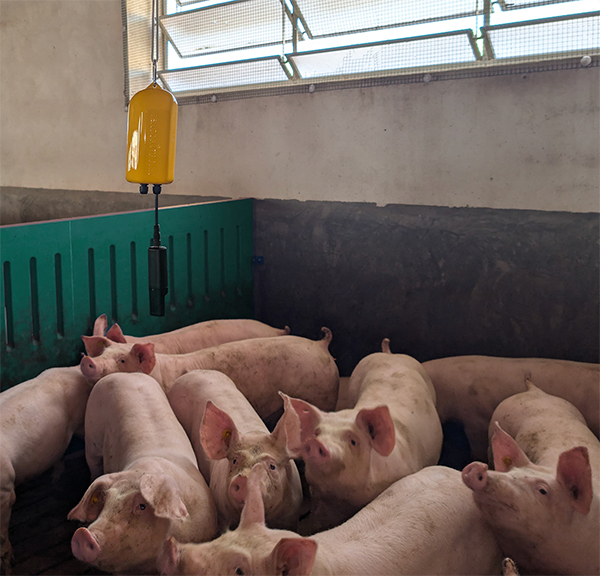
Sensoritronic allows for the continuous monitoring of essential environmental parameters. Photo: Rotecna.
Designs that simplify management and strengthen biosecurity
In addition to improving feeding and environmental control, farm equipment is also evolving to simplify daily management and strengthen farm biosecurity. The design of different equipment components aims to reduce the time required for maintenance while making cleaning between production batches faster and more efficient, a key aspect of maintaining good herd health.
Equipment with simple structures and durable materials makes washing and disinfection quicker and more effective. Smooth surfaces, the absence of areas where organic matter can accumulate and high resistance to cleaning products help keep facilities in better condition for longer.
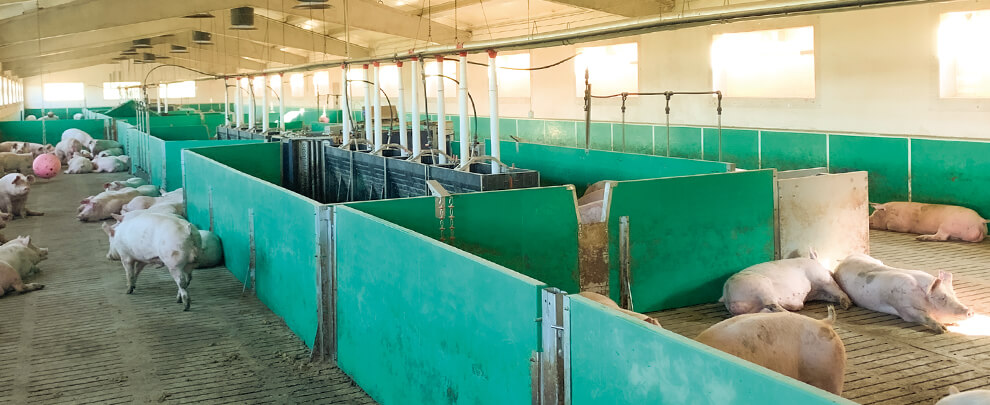
In this context, Rotecna's polypropylene panels provide a versatile solution for barn partitioning. Their design allows pens to be easily adapted to the specific needs of each farm, while their durability and ease of cleaning help maintain high hygiene standards throughout their service life. They also make it easy to reorganise spaces whenever management requirements or batch configurations change.
Ultimately, current trends in equipment for finishing pig farms reflect a move towards increasingly integrated solutions, where feeding, environmental control, biosecurity and ease of management all form part of the same strategy. Investing in equipment designed to improve efficiency and durability helps optimise farm performance and enables producers to meet the growing challenges of modern pig production with greater confidence.