Blog
Blog
Weaning age in pigs: is it better to wean earlier or later?
17th November 2026 - News
The moment piglets stop suckling and become entirely dependent on solid feed has consequences that go far beyond their departure from the farrowing room. Weaning age affects the animals’ digestive and health development, their adaptation to the nursery phase and the sow’s reproductive recovery. Weaning earlier can help improve the turnover of farrowing places, but it also puts piglets that have not yet completed their development to the test. Weaning later makes this transition easier, although it extends room occupancy and changes the farm’s production schedule. Finding the right time requires weighing up both sides of the equation and taking the conditions of each facility into account.
What happens to piglets and sows depending on weaning age?
Weaning is one of the most delicate stages in a piglet’s life. Separation from the sow coincides with an abrupt change in both diet and environment: piglets stop receiving milk, lose contact with the sow and their littermates, and must adapt to a new housing environment, where they begin consuming solid feed exclusively. This combination of changes causes stress and directly affects the digestive system. During the first few days after weaning, the intestinal mucosa may experience a reduction in villus height and absorptive capacity, while enzyme activity still needs to adapt to the new diet. This can result in reduced feed intake, diarrhoea and a temporary slowdown in growth.
The age at which separation takes place determines the severity of this response. A piglet weaned at 21 days generally has a less developed digestive system and immune response than one that remains with the sow until 28 days. It also has less time to become familiar with solid feed during lactation. Although the protection provided by maternal antibodies gradually decreases, the piglet’s own immune system is still developing. As a result, weaning too early can leave the animal more vulnerable.
In sows, the length of lactation also affects the subsequent reproductive cycle. After farrowing, the uterus needs a recovery period before it is ready for a new pregnancy. If weaning takes place too early, particularly before 18–19 days, the weaning-to-service interval may become longer and reproductive performance may deteriorate. Therefore, the decision affects not only piglet development but also the sow’s ability to maintain good productivity throughout successive reproductive cycles.
Advantages of earlier weaning
Reducing lactation length can improve the farm’s production organisation. By shortening the time sows spend in the farrowing room, places become available sooner for the next batch of farrowings. On farms with limited capacity, this turnover can make batch planning easier and help maximise the use of available space. It may also contribute to increasing the number of reproductive cycles per sow per year, provided that reducing lactation days does not compromise subsequent results.
From a health perspective, early weaning has also been used as a tool to limit the transmission of certain pathogens from sows to piglets. In specific health control programmes, separating animals at an early age can reduce their period of exposure to certain infections. However, this measure cannot work in isolation, as it requires an understanding of the transmission routes of the pathogens involved, suitable facilities and strict biosecurity protocols.
Another potential benefit for the sow is a reduction in the physical strain associated with lactation. During this period, nutritional requirements increase considerably to sustain milk production, particularly in large litters. If the sow cannot compensate for this energy expenditure through feed intake, she may lose body condition and reach weaning in a poorer physical state, potentially affecting her next reproductive cycle. Shortening lactation may help limit this loss, although the outcome will also depend on feeding management and the sow’s ability to maintain adequate feed intake.
Disadvantages of weaning too early
The main difficulty with earlier weaning arises when piglets enter the nursery phase without being sufficiently prepared for the change. Younger animals generally require highly digestible diets, more precise environmental control and easy access to water and feed to encourage initial consumption. Temperature, ventilation and housing quality also become particularly important, as any shortcomings can worsen the effects of post-weaning stress and increase the risk of diarrhoea and growth setbacks.
These difficulties also have health implications. When piglets experience a challenging transition, the risk of requiring veterinary treatment increases and, in certain situations, antimicrobial use may also rise. Therefore, bringing weaning age forward without having suitable facilities in place may run counter to the pig sector’s efforts to reduce antibiotic use.
Animal weight is another factor to consider. Piglets weaned at a lower weight generally need more time to regain their growth rate, particularly when they also experience difficulties adapting to feed or are housed under unsuitable environmental conditions. These differences may persist throughout subsequent production stages and affect batch uniformity. Consequently, the days gained in the farrowing room may ultimately translate into a longer stay in the nursery or finishing stages if piglets are not sufficiently prepared.
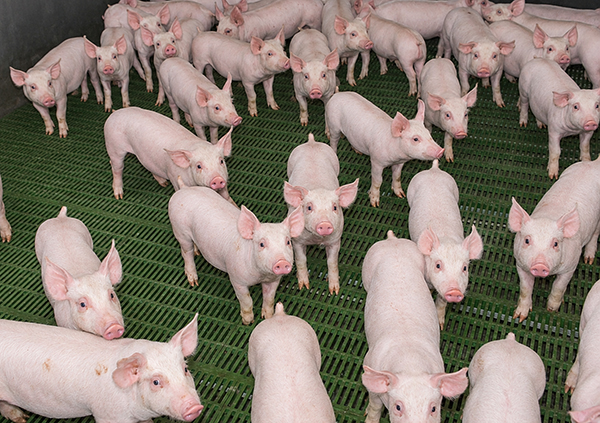
Weaning represents a sudden change for the piglet, which must adapt to a new environment. Photo: Rotecna.
Advantages and disadvantages of later weaning
Keeping piglets with the sow until 26–28 days allows them to reach weaning at a higher weight and with a more developed digestive system. During these additional days, they have more opportunities to become familiar with solid feed and gradually adapt to a diet different from their mother's milk. This generally makes the transition easier, reduces the impact of the dietary change and promotes more consistent growth during the first few weeks after weaning.
A longer lactation also allows the sow to complete uterine recovery more effectively and may improve reproductive performance, particularly in young females or those that have experienced a demanding lactation. However, extending this period does not necessarily lead to better results in every case. Sows raising very large litters may experience considerable body condition loss if their feed intake does not meet the requirements of milk production. For this reason, extending lactation should be accompanied by body condition monitoring and appropriate nutritional management.
The main drawback is related to farrowing room occupancy. Each additional day of lactation delays the departure of piglets and the arrival of the next group of sows. When the number of available places is limited, this may require changes to batch planning or reduce the production capacity of the facilities. The farm’s health status must also be taken into account: keeping piglets with the sow for longer extends their exposure to any pathogens she may transmit. On farms facing specific health challenges, extending lactation without reviewing control measures may not be the best option.
How to choose the most suitable weaning age for each farm
There is no single weaning age that delivers the same results on every farm. European legislation establishes a general minimum of 28 days, although weaning is permitted from 21 days when piglets are moved to specialised facilities, separate from those housing sows and subject to specific hygiene and management conditions. Within this framework, each farm must find the right balance between piglet development, sow recovery and the capacity of its facilities.
The quality of the nursery phase is one of the first aspects that should be assessed. A room with well-controlled temperature and ventilation, sufficient space and easy access to water and feed provides better conditions for receiving young animals. By contrast, if diarrhoea occurs frequently, feed intake is difficult to maintain or batches show growth setbacks, bringing weaning forward may make these problems worse. In such cases, delaying separation by a few days may help piglets arrive better prepared.
Piglet weight and litter uniformity should also be monitored. When there are significant differences between animals, it is important to identify whether they originate during gestation, from the sow’s milk production or from competition for teats. Earlier weaning does not solve these differences and may make them more pronounced during the nursery phase. Litter redistribution, cross-fostering or partial weaning are alternatives that can help organise the departure from the farrowing room more effectively, provided they are implemented with due consideration for health and production conditions.
Finally, the decision should be assessed from an overall perspective, rather than focusing solely on the number of days sows spend in the farrowing room. Comparing the results of different batches makes it possible to determine whether earlier or later weaning genuinely improves farm performance. Piglet weight at 70 days, mortality during the nursery phase, medication use, batch uniformity and the weaning-to-service interval are indicators that help measure the consequences of the change. Ultimately, the best time to wean is not necessarily the one that allows farrowing places to be freed up sooner, but the one that maintains good reproductive and production results without compromising piglet development.