Blog
Blog

Colostrum management in piglets: key practices to improve survival
07th May 2026 - News
The first hours after birth involve a series of decisive physiological processes that directly affect piglet viability and subsequent performance. Within this limited time window, access to colostrum determines the animal’s ability to face immediate sanitary and energetic challenges. Piglets are born without functional circulating immunity due to the absence of placental antibody transfer, making colostrum their only source of immune protection during the neonatal stage.
From a biological perspective, colostrum has a unique composition: a high concentration of immunoglobulins, elevated energy density, and bioactive compounds that stimulate intestinal epithelial maturation. This combination helps stabilize piglets against heat loss while also facilitating antibody absorption at a time when the intestine remains permeable to these molecules. However, this permeability is temporary and decreases rapidly after birth.
Factors affecting colostrum intake in piglets
Variability in colostrum intake within the same litter is influenced by both individual and sow-related factors, as well as management practices. Birth weight is one of the most influential parameters. Low-birth-weight piglets have reduced mobility and lower competitiveness at the udder, decreasing their likelihood of ingesting sufficient amounts of colostrum at the right time.
The farrowing process itself introduces another source of variability. Prolonged farrowings negatively affect the vitality of piglets born later in the process, which may show signs of hypoxia and reduced suckling reflexes. As farrowing progresses, colostrum availability also changes, increasing competition within the litter.
Regarding the sow, colostrum production and quality are not constant. Factors such as parity, body condition, and gestation nutrition influence the amount of immunoglobulins available. Young sows often show more limited colostrum profiles, requiring closer attention to their litters.
Timing is another decisive factor. The piglet intestine’s capacity to absorb immunoglobulins decreases sharply during the first hours of life. After 6–8 hours, absorption efficiency declines significantly, placing early intervention at the center of colostrum management protocols.
Colostrum management practices
The main colostrum management strategies in piglets on pig farms are structured around a common objective: ensuring that all piglets ingest sufficient colostrum as soon as possible after birth, within the biological window during which immunoglobulin absorption is still efficient.
The first pillar is immediate intervention in the farrowing room, based on continuous supervision of the farrowing process. Priority is given to weaker piglets by drying them, reducing heat loss, and quickly guiding them to a functional teat. This point is critical, since initial vigor conditions the piglet's ability to compete for access to the udder in the first hours of life and, consequently, determines the effectiveness of early colostrum intake, with a direct impact on survival.
The second pillar focuses on managing within-litter competition. In large litters, where the sow’s teat capacity is limited, techniques such as temporary separation of stronger piglets or rotational access to the udder are applied. These measures aim to reduce direct competition and make it easier for weaker piglets to reach a minimum intake of colostrum, which helps improve the homogeneity of consumption within the litter and, consequently, reduces the variability of weaning weights.
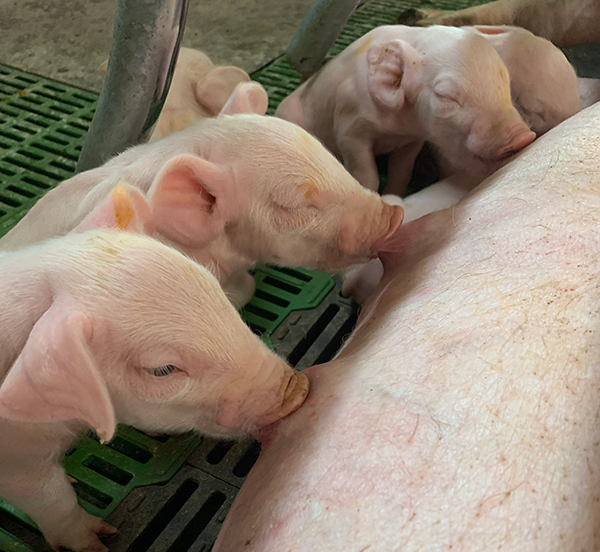
We must ensure that all piglets ingest enough colostrum. Photo: Rotecna.
A third component is early cross-fostering between sows. When performed within the first 24 hours, it helps balance litter sizes and adjust the productive load of each sow. However, it should only be carried out once all piglets have consumed an adequate amount of colostrum from their biological mother, as this provides immunity specific to the farm’s health environment.
In more challenging situations or irregular farrowings, stored colostrum reserves can be used as a support tool. This practice requires strict control during collection, storage, and administration, as immunoglobulin functionality depends on proper handling. Its application is mainly aimed at piglets of low weight or at high risk of not achieving sufficient intake.
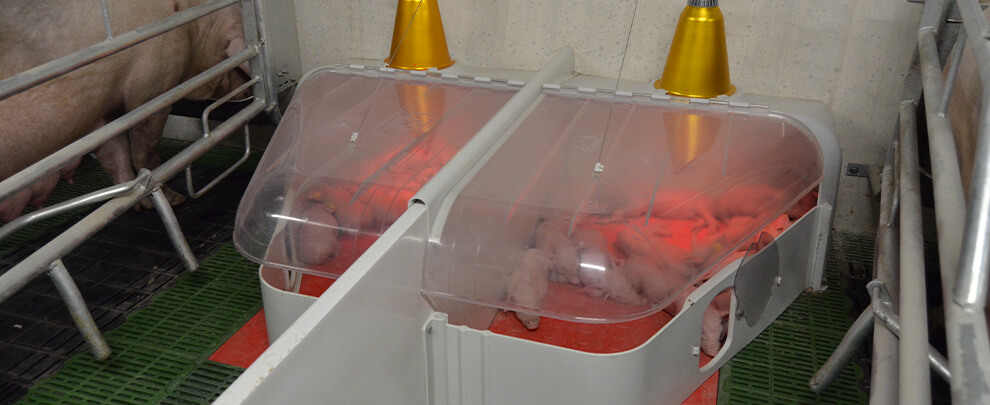
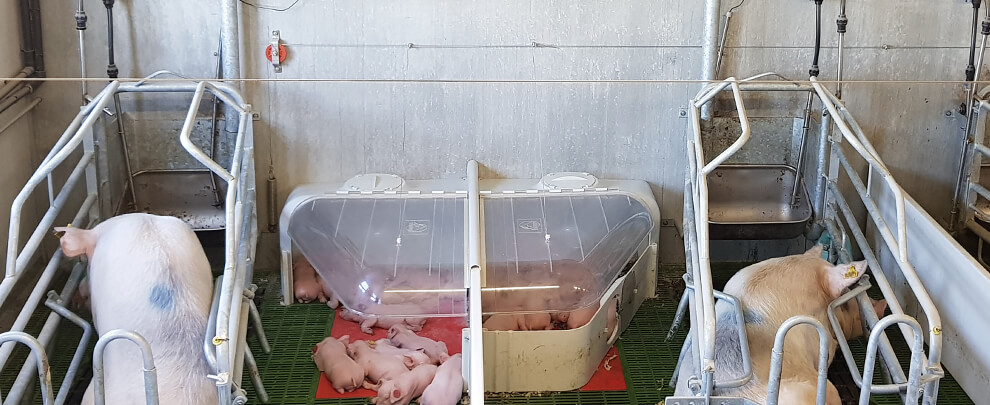
Finally, thermal environment control acts as a cross-cutting factor. Poor thermoregulation in newborn piglets limits mobility and reduces their ability to reach the udder. Maintaining adequate heated zones supports activity, encourages teat seeking, and promotes early suckling, directly influencing colostrum intake.
Overall, these strategies do not function in isolation but as an integrated system of early-life intervention, where speed, litter organization, and environmental control determine the efficiency of colostrum utilization.
Impact of colostrum on productivity and herd health
The effects of colostrum management are clearly reflected in productive indicators. Piglets achieving adequate intake show lower pre-weaning mortality, higher growth rates, and improved litter uniformity. These advantages continue into later production stages, directly influencing overall farm efficiency.
From a health perspective, the level of passive immunity acquired determines the response to pathogens. Insufficient colostrum intake is associated with a higher incidence of digestive and respiratory disorders, as well as increased batch variability. This has a direct impact on treatment use and production stability.
Colostrum management is integrated into a broader strategy of health control and performance optimization, understanding that the first hours of a piglet’s life largely determine its productive trajectory, so that precise intervention during this period translates into sustained improvements throughout the entire cycle. In this context, the standardization of practices, staff training, and monitoring of parameters such as survival or weaning weight allow the effectiveness of the implemented measures to be evaluated.