Blog
Blog

Truck cleaning: Key to preventing disease transmission
31st May 2019 - News
Biosecurity in animal transport is essential to prevent the spread of pathogens and diseases that could cause multimillion-euro losses in the pig sector. According to Natalia Ferbel, a technical specialist at the National Association of Live Animal Transporters (ANTA), the key lies in implementing preventive measures when loading and unloading animals at farms, as well as ensuring that trucks are properly cleaned and disinfected after each unloading operation.
What is the National Association of Live Animal Transporters (ANTA)?
It is the only national association established to defend the interests of companies operating in the live animal transport sector, and it serves as a benchmark at both national and European level. Its main objective is to promote the value of this activity among regional, national and European authorities, as well as to submit proposals for improvement, support and encourage all kinds of activities that help ensure compliance with regulations, and raise public awareness of the sector, among other actions.
Increasing importance is being placed on biosecurity in live animal transport. Why has it become such a fundamental issue?
Biosecurity can be understood as all the practices that must be observed by everyone involved in the livestock sector to minimise the risk of transmitting diseases that affect livestock and any activities related to it. For this reason, it is a fundamental aspect of livestock farming and the meat industry. These practices are absolutely essential and necessary both to safeguard the veterinary health of the various livestock sectors and to protect their economic security. Focusing on live animal transport, if the necessary biosecurity measures are not implemented to maintain high standards, trucks can become vectors for disease transmission.
What biosecurity measures should be implemented when transporting pigs?
On the one hand, transport vehicles should be prevented from entering the farm perimeter, loading and unloading should be carried out from outside the building, and shared loads should be avoided wherever possible. On the other hand, cleaning and disinfecting the truck is an essential practice for ensuring biosecurity during transport. These procedures must be carried out at authorised Cleaning and Disinfection Centres (CLyD) registered in the official register. The required level of biosecurity may vary depending on the type of animal being transported, since transporting piglets is not the same as transporting pigs for slaughter. Piglets are much more delicate animals and more vulnerable to disease.
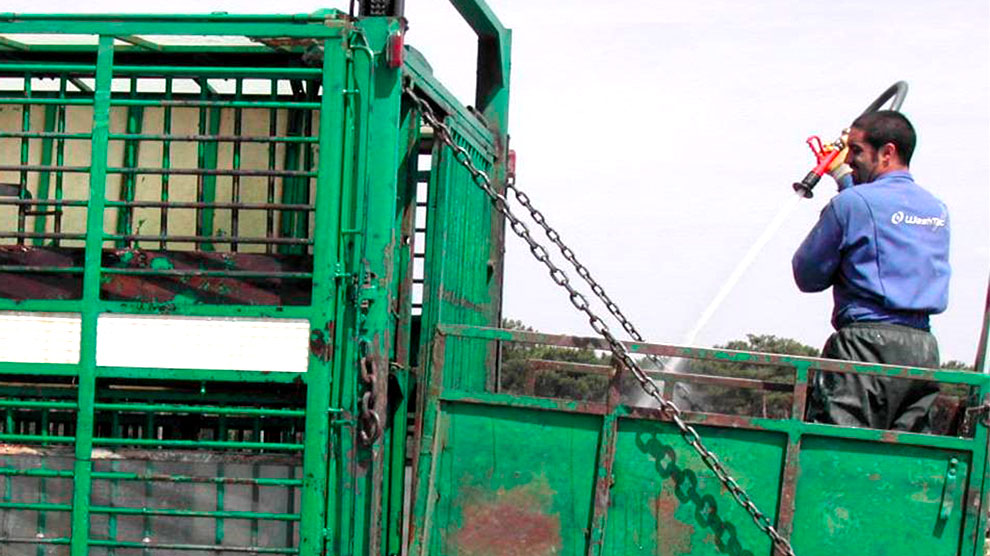
Truck washing process. Photo: ANTA.
How should cleaning and disinfection be carried out?
- Cleaning: First, an initial dry-cleaning stage is carried out to remove all solid matter (manure, sawdust, straw, etc.). The surfaces are then pre-washed with pressurised water to remove the remaining solids. This waste must be stored in a designated area for disposal or recovery. Dry cleaning is essential because of the high concentration of pathogenic microorganisms and the presence of dirt, both of which can compromise the effectiveness of the subsequent washing and disinfection stages.
- Washing: This is carried out using hot water under pressure and detergent. For washing to be effective, the vehicle's removable components must be dismantled, including cages, partitions, floors and other elements. The wheels, underside of the truck, bodywork and cab must not be overlooked. The cab, in particular, presents a challenge, so every removable component must be thoroughly cleaned, including clothing, boots and floor mats, with special attention paid to the pedals. The importance of using a good detergent is reflected in the reduction of the microbial load. As after the cleaning stage, wastewater must be collected in a designated area after washing.
- Rinsing: This stage is carried out to prevent dirt from being redeposited on clean surfaces and to ensure that no detergent residues remain that could inactivate the livestock-use biocidal products to be applied.
- Disinfection: Even after the previous operations, a residual level of pathogens remains in the vehicle, which is why disinfection is necessary. Disinfection is only effective when infectious agents come into contact with the biocidal product intended for livestock use. This is why the preceding cleaning and washing stages must be carried out properly. Disinfection is performed by spraying the product, starting with the external parts and finishing with the area used to transport the animals. At this stage, it is also important not to overlook any removable equipment, wheels, mudguards and other components. The wastewater is then stored in a previously designated area for subsequent disposal.
Are penalties imposed for failing to comply with minimum biosecurity measures?
Failure to possess a Cleaning and Disinfection Certificate (CLyD) does carry a penalty. Article 9 of Royal Decree 542/2016, which specifies the transport documents that must accompany transported animals and be available to the competent authorities, refers to “the disinfection certificate or receipt for the container or means of transport”.
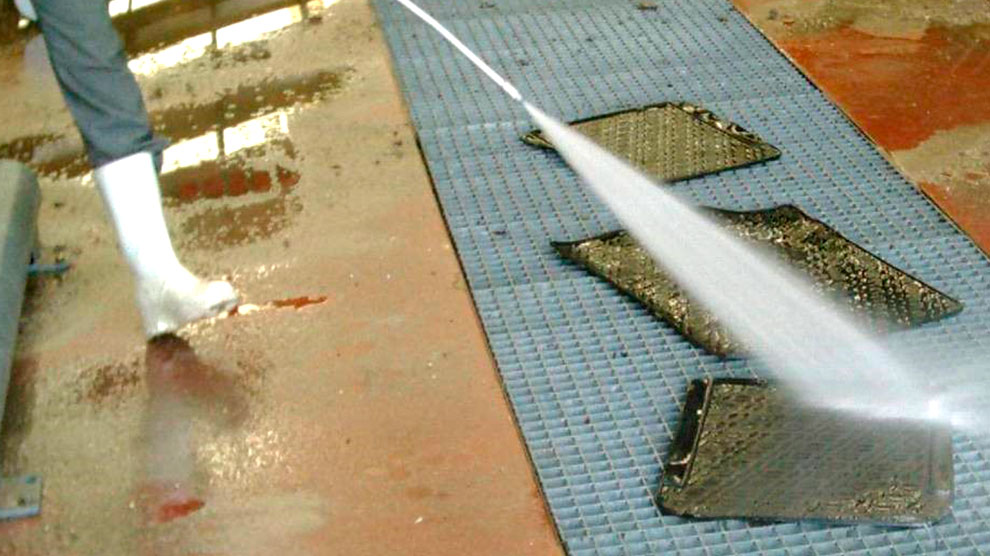
It is important to clean and disinfect items such as the cabin floor mats. Photo: ANTA.
How is compliance monitored?
Once the cleaning and disinfection procedures have been completed, the CLyD issues a certificate for each vehicle, and a seal is placed on the truck doors or the access points used for loading livestock. The certificate remains valid from the moment the vehicle is sealed until the first livestock transport operation following the breaking of the seal has been completed.
What economic impact can result from failing to implement biosecurity measures during transport?
Given the pig sector's current dependence on foreign trade, the introduction and spread of a disease would cause the sector to collapse, resulting in very substantial economic losses and a reversal of all the progress achieved through considerable effort in recent years. For example, the Classical Swine Fever outbreak in the Netherlands in 1997–1998, which is suspected to have been caused by a dirty pig transport truck, led to the culling of 10 million pigs, at a direct cost of €3.2 billion.
In this context, what are the future challenges for the live animal transport sector?
In my opinion, the main challenge is to ensure that all trucks are cleaned and disinfected properly. This requires an investment of two to three hours, depending on the size of the vehicle. For various reasons, this time requirement often means that the process is not completed correctly. Furthermore, the facilities are not always suitable or sufficient, and there is sometimes a genuine lack of knowledge about the minimum tasks that must be performed. It is therefore essential that all personnel involved in these operations understand how the entire process should be carried out.