Blog
Blog
Anna Barbé: “We consider proper cleaning to be an investment, not an expense”
06th March 2019 - News
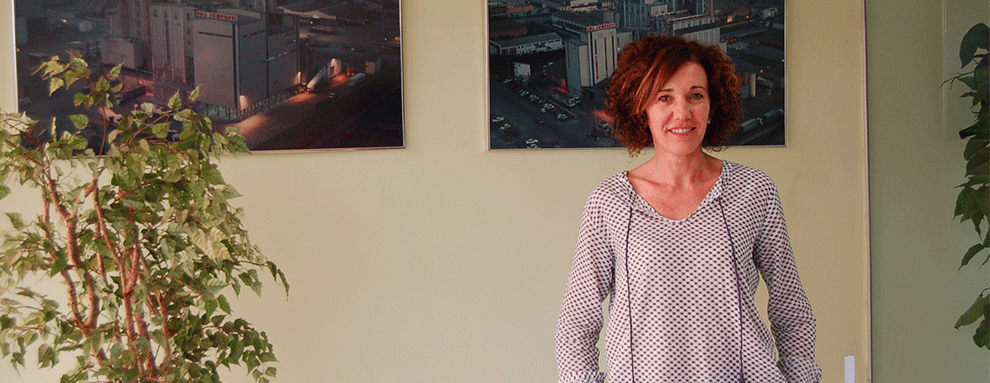
The major challenge of reducing antibiotic use is forcing the sector to become increasingly thorough and careful in many areas. One of these is the cleaning and disinfection of facilities, which has a direct impact on animal health and, consequently, on antibiotic use. Anna Barbé, a veterinarian at Vall Companys, explains the work carried out by the integrator, based on the premise that cleaning is an investment, never an expense.
How has the pig sector evolved with regard to hygiene and disinfection in fattening barns?
I think there has basically been a change in the way the concept of farm cleaning is understood: it is no longer seen simply as cleaning the barns (pens, slats and walls), but rather as a broader concept that includes all the elements of a farm, such as silos, water tanks, pipes, changing rooms, loading areas and even the areas outside the farm. This change has been driven by the sector’s need to improve health status, although the decisive factor has been the need to reduce antibiotic consumption.
How should proper cleaning and disinfection be carried out?
First of all, we carry out the cleaning of the barn. To do this, we remove the larger pieces of manure, clear away feed residues from the feeders and soak the entire barn thoroughly. This softens the dirt so that cleaning can then be more effective. For about three years now, we have been supplying soap for cleaning. We consider proper cleaning to be an investment, not an expense. Common sense tells us that if we want to clean something properly, whether it is a car or our hands, we use soap, right? Well, we believe that the same should be done with our farms. Therefore, after soaking the barn, we clean it with soap, go over it again to make sure no dirt remains, and we recommend allowing it to dry before applying the disinfectant. Secondly, we carry out disinfection. At this stage, it is very important to adjust the amount of disinfectant we are going to apply to our specific needs; the widespread idea of using a 5-litre container for every 1,000 pigs is not sufficient. The amount of disinfectant will depend on different factors, such as the dimensions of the barn, the litres of water used for disinfection, the concentration of the disinfectant, etc. Once the appropriate amount has been established, we soak the entire barn with the disinfectant. Ideally, this should be done using the appropriate tools to make the process as comfortable and easy as possible. In total, cleaning, provided the barn has been properly soaked, represents around five hours of work for people, while disinfection takes one and a half hours.
“It is very important to adjust the amount of disinfectant to our specific needs.”
Does the type of material used for the equipment installed in the barns affect the time and quality of cleaning and disinfection?
Yes. The time increases considerably, even doubling, if the floors and panels are made of concrete, as it is a very porous material that absorbs a great deal of dirt and water. Plastic, on the other hand, being a non-porous material, allows cleaning to be carried out in less time and is more effective. When it comes to cleaning and disinfection, plastic is always much better, without a doubt.
Which areas require particular attention?
The most critical points are the corners, the joints between the slats and the concrete, the areas around certain feeders, depending on where they are positioned, and the ventilated panels. On the other hand, it is difficult to make people aware that ceilings also need to be cleaned and that they should be smooth. Finally, another complicated area, often because of how the installation has been designed, is the water tanks.
In this regard, is water hygiene being carried out correctly?
First of all, it is very important to point out that simply having a pump and using a product to sanitise the water is not enough. It is essential to supervise the installation, because we find that pumps fail, the water sanitising product runs out, etc. We carry out a water analysis for every batch. Legally, only one analysis per year is required if the farm’s water comes from a canal and, theoretically, none if the water is potable and comes from a village, although you can get many surprises with water from villages. Therefore, water sanitisation needs to be constant and, above all, supervised.
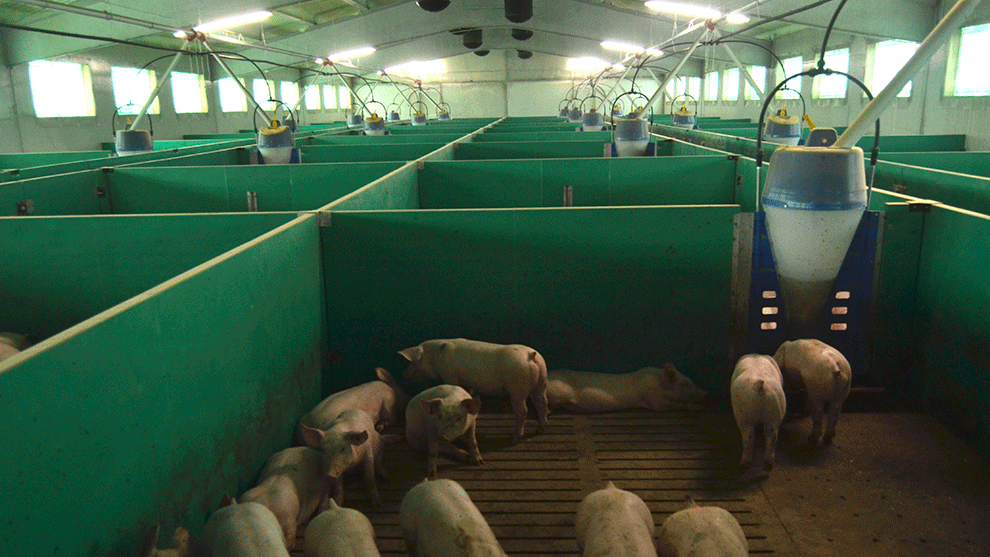
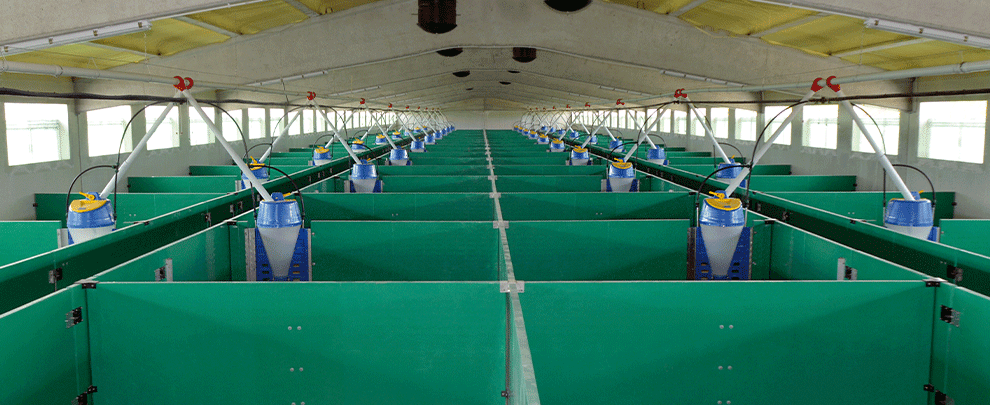
Fattening barn with Rotecna plastic panels. Photo: Rotecna.
What are the main diseases resulting from inadequate water hygiene?
First of all, we consider water to be a feedstuff. For every kilogram of feed a pig eats, it drinks between 2.5 and 3 litres of water; in other words, it drinks three times as much as it ingests. As for its relationship with different diseases, water can transmit any pathogen and, in particular, those responsible for digestive problems: E. coli, clostridia, dysentery, salmonella… Any disease can enter through the water.
With regard to cleaning the areas outside the barns, what should we take into account?
In this regard, we are talking about external biosecurity: keeping the outside areas clean, keeping the silos clean, having footbaths… I would add the importance of making farmers aware that hygiene also includes materials such as needles, workers’ clothing, boots, etc., elements that are sometimes overlooked.
Does proper cleaning and disinfection contribute to reducing antibiotic use?
Yes, I have no doubt about it. In fact, I carried out a trial over a six-month period to assess the savings that could be achieved in colistin and neomycin, which are currently the leading antibiotics, by improving cleaning and disinfection. Thus, when comparing the same period of time, in 2016, by improving cleaning, we reduced the use of these antibiotics by 50% compared with the previous year, and we no longer use colistin.
“When it comes to cleaning and disinfection, plastic is always much better, without a doubt.”
And as far as animal welfare is concerned, does the quality of cleaning and disinfection in the barns have an impact?
I understand that anything you do to keep the animal healthier and prevent it from suffering as many diseases… has a direct effect on its welfare. The better you keep the animals, the better fed they are and the cleaner their environment is… the greater their productive potential will be. Therefore, the most direct relationship is between cleaning and health, although everything contributes to animal welfare.
Overall, what challenges does the sector face in terms of cleaning and hygiene?
Above all, raising awareness and providing training throughout the sector on the importance of this issue, from cleaning companies to farmers, as well as all the agents involved in pig production. Anything that can be done to facilitate the cleaning and disinfection of farms, whether through different types of materials, cleaning products, the construction of new facilities designed to facilitate cleaning tasks, etc., will be welcome.