Blog
Blog
What happened after the last ASF crisis in Spain?
30th June 2026 - News
Seven months after the first cases of African swine fever (ASF) were detected in Barcelona, the pig sector remains on alert and closely monitoring the evolution of the outbreak. Although the disease is currently confined to wildlife, particularly wild boar, its presence has revived a threat that Spain has faced before, albeit in a very different context from the past, when the virus mainly affected domestic pigs.
Looking back is therefore essential. The previous ASF crisis, which lasted for more than 30 years until its eradication in 1994 and Spain's official declaration as an ASF-free country in 1995, marked the beginning of a profound transformation of the industry. We look back through the insights of Christian Gortázar, Professor of Animal Health, and Manolo Toledo, a veterinarian with decades of experience, to analyse the main differences between that period and the current situation, as well as the key lessons the sector learned from that process.
What was the Spanish pig sector like at that time?
The production context in which ASF emerged was completely different from today's. As Christian Gortázar explains, "the pig sector was outdated, with very limited biosecurity and production based on small farms operating under a largely unprofessional system." In this context, pig production did not have the economic importance it has today and, as Manolo Toledo recalls, "in many cases, farms were a complement to agriculture or another occupation, which limited the implementation of strict sanitary measures."
This lack of professionalisation was, in fact, one of the main factors that facilitated the spread of the virus. Limited control over animal movements and the lack of separation between farms created a highly vulnerable sanitary environment. "Many farms shared veterinary equipment and even boars," recalls Toledo, adding: "This clearly reflects the absence of sanitary barriers at the time, which made it much easier for the disease to spread."
What was the impact of ASF?
Although Spain was not yet the major pork exporter it is today during the 1970s and 1980s, the impact of the virus was significant from both a sanitary and an economic perspective, as the widespread circulation of the disease and the lack of effective tools made it difficult to control.
Economically, the consequences were considerable, particularly due to the trade restrictions imposed by the disease. "Being unable to export pork products, including higher value-added products such as Iberian pork, limited production to domestic consumption," explains Gortázar. However, he points out that the consequences are not comparable to what they would be today because "at that time the pig sector was very local; everything produced was consumed within the country and therefore it did not have the scale it has today."
Even so, the disease caused significant direct losses on farms, particularly due to the compulsory culling of animals. However, as Toledo points out, "if ASF reached a farm, the number of pigs that had to be culled was nowhere near what it would be today." This highlights how the evolution of the sector has also increased the potential impact of the virus, both because of the larger size of farms and the much greater economic and commercial importance of pig production today.
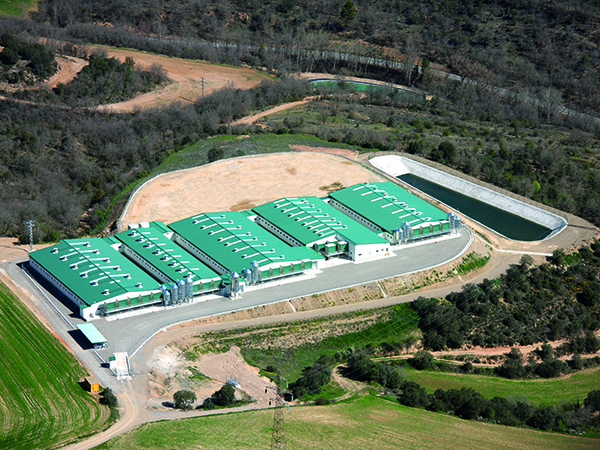
The last ASF crisis strengthened the culture of biosecurity. Photo: Rotecna.
How did the pig sector overcome the asf crisis?
Despite the limitations of the time, eradication was achieved thanks to a strategy based on decisive and effective measures. Gortázar highlights three key actions: "movement controls, the culling of animals on infected farms, which was essential, and, of course, the modernisation of facilities and the closure of older farms with poor biosecurity conditions."
Toledo emphasises the importance of early detection and rapid intervention. This was a key factor in encouraging the sector's cooperation, although it was not without challenges. In fact, he acknowledges that "many people overlooked ASF cases, often due to a lack of training or because they did not know how to recognise the disease, which delayed eradication," adding: "The contingency plan was also simple: animals were culled and disposed of." These practices illustrate the lack of information and awareness that existed at the time, as well as the major differences compared with today's sanitary protocols and standards. Nevertheless, these measures, aimed at interrupting transmission within domestic pig farms, ultimately proved effective, although under circumstances very different from those of today.
What changes emerged after eradication?
The eradication of ASF marked the beginning of a profound transformation of the Spanish pig sector. Many of the structures and protocols that are now considered standard emerged directly in response to that period, marking a turning point in the sector's professionalisation. In this regard, Gortázar recalls that "being declared ASF-free and reopening export markets for pork products gave the sector a huge morale boost, which ultimately drove its growth and professionalisation."
From that point onwards, the industry embarked on a process of modernising facilities and specialising production. As Gortázar explains, "the sector moved towards a more modern pig production model, with a greater division of functions between farms, increasingly specialised production phases and much more advanced internal and external biosecurity measures." This evolution improved disease control while enhancing the competitiveness of Spanish pig production.
As Toledo notes, "from then on, veterinary control became increasingly important in farm management, and production systems evolved towards more organised and compartmentalised structures." This further strengthened the sector's professionalisation and sanitary control.
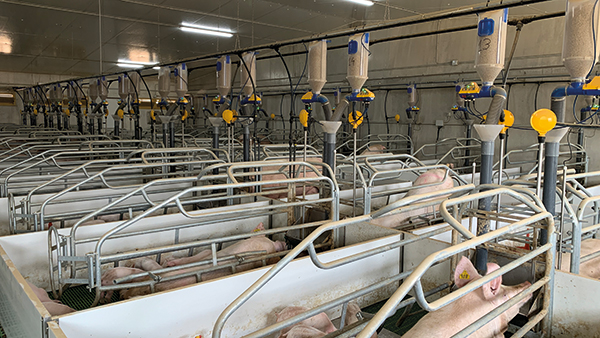
Following the ASF crisis, the sector embraced a more modern production model. Photo: Rotecna.
The role of wild boar
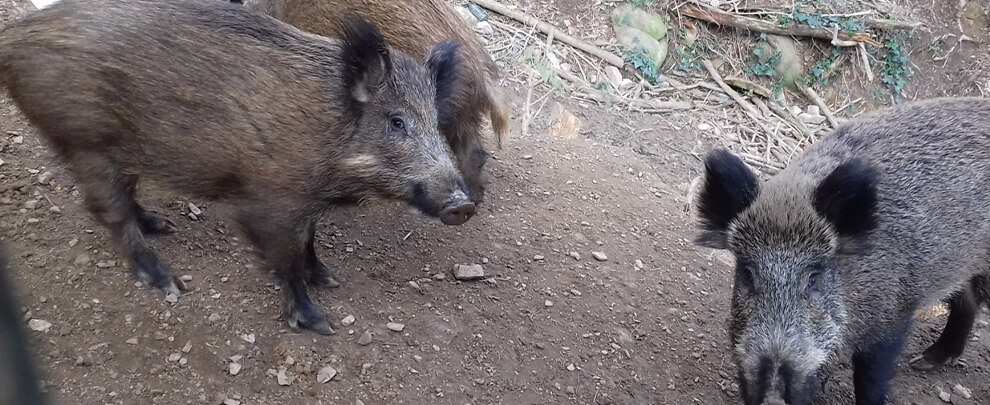
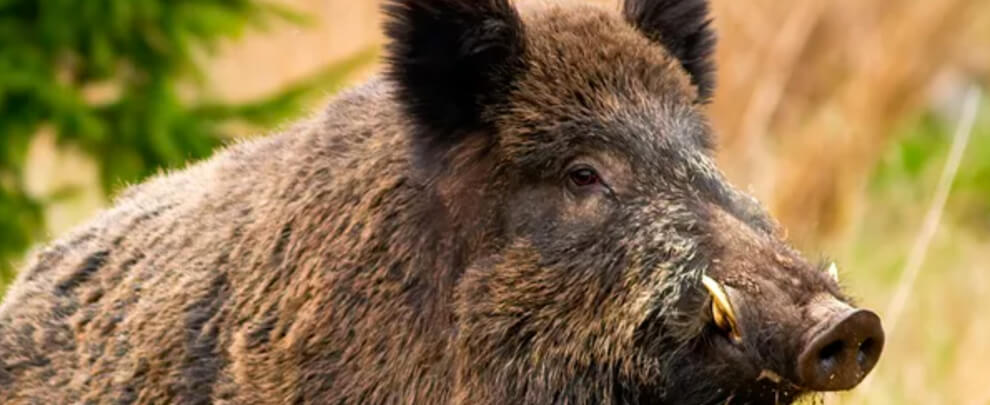
One of the biggest differences between the previous crisis and the current situation is the role now played by wildlife in the epidemiology of the disease. According to Gortázar, "before the 1990s, wild boar played a much smaller role because the population was only one-tenth, or even less, of what it is today." This allowed measures targeting domestic pigs to be sufficient to eliminate virus circulation.
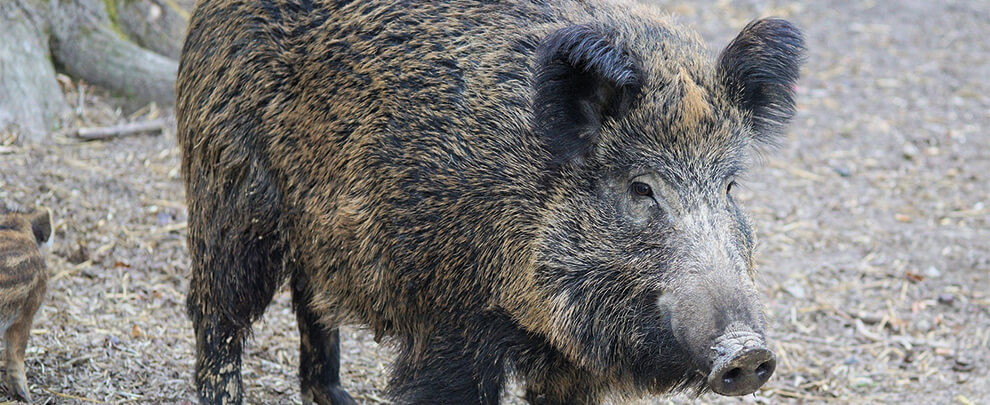
Today, however, the situation is completely different. According to the professor, "the sector is better prepared than it was then, but the risk has multiplied because of the overpopulation of wild boar." In this sense, "wild boar has gone from being a secondary factor to becoming a key element in maintaining and spreading the disease, forcing a rethink of animal health control strategies."
Along the same lines, Toledo stresses the need to manage wild boar populations. "There are so many wild boar that disease spread is extremely difficult to control because there are huge numbers within just a few square kilometres, something that never happened before. It is a major problem and it has to be addressed," he says, adding that this should be a shared responsibility across all Spain's autonomous communities: "Every autonomous community should have contingency plans and occasionally carry out simulation exercises on farms so that everyone knows how to respond."
Another factor influencing the current scenario is globalisation, which has significantly increased the movement of animals, people and goods. As Gortázar reminds us, "every movement represents a risk, especially in a country with such a high level of trade and international traffic."
What have we learned?
The previous ASF crisis in Spain provided the pig sector with essential lessons, one of the most important being the value of rapid action. Early detection remains one of the fundamental principles of any disease control strategy. As Toledo explains, "rapid identification makes it possible to establish a control zone and contain the disease."
To illustrate this, Gortázar uses the example of a forest fire: "When all available resources are deployed at the very beginning of a wildfire, while the affected area is still relatively small, the chances of controlling it are very high. If those resources are not used immediately, the fire grows larger and the available resources have to be spread over a much wider area." This comparison highlights the importance of mobilising all available resources immediately and in a coordinated manner whenever there is suspicion or confirmation of the disease.
The previous crisis also demonstrated the importance of transparency, communication and training. As Toledo recalls, "that situation encouraged risky behaviour and made it difficult to apply sanitary measures consistently." Therefore, he believes one of the greatest lessons learned is that "we must be as transparent as possible without creating unnecessary alarm. And we must not only be transparent, we must also be perceived as such."
Three decades later, experience has shown that ASF profoundly transformed Spanish pig production and forced the sector to develop a capacity for adaptation and resilience that remains one of its greatest strengths in facing any future animal health threat.