Blog
Blog

Bodycheck, AI to the slat level
30th April 2026 - News
Technology transforms how our farms are managed, improving their efficiency, sustainability and profitability. In the constant search for methods to optimise production and ensure animal welfare, the application of artificial intelligence (AI) at the farm level can be a key tool for farmers' service. Rotecna has developed an individual electronic feeding system for sows in group gestation according to body conditions determined by image. The application of these intelligent systems allows for a more precise and individualised feeding according to the needs of each sow, automatically and objectively, without depending on the farmer's evaluation and without the need to manually adjust the feed required by each animal to ensure that the sows maintain the ideal body condition for their optimal development, maximise their productivity throughout their lives and maximise the quality of the piglets they wean.
The bodily condition of sows during gestation is one of the leading indicators of good health and welfare. Keeping it at adequate levels is crucial for the productive performance of breeding sows. Correctly assessing this condition and adjusting their diet accurately and individually is essential because:
- It ensures proper gilt development: The body condition of sows at first farrowing is one of the factors that most influence breeder performance throughout their productive life and the viability of the piglets they wean.
- It improves the health of the sows: It is essential to maintain the proper body condition to guarantee the necessary energy reserves and ensure their health during gestation and lactation. This avoids problems arising from having too slim sows. One of them is low piglet weight at birth, insufficient milk production, or being too fat, which can lead to difficulties during farrowing and lower fertility in the future.
- It improves productive performance: Maintaining an adequate body condition during pregnancy helps sows to generate adequate fetal development, good farrowing, and successful lactation and facilitates postpartum recovery. This is crucial to reduce piglet mortality, maximise their weaning weight, ensure that the sow can cycle correctly again and maintain good fertility and prolificacy in future gestations.
- The optimisation of resources: Adjusting the amount of feed according to body condition prevents overconsumption or waste of feed. Feeding more feed to sows with good body condition can be unnecessary and inefficient while reducing the ratio of sows that need it can put their health and the health of their young at risk.
Rotecna has developed Bodycheck, an artificial intelligence system that revolutionises feed management in pregnant sows to respond to these needs.
How it works?
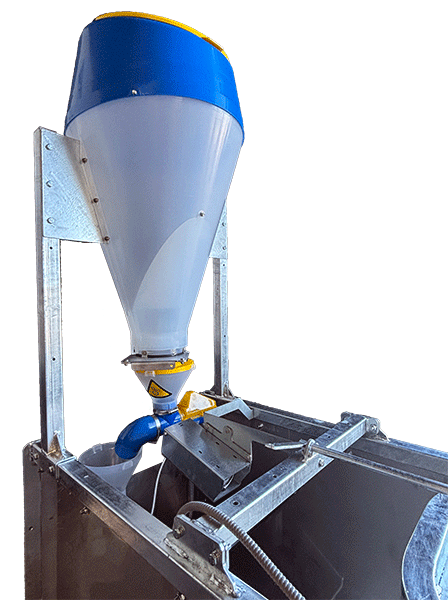
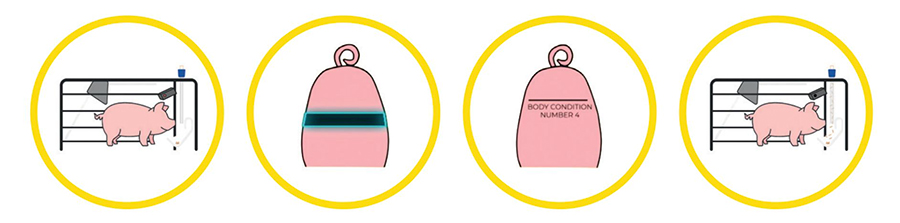
- Visual monitoring: A camera installed in the Dositronic cage takes images of each sow when it enters to eat.
- Automatic identification: The system identifies each sow individually using its electronic ear tag and the Dositronic antenna.
- Body condition assessment: AI analyses images to assess the sow's body condition in real-time.
- Feed Adjustment: Based on this assessment, the system automatically adjusts the feed curve to suit the specific needs of the sow.
- Monitoring of the evolution of body condition: Easy total control over the state and evolution of the body condition of all gestation groups.
Advantages
- Automation and elimination of subjectivity: It avoids subjectivity in user visual evaluation and overcomes the limitations of traditional methods, such as using callipers or grease meters, which are not easy to implement, and doing it completely automatically.
- Accuracy and efficiency: Thanks to artificial intelligence and automated deep learning, the system offers an accurate and reliable assessment of the body condition of sows, optimising feeding adaptively.
- Scalability and flexibility: The system's architecture allows it to be adapted to any breed or type of sows.
- Easy integration: The system is easily integrated into existing Dositronic G electronic power systems, ensuring uncomplicated implementation.
Implementing artificial intelligence in electronic feeding systems for pregnant sows represents a significant advancement in pork production, as it offers multiple benefits for animals and farmers. By allowing animals to be fed more precisely and tailored to the individual needs of each sow, AI not only improves animal health and welfare but also optimises resource efficiency, reducing costs and minimising waste.
In addition, monitoring feed and body condition data allows them to be analysed by cross-referencing them with others, such as productivity and costs, enabling producers to make decisions that maximise productivity and profitability.