Blog
Blog
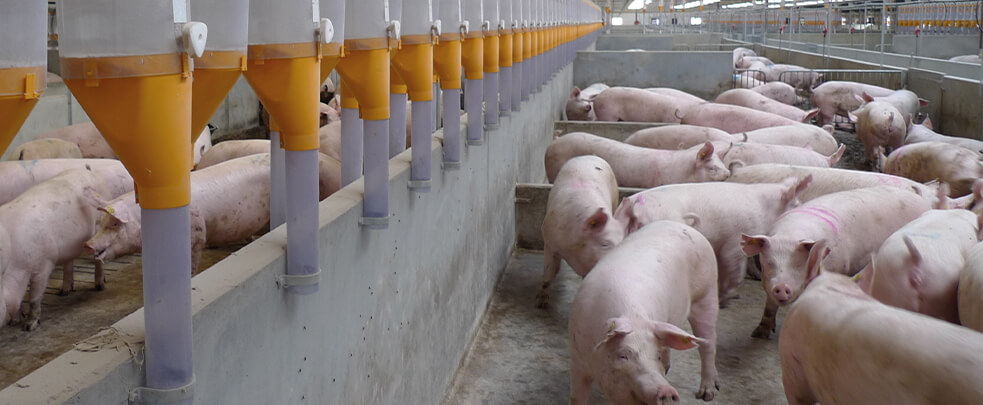
Denmark is considering changes to its pig production model
13th October 2026 - News
Denmark has built one of the world's most intensive and competitive pig production models over decades. With production far exceeding the consumption needs of its population, the country has built much of its agri-food leadership on exporting pork and live animals. However, the political debate after the last elections has created an unprecedented scenario in which animal welfare, environmental protection, and the sustainability of the production model take centre stage.
The scale of a strategic sector
With a population of nearly six million, Denmark maintains pig production that far exceeds its domestic needs and is strongly export-oriented. According to data from Landbrug & Fødevarer, in 2025 the country produced 31.8 million pigs and pig farming generated 33,300 jobs. That same year, the sector exported products worth 36.9 billion Danish kroner, making pork, between processed meat and live animals, the main export category for the Danish agri-food sector.
One characteristic that differentiates the Danish model is the large scale of piglet production destined for other European countries. According to Statistics Denmark, in 2025, Denmark exported 16.7 million live pigs, almost all of them piglets. This specialisation also has an important economic dimension, as piglet producers achieved the best results among the different types of pig farms in 2025 for the third consecutive year. These figures reflect the weight piglet production has gained within the Danish pig sector and its importance in the country's livestock activity.
Animal welfare enters the political agenda
The last general elections marked a turning point. During the election campaign, animal welfare ceased to be an issue limited to specialised organisations and became one of the topics with the greatest media impact. Various journalistic investigations and campaigns by animal protection organisations significantly increased public sensitivity to pig production conditions.
Polls conducted during the campaign showed that more than half of voters said animal welfare would influence their voting decision, while 95% called for urgent action to protect drinking water.
One of the most striking aspects of the process was the message's simplicity. Instead of focusing the debate on economic or commercial issues, much of the campaign revolved directly around the welfare of the animals themselves. According to its promoters, this strategy made it possible to turn a complex issue into a message that citizens could easily understand that citizens could easily understand.
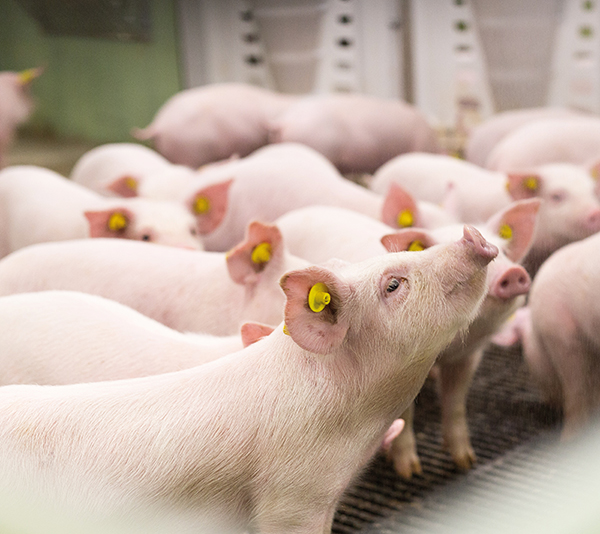
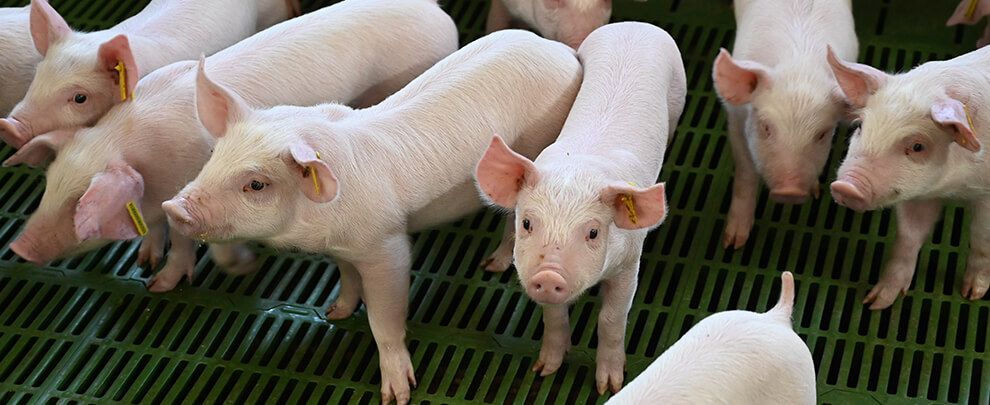
Denmark exported 16.7 million live pigs in 2025. Photo: Skiold.
The lines of action of the new Government
Following the elections, the new coalition government has defined a series of guidelines that point towards an evolution of the Danish pig farming model. Although the political agreement does not yet specify an implementation schedule or develop all the necessary measures to carry it out, it proposes a production model that is progressively more linked to the national food system, in contrast to the sector's traditional export orientation. To define this new scenario, the Executive also proposes opening a dialogue process between representatives of the agricultural sector, environmental and animal welfare organisations, labour representatives and food system operators.
On animal welfare, the main lines of action include progressively reducing routine tail-cutting, limiting genetic selection aimed at excessively large litters, and increasing the space available for animals, while strengthening controls and compliance with regulations. The environmental sphere also takes on greater prominence, with increased municipal powers to authorise new farms or expansions and a review of nitrate limits in drinking water, with the maximum expected concentration falling from 50 to 6 mg/L. This new approach also has an institutional implication, since a Ministry of Nature and Animal Welfare will replace the current Ministry of Agriculture.
What impact could it have on the European market?
Although it is still too early to quantify the economic consequences of the proposed measures, Denmark's shift in direction could affect the entire European pig market. If new welfare and environmental protection requirements raise production costs or limit farms' growth capacity, Danish supply could be affected in the medium term. Given the country's weight in piglet production and, especially, exports, any relevant changes could disrupt existing trade flows within the European Union.
The process could also influence the evolution of EU regulations. Higher standards in Denmark could strengthen the debate on animal welfare and sustainability in other member states, especially as the European Union advances its review of its regulatory framework. However, this scenario should be interpreted with caution, as many announced proposals still need to be finalised and developed into regulations. For now, rather than anticipating a reduction in production or a concrete impact on prices, the Danish change can be understood as a process whose scope will depend on how well it balances well-being, sustainability, and competitiveness.
In this sense, the Danish case can become a benchmark for other producing countries facing increasing pressure to adapt their pig production systems to new social demands. The main challenge will be to prevent the improvement in standards from resulting solely in a loss of competitiveness against production from third countries with different requirements. For the European pig sector, the debate thus raises a fundamental question: how to move towards more demanding models in welfare and the environment without compromising the economic viability of farms or the capacity of Europe to maintain competitive pig production. Denmark's evolution will therefore be especially relevant to observing how this balance is resolved.