Blog
Blog
J. Arenas: “The great challenge is to achieve an effective vaccine against Streptococcus suis”
07th July 2026 - News
Streptococcus suis has established itself as one of the main health challenges in the pig sector. Although it is a regular part of the pig microbiota, certain conditions can allow this bacterium to trigger serious, fatal infections within a few hours. Jesús Arenas, a biologist and professor at the University of Zaragoza, explains how factors such as stress, the intensification of farming, and reduced antibiotic use have favoured its expansion. In this interview, he addresses scientific advances aimed at controlling a disease for which there is still no fully effective vaccine.

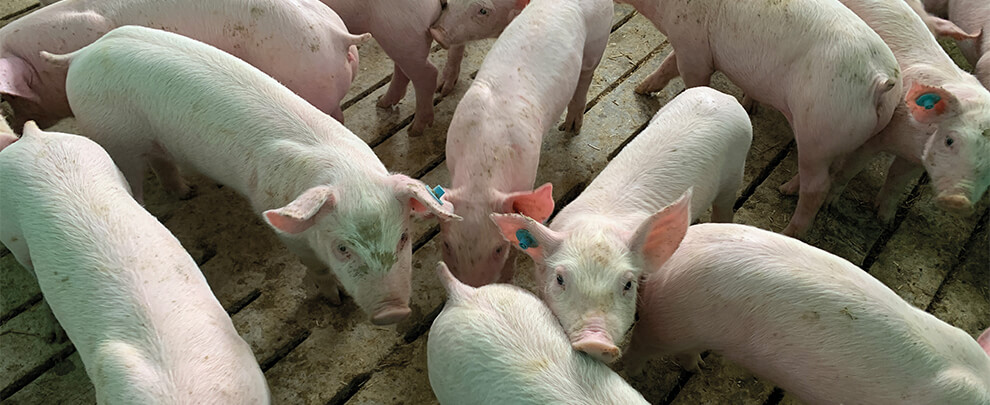
Jesús Arenas, biologist and professor at the University of Zaragoza. Photo: J. Arenas.
What is Streptococcus suis, and why has it become an increasingly important problem on pig farms?
Streptococcus suis is a bacterium that lives in many animals, but is particularly problematic in pigs. We find it in the respiratory and upper tracts, the genitals, and the intestine. It does not cause problems, except when it occasionally crosses epithelial and endothelial barriers, leading to septicemia and meningitis. Streptococcus possesses numerous virulence factors, enabling it to evade the host's immune defences and cause a streptococcal infection that can lead to the animal's death within a few hours.
What symptoms does it cause in pigs?
The main symptoms are septicemia, meningitis, and endocarditis, and it can also generate biofilms in the heart and arthritis. It can invade numerous internal organs.
What animals does it especially affect?
The animals most susceptible to infection are piglets during the weaniing phase, as the bacterium's impact is closely linked to an immature immune system and is further exacerbated by stress. During this stage, piglets are weaned from the sow, move from living with their littermates under maternal protection to being housed with unfamiliar animals, undergo dietary changes, and face other challenges. These stressors can lead to immunosuppression, allowing Streptococcus suis to overcome the animal’s natural defence barriers more easily.
We know that it can be transmitted to people. How does this occur, and who is most at risk?
Above all, it has been observed among people working on farms and having direct contact with animals without protection, especially those affected by highly virulent clones. This direct contact means the disease can be transmitted through aerosols and wounds. Studies in various countries have shown that Streptococcus suis can be found among veterinarians, farm personnel, inspectors, slaughterhouse personnel, and butchers. Also, cases have been reported among people who hunt wild boars, who may be infected with Streptococcus, which causes very rapid-onset meningitis.
How has the problem of Streptococcus suis evolved in recent years in Spain?
Streptococcus suis was a bacterium that responded well to antibiotics, but regulatory changes at the European level to reduce antibiotic consumption have led to more cases of the disease. Another factor in this increase has been the intensification of production, which allows Streptococcus suis to be transmitted quickly between animals, and a higher level of stress. Furthermore, hygienic conditions influence the persistence of bacteria in the environment and their potential for transmission to animals. In short, they are a set of factors that make Streptococcus suis evolve as a problem. Furthermore, we must add that although vaccines aim to reduce and control the disease, they are not 100% effective against all strains.
How can this be fought?
We must try to make rapid diagnoses of infections to prevent them from spreading, and to apply measures effectively so that hypervirulent clones do not persist after an infection and can reinfect the animals. On the other hand, many substances aim to reduce the carrier state in animals through additives in food and dietary control. Finally, we also have vaccines that, although not entirely effective, prevent the expansion of clones and, in many countries, are being used to prevent the spread of the disease on farms.
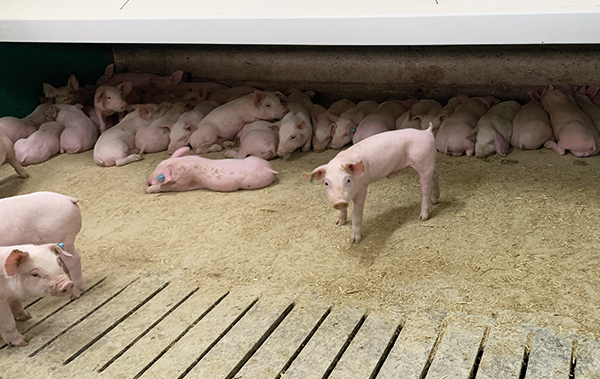
The most susceptible animals are piglets in the weaning phase. Photo: Rotecna.
What economic and productive impact does this disease have on the farm's pigs?
It is a difficult question to settle. First of all, the casuistry on farms is very different and has not been studied in sufficient detail. Typically, that information comes to us from veterinarians working on farms and from their experience. Based on this information, we have identified farms with mortality rates ranging from 0.5% to 20%. A study conducted on farms in Spain, Germany, and the Netherlands found that 80% of production units were clinically affected by Streptococcus suis. That does not mean that all the animals were affected, but it does mean that there was at least one case. In terms of costs, the disease is estimated to cause between 140 and 180 million euros in economic losses per year in Europe.
Given this case, how did the EPIG project emerge at the University of Zaragoza?
After working for many years as a researcher in the Netherlands, I joined the University of Zaragoza five years ago. During a research funding call, an opportunity arose to return to this pathogen I had previously studied. I contacted colleagues from the Dutch university where I had worked to discuss how we could devise the project based on the work we had from previous collaborations carried out at the European level, and the current project emerged.
What are the main objectives being worked on in this project?
We work together across several countries (Spain, the Netherlands, England, Germany, and Ireland), and each country has its own methodologies, approaches, and perspectives in the project to find solutions to Streptococcus suis. In Spain, we will work in two ways. On the one hand, try to differentiate between commensal strains, which do not cause infection in practice, and highly virulent strains, which exhibit genetic characteristics. From here on, we will develop techniques to determine how virulent strains move, relative to commensal strains on farms, assess transmission between animals, and implement procedures to prevent their spread. On the other hand, we will study a surface-exposed protein in hypervirulent clones, determine its function and its relationship to virulence, and develop vaccines based on it. Other countries are studying aspects such as the influence of heritability on disease transmission, the use of various immunoexclusion methods, and the alteration of the microbiota to prevent colonisation by hypervirulent clones.
What kind of innovations or scientific approaches are being applied to fight Streptococcus suis?
It depends on the research group. Some are investigating the use of bacteriophages to combat multidrug resistance, a major problem in China. Others are studying feed additives that could be incorporated into diets to reduce the carrier status of Streptococcus suis. Research is also underway to develop vaccines and drugs that prevent or inhibit the progression of infection.
What are the main challenges the research is facing?
The great challenge is to find a vaccine that is effective against a highly variable pathogen or, at least, against strains that are more invasive. The problem is that Streptococcus suis is highly variable at the genetic and antigenic level. For example, here in Spain, we can see that all existing strains share approximately 50% of their genomes. That is, the rest of the genome consists of many structures that vary from one strain to another.