Blog
Blog
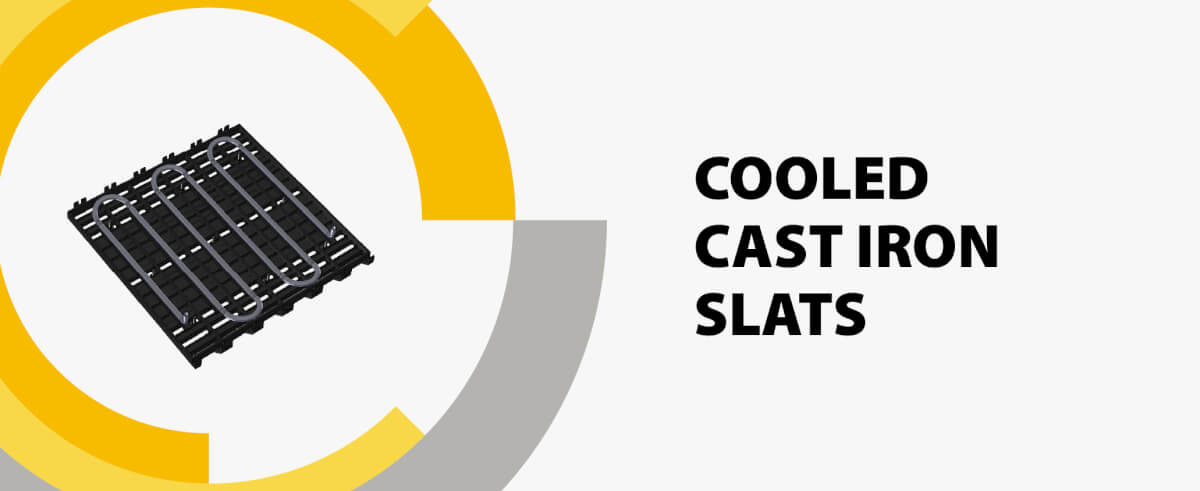
New cooled cast iron slat for sows in farrowing
27th October 2026 - News
In modern pig production, farrowing is one area where small design details can directly affect productivity, animal welfare, and piglet survival. In this context, the type of soil used in the farrowing wall plays an important role.
The soil should match the physiological needs of the sow and her piglets, which do not always align. Both require comfortable, well-drained surfaces, but the newborn piglet needs warm surfaces to minimise heat loss, while the lactating sow needs the coolest possible area. For this reason, using cast iron slats exclusively under the sow, combined with plastic slats around it, has become one of the most popular solutions to provide effective cooling.
Do cast iron slats really provide greater thermal comfort to sows?
One of the main challenges in farrowing is maintaining the sow’s feed consumption during lactation, especially in warm climates or during the warmer months. Current genetics have a high metabolic demand, and any reduction in intake quickly impacts milk production, loss of body condition, pre-diestrus mortality (the discomfort of the sow causes it to move more and there are more crushes), the weight of piglets at weaning and the mother’s reproductive performance in the subsequent cycle.
This is where casting provides an advantage over plastic slats under the sow, since, thanks to their high thermal conductivity, they absorb and dissipate the sow’s body heat much more efficiently than other materials, creating a cooler, more comfortable surface.
However, high conductivity does not equal cooling; because the grates’ mass is small compared to that of the sow, the casting heats up because the grates cannot dissipate the heat they receive from the animal, especially if the room temperature is high. Thus, when it is not possible for us to keep farrowing units below 26ºC, nor other advantages that the use of cast iron should provide us, the grilles lose much of their effectiveness.
The evolution towards water-cooled cast iron systems
If we want to take advantage of cast iron slats when we need them most, we must go a step further and incorporate water-cooled cast iron slat systems under the sow, especially in warm-climate areas or in farrowing units for high-productivity sows with a high metabolic rate.
These systems incorporate cold-water circuits under the casting that continuously extract heat from the sow’s resting surface, regardless of room temperature. The goal is not to cool the room, but to act directly on the most important thermal contact point, the animal’s body. In addition, cold drinking water can also be dispensed for mothers.
The benefits observed with this type of solution include: increased feed consumption during lactation, decreased heat stress, reduced loss of body condition, improved sow performance in the next cycle, potential reduction in the risk of crushing associated with greater comfort and less mobility of the sow once lying down, improved litter uniformity and greater piglet weight at weaning. Furthermore, by focusing exclusively on the sow area, these systems allow warm, protected areas for piglets, avoiding thermal conflicts during farrowing.
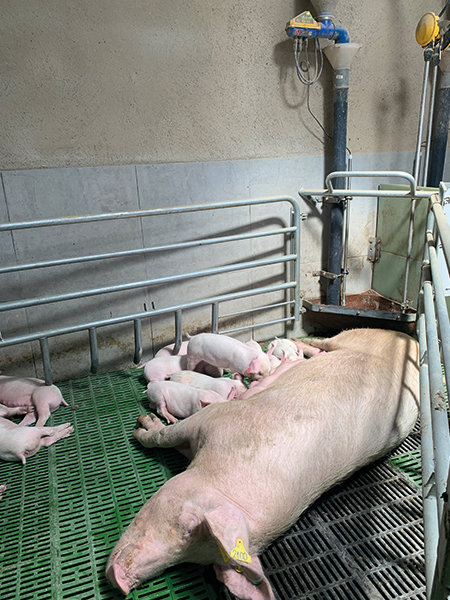
Cast iron flooring helps dissipate heat and improve sow comfort. Photo: Rotecna.
The fundamental role of plastic slats
Incorporating cooled cast iron under the sow is not intended to replace the advantages of plastic in the neonatal area. In fact, plastic slats remain the most efficient solution for piglets thanks to their insulating capacity, greater thermal comfort, reduced heat loss, and safety for small animals.
In addition, during the first few days of life, piglets tend to naturally avoid colder surfaces, such as water-cooled cast iron slats, and seek heated areas or warmer resting areas. This behaviour helps keep them away from the sow during rest periods, reducing the risk of crushing. Therefore, the most efficient maternity configurations combine refrigerated casting under the sow, plastic slats in the piglet area, and a heated nest area protected from air currents.
Zonal air conditioning
The advantages of keeping animals in their comfort zone are evident. However, depending on climatic conditions, this is not always possible, since insulation and climate-control systems cannot reach certain levels of effectiveness at an affordable cost. Furthermore, as with gestation, we can have animals with different requirements in the same space.
So the current trend in swine air conditioning is not only about conditioning large volumes of air, but also about acting directly on the animal’s thermal balance through localised, more
energy-efficient systems.In other words, applying techniques that provide comfort in specific locations is highly effective. Some are already widespread, such as heated plates and nests for piglets in maternity, weaning, and fattening, which create comfort zones without heating the entire room or warehouse and represent significant energy savings. Others, however, are not as well known and used, despite having proven their effectiveness and economic viability, such as individual air intakes per sow in farrowing units, the cooling of drinking water for lactating sows and growing animals during times of heat stress, or the refrigerated floors we just discussed, which can also be applied in fattening with radiant solid floor systems to improve the thermal comfort of animals in times of high temperatures and increase feed consumption and average daily gain.
The evolution of high-efficiency farrowing units designed with animal welfare in mind points toward increasingly specialised zonal air-conditioning systems, where the objective is not to keep the entire room at a single temperature, but to create physiological microclimates adapted to the specific needs of the sow and piglets. In this context, technologies such as cooled flooring, localised ventilation or drinking water cooling represent a new generation of tools aimed at simultaneously improving animal welfare, energy efficiency and productive performance.