Blog
Blog
Prevention, key to controlling swine influenza
09th November 2026 - News
Swine influenza is a viral disease of great relevance to the sector, both due to its high presence on farms and its zoonotic potential. In this interview, Guillermo Ramis, veterinarian and professor at the University of Murcia, analyses its transmission routes, symptoms, diagnosis and productive impact. It also addresses the main challenges to its control, including the need to strengthen biosecurity and the importance of incorporating vaccination, both animal and human, into farm preventive programs.
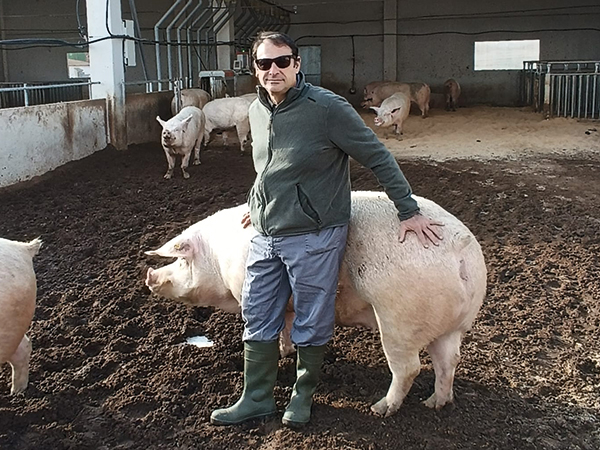
Guillermo Ramis, veterinarian and professor at the University of Murcia. Photo: G. Ramis.
What is swine flu?
It is one of the main viral diseases affecting pigs, but it remains largely underdiagnosed. We have reached a point where diagnosing it does not worry us, or we do not pay it the attention it deserves, despite the danger it poses. We must keep in mind that swine flu is one of the main zoonoses our animals suffer from; however, it is not one of the most serious health problems on farms, such as PRRS, so it does not worry us excessively.
What does it mean to have zoonotic potential?
When we talk about zoonoses, we usually do so from the perspective of zooanthroponosis, the infection that animals transmit to humans. Still, we must also consider anthropozoonosis (the reverse transmission of the disease, from animals to humans). By this I mean that a flu transmitted from pigs to people can be just as serious as the flu transmitted from people to pigs. In this last example, a good biosecurity measure we all struggle to understand is that workers around animals should be vaccinated against the flu, or that when a person has a clinical illness that may be compatible with the flu, they should not go to the farm. These measures are not being implemented, and that is worrying. We have already had several episodes of disease in humans transmitted by pigs. For example, in 2009 we had an H1N1 that was transmitted from pigs to humans. Although we haven't had a serious zoonosis problem so far, that doesn't mean a strain won't appear; when transmitted from animals to humans, it can cause critical illness or a worrying spread between humans. That is the danger that exists.
What is the current presence of swine influenza on Spanish farms?
When we look for it, it is usually present quite frequently and is part of the respiratory complex. For this reason, it is a disease to consider on our farms when establishing prevention protocols or the vaccination programme.
How does the virus enter a farm and how is it transmitted?
It is a very ubiquitous virus for a very simple reason: it is airborne, and as we have already mentioned, it enters easily through people. We breathe it in, and it arrives through the air. We have flu outbreaks every year. This virus moves through animals, aerially, and among people, so the flu virus enters farms relatively easily. This is why we have such a high prevalence, and why, when the flu is tested, it is found in a very high percentage of our pig farms.
What are the symptoms and the signs that should alert the farmer?
The primary symptoms that we can detect in young animals in transition and in the barn are: first, sneezing, which indicates that the virus is replicating in a nasal phase; from there, we move on to respiratory and systemic symptoms, that is, the animal coughs, has a high fever, prostration, anorexia, etc. The problem is that we include the flu in the respiratory context, and often it does not cause those symptoms on its own; instead, it synergises with another virus or with bacteria such as PRRS or Mycoplasma. In breeding sows, for example, the flu can cause abortions. Still, it is not the same abortion that is produced by, for example, a PRRS virus, but rather an abortion linked to symptoms due to a high febrile state, or even causing vomiting, which is something that catches our attention, because it could be confused with Aujeszky's disease.
So how is the diagnosis confirmed?
Diagnosis is straightforward: we take a sample and send it to the laboratory; using PCR or sequencing, we can diagnose influenza. Two proteins tell us what type of virus is present. The problem with the flu virus is that it is an RNA virus that mutates a lot, and once it is clinically active, it the clinical course lasts about a week. As we have said, almost sarcastically, all our clinical lives, the flu lasts 7 days with medication and 7 days without. Whatever you do, this virus will take a week in your animals, of course, if there are no complications. So we need to prevent it.
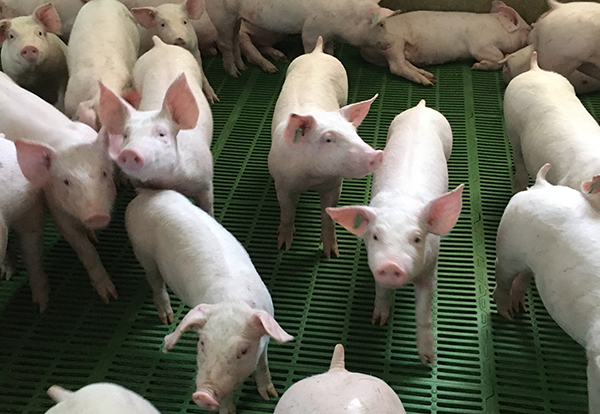
The younger the animal, the worse the respiratory effect. Photo: Rotecna.
Are the available vaccines effective as a preventative measure?
The flu vaccine should be included in our vaccination programs, but this isn't always the case because vaccines often aren't as effective as possible, given that this is a highly mutable virus. Furthermore, we don't rely heavily on vaccines, which stems from how little we rely on them.
Does it affect all phases of production the same way, or are some animals more vulnerable?
When it affects the respiratory system, the younger the animal, the worse it is. However, the flu can affect any phase if animals lack immunity to this virus, so technically we can find it from breeding animals to fattening pigs, including lactation and transition. ¿What is the worst phase for me? Normally, it starts during transition, when maternal immunity is being lost, and it can spread along with PRRS virus or mycoplasma.
What impact can it have on the production and economic performance of a farm?
There will almost always be some loss of productivity. It is true that when the disease is isolated, something that rarely happens, it is a disease that progresses very quickly. Within a week, it disappears, produces an explosive clinical presentation, causes high mortality, and the animals have anorexia, but within a week it self-limits. Another issue is when it becomes entangled with the respiratory complex and affects the immune system. It is harder to quantify because the immune system stops attending to other pathogens that will be much more serious and, together, will mean a productive loss translated into less growth and an increase in the feed conversion rate.
You mentioned that prevention is important to fight swine influenza. What management and biosecurity measures are most effective in preventing the disease?
Obviously, we need to strengthen all external biosecurity significantly. As my good friend Josep Casanovas says, “Of all the measures, which is the most important? The one we don't have”. We must maintain the measures we already have. That said, for me, the most important measure, which we still do not contemplate, is that farm workers are all vaccinated against the flu. People always tell me that I can't force my workers to get vaccinated; well, they've forced us to get vaccinated against other things and nothing has happened. Therefore, I would systematically implement flu vaccination for workers, because it is one of the best ways to prevent the effects of swine flu on our animals. On farms, in addition to good biosecurity, we should vaccinate animals and include flu in our vaccination protocol, always supported by a diagnosis.
What is currently the main challenge in reducing the circulation of the virus on farms?
The main challenge is to systematically include it in our vaccination protocols to stop transmission and reduce both the health and productive impact of the virus, as long as, I insist, we have a diagnosis, either by PCR or by flu sequencing. This will be critical for me, more than anything we've already mentioned. With good biosecurity, good prevention of other pathogens that may synergise with the flu, promoting vaccination, and ensuring that workers with obvious signs of respiratory illness compatible with the flu do not go to farms and do not transmit this virus to our animals.... All of this would provide a framework for preventing this pathogen, even if we do not have 100% effective prevention.
In this regard, is there awareness in the sector to follow these lines of vaccination, prevention and biosecurity?
This pathogen is undervalued in a very obvious way, and we don't believe it's a big problem. Therefore, I don't see awareness in the sector, and we'll have to keep working on it and keep promoting the fact that the producer firmly believes he needs a swine flu prevention program on his farms.