Blog
Blog
J. Font: “Animal health is the factor generating the greatest cost variability among producers”
29th September 2026 - News
In a context marked by market volatility, rising costs, and increasing regulatory demands, economic management has become a decisive factor in pig farm profitability. Knowing production costs accurately, identifying major inefficiencies, and making data-driven decisions is more important than ever. In this interview, Just Font, an agricultural engineer at SIP Consultors, analyses the recent evolution of production costs, the factors that most influence farm profitability, and the keys to successfully facing the economic challenges the sector will face in the coming years.

Just Font, agricultural engineer at SIP Consultors. Photo: J.F.
What is the current average cost of producing a fattening pig? How has it evolved compared to five years ago?
According to our database, the average production cost of a conventional fattening pig is currently around €1.35/kg of live weight, which is equivalent to around €162 for a 120 kg pig. In recent years we have experienced strong volatility in production costs. After a period of stability, in 2021 and 2022 the cost experienced a significant increase due, mainly, to the increase in the price of raw materials caused by the conflict in Ukraine and to the collateral effects of Covid-19, such as the increase in the costs of transport, fuel or materials. From 2022, the trend has been towards a progressive reduction in production costs, driven above all by the drop in feed prices.
What percentage of the total cost does each of the main items currently represent?
Feed remains the main cost item in pig production, accounting for about 63% of the total. Accommodation and management follow, representing around 28% of the total. This includes both the farm's fixed expenses (labour, energy, or amortisation) and the company's general expenses (structure, financial costs, transportation of piglets, and integration expenses). Drugs, on the other hand, represent around 5% of the final cost, while reproduction accounts for approximately 4%. This item includes replacement and coverage costs, and the amount obtained from the culling is deducted.
Which of these costs have experienced the greatest variations over the past year? Have some items already stabilised, or are they still very volatile?
Looking at the most recent developments, the item that has increased the most has been housing and management, mainly due to the increase in the price of integration. Among the costs that have decreased, food stands out, and it also has the greatest impact on final production costs. Over the last two or three years, feed prices have fallen and then stabilised, moderating production costs. Even so, the international context remains highly uncertain, making it difficult to predict how these items will evolve in the coming months.
With current pork prices, what economic margin can a producer expect? At what price does a farm really start making profits?
With the current selling price (Mercolleida at 1.285 €/kg at the time of the interview), a producer with average production costs registers a negative margin of about 10 € per animal. Currently, the price of Mercolleida needed to cover production costs would be around 1.37 €/kg of live weight, that is, 8.5 cents per kilogram above the current price. From that level onwards, a producer with average costs would begin to make profits. The actual price the producer receives is usually slightly lower than the Mercolleida reference because of transport, discounts, seizures, or other sale-related expenses.
SIP Consultors analyses the results of numerous farms every year. What differences do you see between the most profitable farms and those that have the most difficulty making profits?
Profitability varies widely between producers because production costs differ. In recent years, this variability has increased significantly, mainly due to factors related to animal health, housing and management costs. Currently, the cost range considered "normal" in our database (standard deviation) is around ±10 c€/kg relative to the average cost, equivalent to 1.26 to 1.46 €/kg. This cost dispersion has practically doubled compared to what existed before the current health problem, mainly associated with the Rosalía strain of PRRS.
Which economic indicators should be reviewed most frequently to detect deviations before they affect profitability?
There is no single answer, as each company has a different cost structure and strengths and weaknesses. Therefore, rather than focusing on a single indicator, it's important to know where the main deviations come from and to periodically monitor the aspects that most affect each farm's profitability. This analysis enables quality decisions and improves productive efficiency, with a consequent positive impact on profitability. For this reason, at SIP we have always considered it essential to offer a comprehensive economic vision of the company, which allows us to identify where it is appropriate to focus efforts without losing sight of the entire activity.
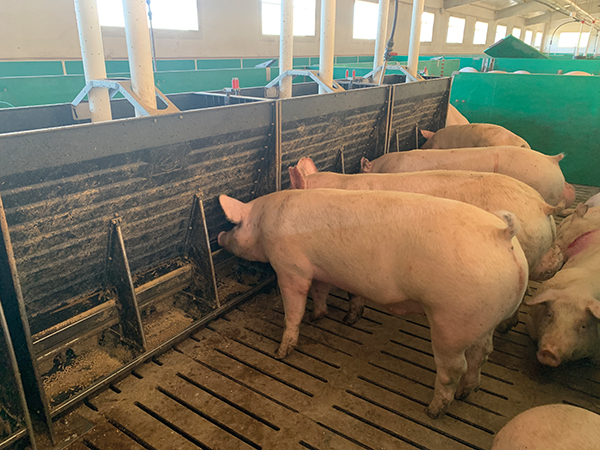
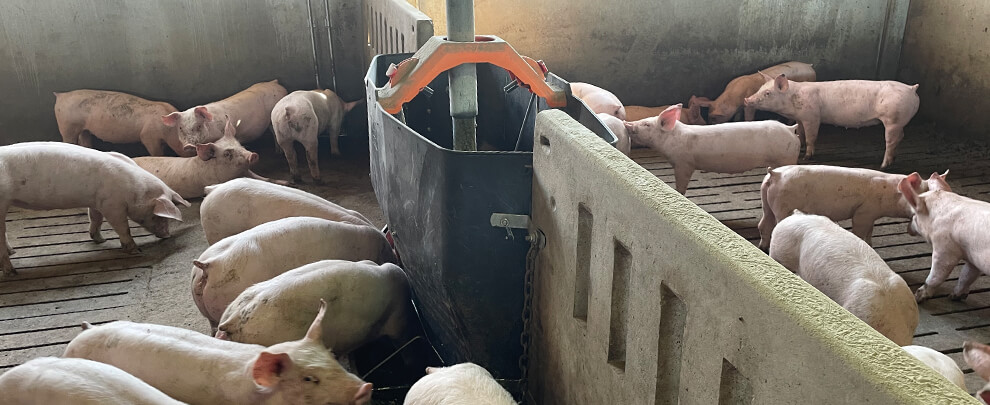
Feed accounts for 63% of production costs. Photo: Rotecna.
Which management decisions have the greatest economic return today?
The management decisions with the highest economic return are those that respond to each company's specific needs. Therefore, it is essential to study each case in detail and assess the farm's specific situation before making any investment decision. From this point of view, it is useful to conduct a prior economic study to determine the ROI (return on investment) and evaluate economic viability. Even in an unfavourable market situation like the current one, certain investments can be very interesting if economic analysis shows they improve the company's productive efficiency and profitability.
What are the most frequent management errors that end up impacting the profitability of a farm?
Rather than management errors, I would talk about the most frequent problems that impact farm profitability. In this sense, animal health is undoubtedly the factor generating the greatest variability in costs among producers. Its effects are mainly reflected in sow productivity and mortality during the transition and fattening phases. Furthermore, it can also indirectly affect other aspects, such as barn occupancy or animal growth, which increases production costs. Nor should we lose sight of other key factors, such as feed efficiency (both consumption and feed management) and the replenishment or control of housing and management costs.
Are there any costs that the sector is not paying enough attention to and that, in your opinion, will become increasingly important in the coming years?
For years, the pork sector has shown a high level of professionalisation and, in general, there is good control of the main indicators that affect efficiency. Even so, some "hidden factors" are harder to monitor and can significantly affect production costs. A good example is feedlot occupancy. In the current context, where fixed payment per place predominates, poor facility optimisation can mean high extra costs for the producer.
New environmental and animal welfare requirements will mean new investments for many farms. How do you think they will affect production costs and the competitiveness of the sector?
Addressing new environmental and animal welfare regulations will involve making investments that, in many cases, will not have a direct economic return. However, the pork sector has historically shown strong capacity for adaptation and resilience. Although it is still difficult to predict the impact of these new demands, they will also create opportunities for farms that know how to adapt to the new reality and anticipate change.
What role will digitisation and data analysis play in cost control over the coming years?
Thanks to advances in new technologies, we now have numerous digital tools that facilitate data collection and analysis. However, these tools must be well adapted to each company's needs and used appropriately. Otherwise, it will be difficult to draw useful conclusions for decision-making or, in the worst case, wrong decisions could be made. For this reason, although technology offers more and more possibilities, its true value will continue to lie in reliable, rigorous analyses that turn data into sound decisions, rather than reliance on poorly verified tools or interpretations.
If a producer wanted to improve the profitability of their farm, where would you recommend starting?
The first step to improving a farm's profitability is to conduct an economic analysis that provides a overall view of the company. This analysis should identify where the main productive inefficiencies are generated and which areas have the most room for improvement. From there, we must make the right decisions to correct weaknesses and strengthen the company. If we take appropriate action, we can reduce production costs and improve profitability. We must not forget that, in our sector, the main way to increase profitability is to reduce production costs, since our ability to influence the selling price is much more limited.
Finally, what do you think will be the main economic challenges for pig farms in the coming years? When we talk about economic viability, we must consider two fundamental aspects. First, as has been pointed out throughout the interview, it is essential to keep improving the company's productive efficiency. This helps reduce losses in unfavourable market periods and increase profitability when conditions are more favourable. But efficiency alone is not enough; it must also be accompanied by adequate sound financial position. We operate in a highly volatile sector and must face periods of significant economic loss. A solid financial structure allows us to overcome these situations and later take advantage of cycles with positive margins.