Blog
Blog
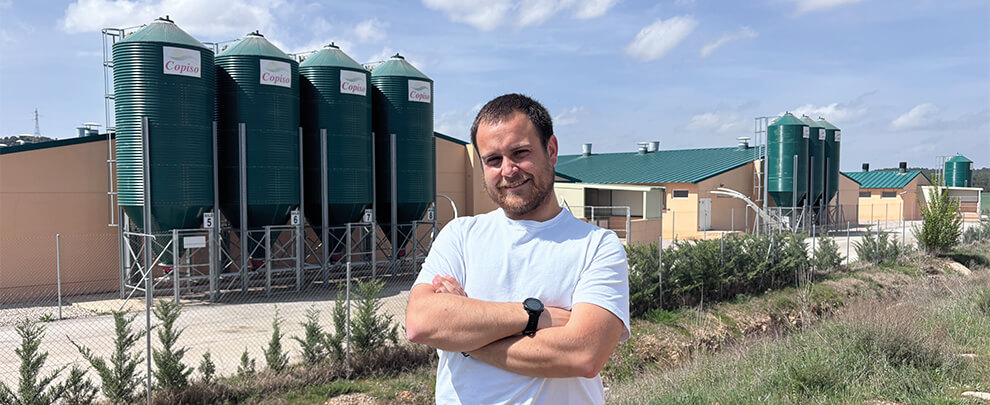
M. García: “With Silotronic, it is safer, and more precise to know the feed left in each silo”
18th June 2026 - Success stories
In the current context of modernising the livestock sector, the adoption of new technologies has become a key factor in improving farm efficiency, sustainability, and management. In this interview, we spoke with Marcos García, an agroenergy engineer and head of Silotronic at the Copiso group, who shares his experience implementing Silotronic, the real-time feed level control system for silos. Through their testimony, we learn how the digitalisation of feed control and logistics optimisation contributes to a safer, more profitable model adapted to the future challenges of the sector.
Why did you decide to commit yourself to livestock farming?
I am an agroenergy engineer by training. One of the fields in which I could work after finishing my studies was the livestock sector, and I chose this professional option.
On this farm, the Silotronic system is installed. Why did you decide to install this system to control the feed level of the silos?
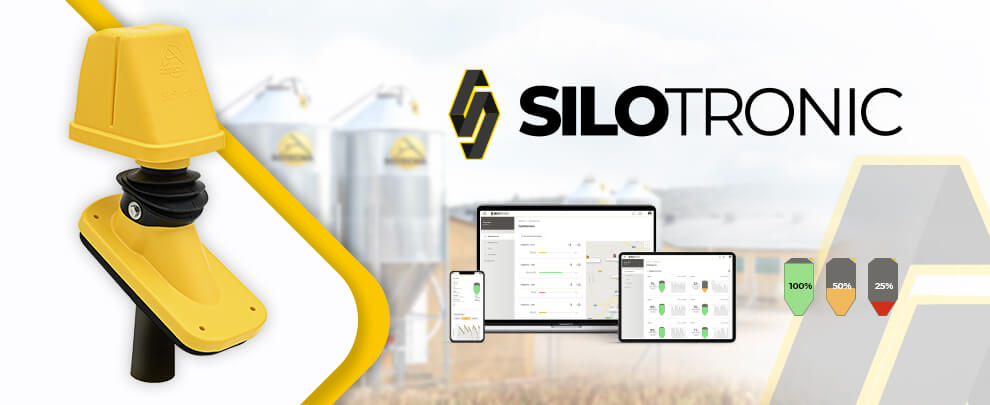
The Copiso group decided to install the Silotronic mainly because it enables control of feed consumption on farms and makes farmers' work easier by simplifying feed ordering and optimising each farm's resources.
How do they interact with the Silotronic system?
From the farmer's perspective, it is very simple: they only need to confer the daily or weekly program to check the status of the silos and order the feed they need from our factory. On the other hand, to maintain a consumption history, we have programmed the Silotronic to take readings every 4 hours. Thanks to this, we can study different variants, such as whether the animals are eating the quantities they need or whether there is any error during feed unloading, and determine the type of feed that corresponds to each silo. In my specific case, I am responsible for providing farmers with the devices and providing technical support for their installation and day-to-day operation on the farms.
Do you think it is an easy system to use on a farm?
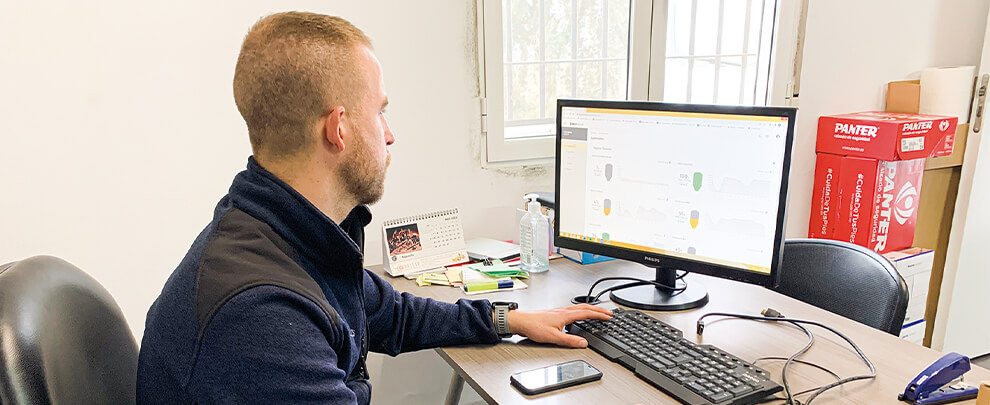
Yes. The silotronic software is very intuitive and easy to use for farmers. Also, if needed, it integrates nicely with other software. For example, on sow farms, we use the Silotronic application, but in feedlots, Copiso has an internal application that is fully integrated with Silotronic, so we can see the same data in both programs.
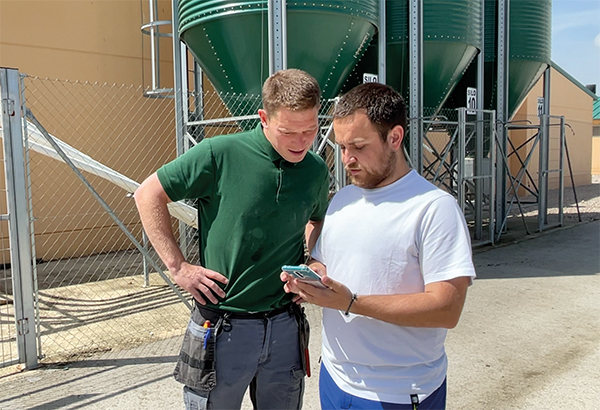
Silotronic's software is very intuitive and easy to use. Photo: Rotecna.
What are the main advantages of working with Silotronic?
The main advantage is, above all, the optimisation of farm resources in relation to feed orders, because it is easier and cheaper to place feed orders with reliable data on the quantities left in the silos than without them. With the installation of Silotronic, it is no longer necessary to have a person on the farm climb the ladder to the top of the silos (with the risk that entails) or throw a stone into the silo to estimate how much feed remains inside. With Silotronic, it is simpler, safer, and more precise to know the feed left in each silo and the quantity to order.
At a logistical level, how does Silotronic improve coordination between the feed factory and the farms?
With Silotronic we facilitate all the logistics of orders and transport costs of feed from the factory to the farms. We optimise the resources and quantities of feed to be ordered with much greater reliability. This is very useful, especially in fattening farms where, once a fattening cycle is finished, we want to ensure that no feed remains in the silos, as it would spoil, and, above all, that the silos do not run out of feed when animals are present. This is the most important thing: that the animal is well cared for. From our experience, having Silotronic on farms benefits farmers. Although we already had an ordering system, we have improved it and transferred the information to the farmer. This makes it much easier for them to place orders, and for the factory, it is more efficient to organise orders and routes, thus avoiding problems such as sending more feed than necessary to a farm.
As far as costs, what benefits have you noticed?
Working with Silotronic represents cost savings. First, we avoid wasting feed because when a cycle ends, there is no excess; second, we avoid transporting more feed to the farms than they need. Both are important costs that we save now that we have the Silotronic.
"With Silotronic we facilitate all the logistics of orders and transport costs of feed from the factory to the farms."
Besides Silotronic, what other Rotecna products have you installed on this farm?
Both on this farm and on others in the Copiso group, practically all the interior equipment is from Rotecna: floors, Dositronic M and G, hoppers, dispensers... We have a lot of Rotecna material.
What do you value about a company like Rotecna?
Above all, we value the company's years of experience and its close after-sales technical support. Whenever I have called Rotecna, they have provided the necessary assistance and worked to find a solution as quickly as possible.
In healthcare, what are your main concerns?
Mainly keeping the farm in optimal sanitary conditions. To do this, we prioritise biosecurity and aim to ensure that barriers are not breached to prevent the entry of diseases.
What biosafety measures do you have installed?
We implement measures at the personnel level: before a person enters the farm, they must follow a protocol to prevent the introduction of disease. There are also measures regarding transportation: for example, with Silotronic, in the logistics of feed delivery, trucks cannot go to just any farm; each operator and each truck has its own established farms.
What are the group's future challenges?
At Copiso, we work to continue growing optimally, as we have been doing to date. We are especially committed to adhering to the work guidelines established to prevent problems on our farms and to continue growing.