Blog
Blog
R. Arzube: “Rotecna allows us to adapt to improvements in animal welfare”
06th October 2026 - Success stories
The Ecuadorian pork sector has evolved significantly in recent years, driven by investment in genetics, facilities, technology, and training. In this interview, we spoke with Rómulo Arzube Delgado, Production Director of Grupo Cedeño, who explains their relationship with Rotecna, the solutions they use on their farms and how innovation, biosecurity and digitalisation will be key to continuing to improve efficiency and competitiveness.
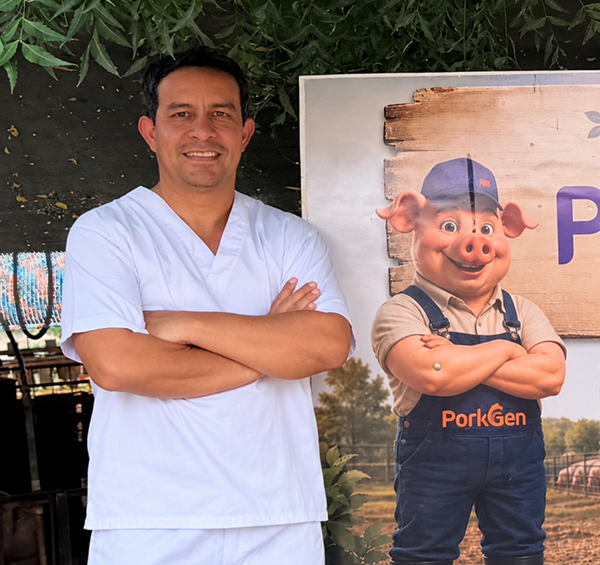
Rómulo Arzube, Production Director of Grupo Cedeño. Photo: R. A.
When and why did you decide to dedicate yourself to livestock farming?
From a young age, I was deeply involved in the agricultural sector, spending my holidays on my father's and maternal grandfather's farms, which focused on agriculture and livestock farming. Just before finishing school, I decided to study Veterinary Medicine, largely because of my father's influence and my mother's support; they were confident it was a good area in which to develop professionally. I was especially attracted to everything related to animal production and, above all, to the pig sector.
How is the company structured?
The group I belong to, Grupo Cedeño, consists of three companies. Each has different centres, organised, as the case may be, into production systems in a single location or across several locations. All three companies have commercial farms dedicated to producing fattening pigs, which supply both our customers and our own meat processing and cutting plant. In addition, we are also involved in the production and marketing of pig genetics.
How many people work there?
Between the farms and the plant, more than 500 people work directly for the company, plus another 100 who do so indirectly. We have administrative staff and technical teams across different areas of production, as well as workers specialised in genetics, gestation, maternity, breeding, and fattening. We also have logistics, maintenance, construction, fertiliser management and environmental departments. Each person's main responsibility is to do their best every day to achieve the goals and objectives we set for ourselves. We are very satisfied with the work done and the results we are obtaining.
From the beginning, you chose Rotecna to equip their facilities. What factors have helped maintain that trust over the years, and how has that collaboration evolved?
Trust in Rotecna has been built primarily on four pillars: seriousness, quality, accompaniment, and support. Over the years, Rotecna has not only been our equipment supplier, with products that meet our demands and quality standards, but has also become a true strategic partner. They have supported our growth, understood our needs, and provided solutions to the challenges and problems we have faced. This closeness and responsiveness have been fundamental to maintaining and strengthening a relationship over the years.
What Rotecna solutions do you currently use on your farms, and in what production areas are they present?
We use plastic floors and grates, farrowing nests, PVC dividing fences, dispensers and feeders for gestating and farrowing sows, TR2 and TR4 feeders, and Maxi and Tecnapan waterers and plates. Rotecna is present in all our production areas: gestation, maternity, breeding and fattening. We also use certain products in other areas, such as those intended for biosecurity and logistics, including loading ramps/loading areas and trucks.
Why did you decide to invest in Rotecna products to equip their facilities?
It was a joint decision with the company's management. When I started working in pig production, I had the opportunity to lead a company that wanted to do things right from the beginning. At the time, we met Asagri, a company introducing new technologies into the sector and trying to transform traditional production systems. That's when I met Rotecna. When I arrived at Fabianacorp, we considered improving and modernising the facilities and decided to opt for a solution we already knew and that had given us good results. Since then, we have maintained this alliance, with which we are very satisfied.
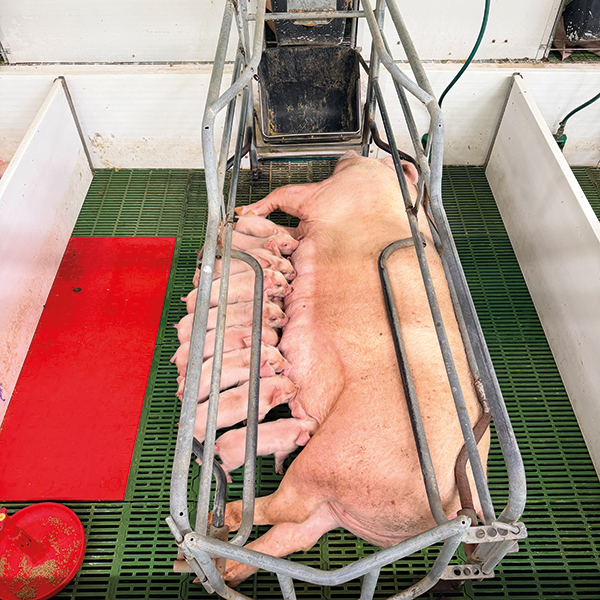
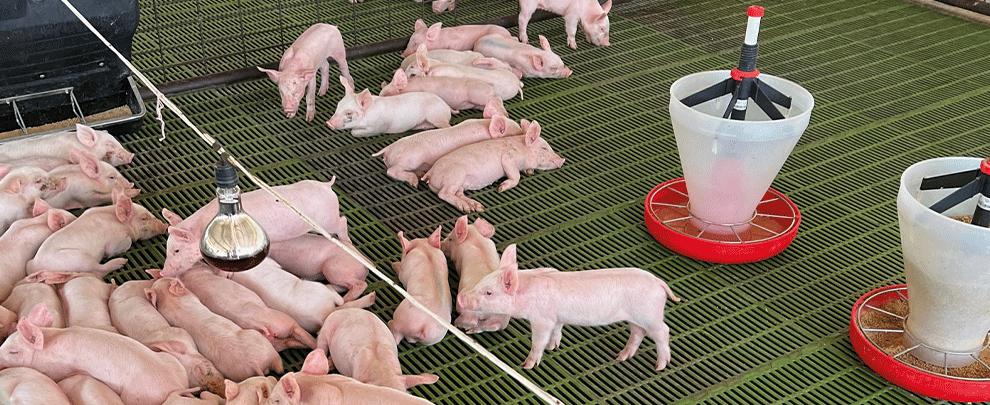
Grupo Cedeño's farrowing pen with Rotecna products. Photo: R.A.
You use Rotecna feeders in all production areas. What benefits have you observed in terms of feed consumption, handling, and maintenance?
For our company, one of the resources we must take the most care of, and that has a significant impact on costs, is animal feed. That's why we closely monitor consumption data, and feeders play an essential role. Factors such as the design and number of mouths per animal, ease of access to food, ease of adjustment, waste control and ease of cleaning and maintenance make Rotecna feeders our first choice.
In your experience, what features would you highlight about Rotecna slats, and what advantages have they brought in aspects such as animal welfare, hygiene, or durability?
As for the slats, I would highlight the design and the wide range of solutions that Rotecna offers. Rotecna solutions allow us to adapt to continuous improvements in animal welfare, hygiene and biosecurity. Furthermore, its ease of cleaning, disinfection and assembly is essential to ensure good conditions in the facilities. Regarding durability, we are convinced these products meet our farms' requirements and perform well over time.
What aspects of Rotecna's service would you highlight, such as technical advice, availability, or support during projects?
Support is one of the fundamental pillars that have made Rotecna our supplier. Throughout each project we have carried out, we have received close follow-up throughout the project and close, consistent customer service. In addition to offering solutions quickly when needed, their team provides practical advice and technical guidance that helps us improve our designs and optimise facilities.
What are your main health concerns?
In Ecuador, a plan to eradicate classical swine fever (CSF) is still being implemented. Beyond this issue, one of our main concerns is continuing to improve farm biosecurity to reduce the risk of pathogens such as PRRS and others that can cause health problems.
Ecuador has experienced significant evolution in the pork sector in recent years. From your point of view, what challenges and opportunities do producers currently face?
The Ecuadorian pork sector has evolved significantly in recent years, driven by investment in genetics, facilities, new technologies and training. Currently, several companies in the country achieve production levels comparable to those of the main international leaders. However, we continue to face significant challenges, especially in production costs, which are heavily influenced by raw material prices, and in the need to move toward eradicating CSF. At the same time, these challenges also create opportunities to improve biosecurity, boost pork consumption, and advance farm digitalisation.