Blog
Blog
What pig behaviour tells us about the condition of the farm?
30th July 2026 - News
Pig behaviour is one of the most valuable diagnostic tools available on any farm. Long before clinical signs appear or production losses become evident, pigs often show changes in the way they rest, eat, drink, move or interact with one another. Knowing how to interpret these signals makes it possible to identify potential problems related to the environment, housing design, management or animal welfare at an early stage.
In modern pig production, where every detail influences efficiency and profitability, daily observation has become a strategic management tool. Pigs are highly sensitive to changes in temperature, air quality, water availability, space or competition for resources. When any of these factors is no longer adequate, their behaviour changes. Understanding the meaning of these behaviours helps producers take action before problems result in reduced growth, poorer feed conversion or an increase in disease.
Behaviour, an indicator of welfare and health
Pigs naturally express whether the farm environment meets their needs. A calm group, with animals resting comfortably, moving normally and accessing feed and water without conflict, usually reflects a well-balanced environment. By contrast, restlessness, aggression or certain repetitive behaviours may be the first indication that something is not functioning properly.
For this reason, an increasing number of animal welfare programmes incorporate behaviour-based indicators. Unlike other parameters that require laboratory analyses or specific measurements, direct observation provides immediate information and makes it possible to detect issues at a very early stage.
However, no behaviour should be interpreted in isolation. The same sign may have different causes, so it is always important to assess the farm conditions as a whole, including temperature, ventilation, stocking density, feeding, water availability, health status and pen design.
When behaviour reveals a problem on the farm
Certain behaviours can quickly point to the source of a problem.
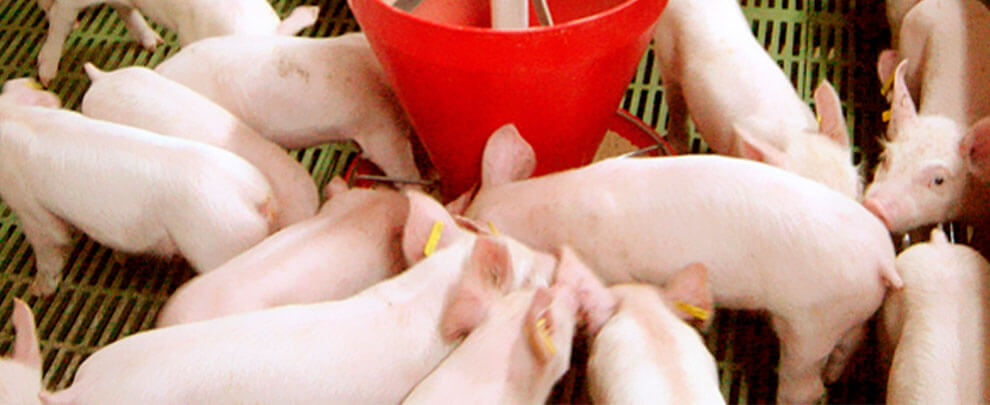
If pigs are huddled together in one area of the pen, particularly during resting periods, it is often a sign that the ambient temperature is too low or that there are draughts. By grouping together, pigs reduce body heat loss, making this behaviour a clear indication that environmental conditions should be checked.
The opposite situation can also provide valuable information. When pigs rest far apart from one another, seek damp surfaces or pant continuously, they are likely suffering from heat stress. In these cases, ventilation, air speed, cooling systems and water availability should be reviewed, especially during the warmer months.
Another common behaviour is the accumulation of pigs around the drinkers. Although this may simply reflect greater water demand at certain times of the day, it can also indicate insufficient water flow, pressure problems, high temperatures or even the early stages of a health issue that increases water consumption.
Excessive aggression also deserves attention. Frequent fighting, biting or constant competition for feed is often associated with excessive stocking density, poor resource distribution or the mixing of unfamiliar animals, all of which disrupt the group's social stability.
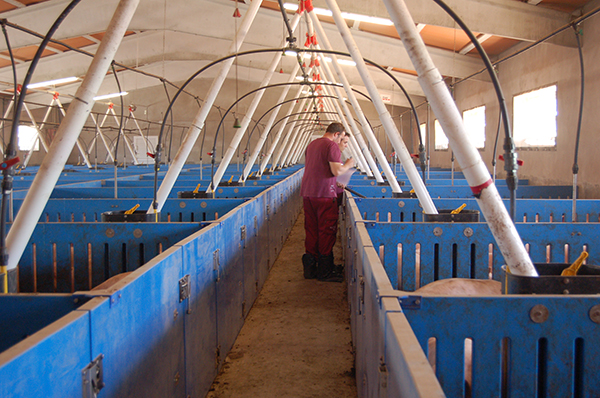
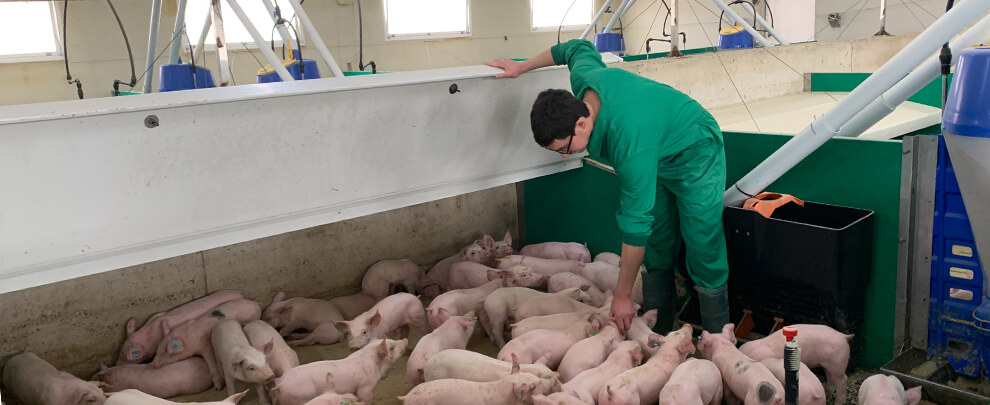
Observing behavior helps detect problems on the farm early. Photo: Rotecna.
The importance of housing design
Animal behaviour does not depend solely on management practices. Farm design plays a major role in shaping the responses observed every day. A well-designed pen layout allows pigs to clearly distinguish between resting, feeding and dunging areas, respecting their natural behaviour. When this organisation is disrupted, easily recognisable signs appear, such as pigs soiling the resting area or having difficulty accessing feeders and drinkers simultaneously.
The positioning of equipment, space allowance, ventilation and floor quality also directly influence the animals' daily activity. Good housing design reduces competition, promotes resting behaviour and improves comfort, whereas poorly designed facilities can increase stress and favour the development of injuries or health problems.
For this reason, pig behaviour also provides valuable information for assessing whether farm design truly meets the animals' needs or whether improvements should be made.
Abnormal behaviours that should never be ignored
Some behaviours require immediate attention because they are often associated with significant welfare or management problems. Tail biting is probably the best-known example. Although its causes are multifactorial, the risk increases when factors such as stress, poor ventilation, high stocking density, environmental deficiencies or excessive competition for resources occur simultaneously. Detecting the first tail-biting animals and addressing the underlying cause is far more effective than intervening once lesions have become widespread.
Other behaviours should also be carefully monitored, including excessive bar biting, stereotypies, prolonged apathy or a sudden reduction in feed intake. In many cases, these behaviours reflect frustration, illness or environmental discomfort.
Providing appropriate environmental enrichment materials can help reduce many of these behaviours by giving pigs opportunities to explore, manipulate objects and express species-specific behaviours.
Observing today to prevent pomorrow's problems
Digital technologies are increasingly incorporating sensors, cameras and monitoring systems capable of automatically recording animal activity. However, no technology can fully replace the daily observations carried out by the people working on the farm.
Spending a few minutes each day walking through the pens and observing how pigs rest, eat, drink and interact makes it possible to detect subtle changes before they develop into more significant problems. In many cases, behavioural changes appear several days before feed intake declines or mortality increases.
For this reason, learning to interpret the language of pigs is a management tool that is just as important as monitoring environmental parameters or reviewing production indicators. Ultimately, pig behaviour reflects how animals perceive their environment. Listening to these signals and acting accordingly not only improves animal welfare but also enhances health, productivity and the overall efficiency of the farm.